Thailand Visa Types: Which Route Fits Your Chiang Mai Stay
Thailand has no single visa for Chiang Mai; the route follows your purpose. A listed passport gets up to 30 days visa-free. The DTV suits remote work and activities. Retirees aged 50 or older use Non-O, O-A or O-X. The LTR covers high income or assets. ED and Non-B cover study and work.
On this page
- Which route fits you
- Short visits: exemption, Visa on Arrival and tourist visa
- Remote work and activities: the DTV
- Long-term residents: the LTR visa
- Retirement visas: Non-O, O-A and O-X
- Study: the ED visa
- Work: the Non-B visa and the work permit
- Marriage and family of a Thai national
- Rules that apply on every visa
- Chiang Mai Immigration Office
- Common questions
Thailand has no single visa for Chiang Mai. The right one depends on why you are staying, so start with your purpose, then read the guide for that route.
Which route fits you
The table gives the length of stay, one test to meet, and the guide to read next.
| Route | Length | Key test | Guide |
|---|---|---|---|
| Visa exemption | Up to 30 days | Passport on the Gazette list, for tourism | Visa exemption guide |
| Visa on Arrival | Up to 15 days | Azerbaijan, Belarus or Serbia | Visa exemption guide |
| Tourist visa (TR) | Up to 60 days | Funds of THB 20,000 per person | Tourist extension guide |
| DTV | 180 days per stay | Funds of THB 500,000 | DTV guide |
| LTR | 10 years, renewable | Income or assets in USD | See LTR section below |
| Non-O retirement | 90 days | Age 50, then THB 800,000 deposit or THB 65,000 a month | Retirement guide |
| O-A | 1 year | Age 50, then THB 800,000 or THB 65,000 a month | Retirement guide |
| O-X | Up to 10 years | THB 3 million deposit | Retirement guide |
| ED | Valid three months | A study purpose | See ED section below |
| Non-B | Valid three months | Ministry of Labour letter | See Non-B section below |
Rules changed on 15 September 2026 for short stays, so see the 2026 changes guide if you read an older source.
What each route costs
Embassies charge visa fees in local currency and the amounts differ by post. The table gives examples from the embassy pages cited, not a price list.
| Route | Visa fee example | Other costs and papers |
|---|---|---|
| Tourist visa (TR) | Oslo: NOK 400 single entry, NOK 2,000 multiple entry | Funds of THB 20,000 per person |
| DTV | USD 340 at Ho Chi Minh City, USD 400 at Washington, NTD 11,000 at Taipei | Funds of THB 500,000; 5 working days to process at Ho Chi Minh City |
| LTR | THB 50,000 per person | No BOI fee for the qualification endorsement; results within 20 working days |
| Non-O retirement | Oslo: NOK 800 single entry | Extension of stay at the Bureau: THB 1,900 |
| O-A | Oslo: NOK 2,000 multiple entry | Health insurance of at least USD 100,000 |
| O-X | Oslo: NOK 3,500 | Thai health insurance with inpatient cover of at least THB 400,000 |
| ED | Oslo: NOK 800 single entry | Health insurance certificate worth at least USD 50,000 |
| Non-B | Oslo: NOK 800 single entry, NOK 2,000 multiple entry | Ministry of Labour approval letter |
Short visits: exemption, Visa on Arrival and tourist visa
A Ministry of Interior announcement lists the countries and territories whose holders enter temporarily for tourism without a visa. They may stay not more than thirty days. The announcement takes effect after fifteen days from its publication.
Visa on Arrival is a separate scheme. Nationals of 3 countries and territories may apply for it at immigration checkpoints, for a stay of up to 15 days for tourism, effective 15 September 2026. The countries are Azerbaijan, Belarus and Serbia. The visa exemption guide has the lists and the border conditions.
The tourist visa (TR)
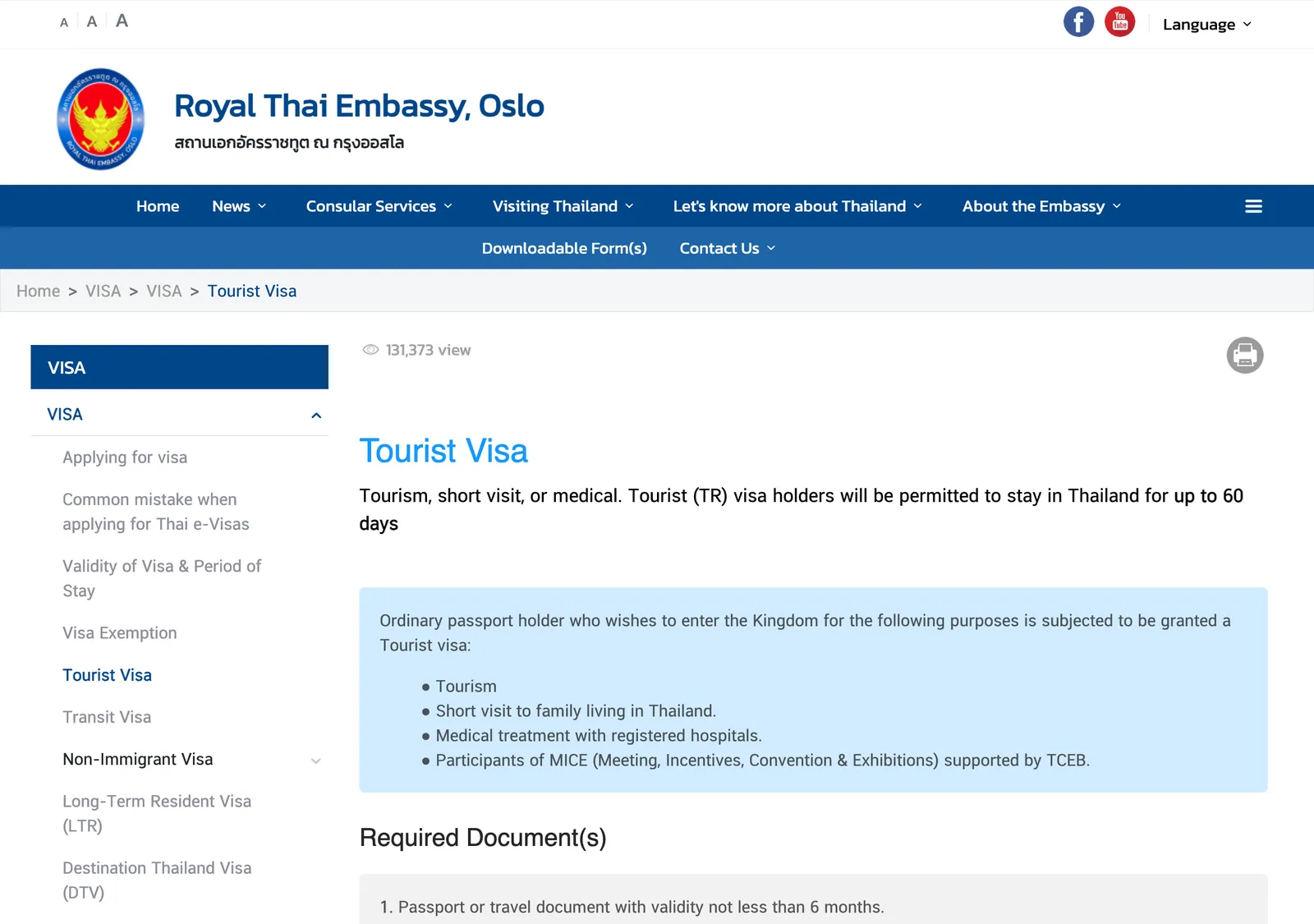
The TR visa is for tourism, short visits or medical purposes, and holders will be permitted to stay up to 60 days. It requires evidence of adequate finance of THB 20,000 per person or THB 40,000 per family. The visa itself is valid for 90 days or 180 days.
At Oslo the application needs a passport valid for not less than 6 months, a travel booking with flight details and proof of accommodation, plus the funds above. Other posts publish their own lists, so read the requirements of the post that will process your application.
Extending a short stay
If travellers wish to stay longer than the permitted duration, they may request an extension of stay for up to 30 days. The extension is at the discretion of the immigration officer, and you apply before the end of the permitted period. The fee is THB 1,900. The tourist extension guide covers the office visit.
Remote work and activities: the DTV
The Destination Thailand Visa (DTV) is issued to people who travel and work remotely in Thailand, for example foreign talent, freelancers and digital nomads. It also covers activities such as Muay Thai courses, cooking classes, sport trainings, medical treatment, seminars and music festivals. A spouse and children under 20 can accompany the holder.
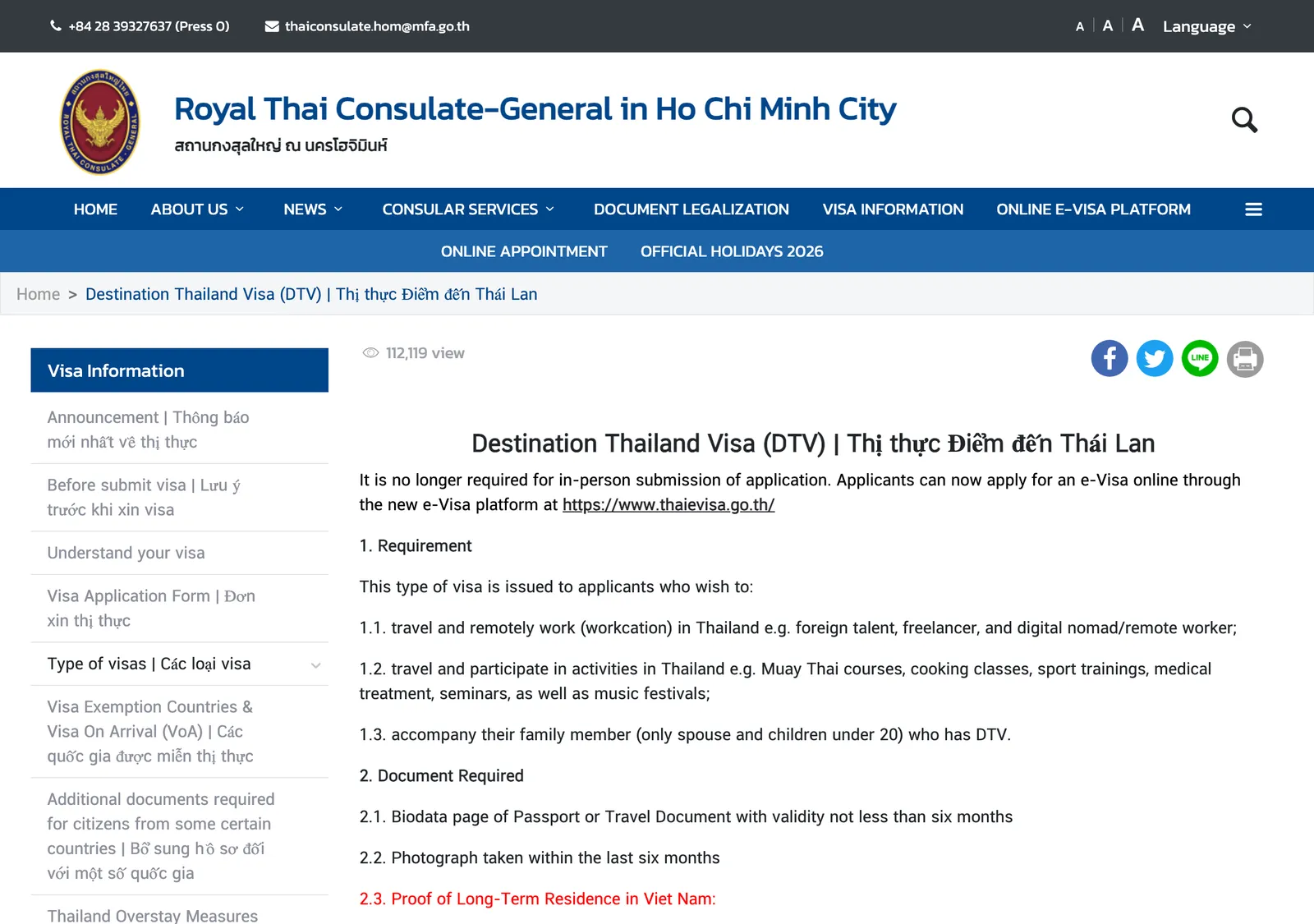
Applicants can apply for an e-Visa online through the Thai e-Visa platform.
The consulate page asks for financial evidence of no less than THB 500,000. Document requirements differ by post. Ho Chi Minh City also asks for a criminal record clearance certificate. Nationals of certain countries may apply only at an embassy in their home or residence country or at a designated embassy.
How long the DTV lasts
- The visa is valid for 5 years.
- The holder is entitled to stay in Thailand for a maximum of 180 days.
- An extension of 180 days may be granted.
- After 180 days plus 180 days, the holder must depart and may re-enter with the same DTV within its validity.
The DTV guide goes through the Chiang Mai steps.
Long-term residents: the LTR visa
There are four types of LTR visa: Wealthy Global Citizen, Wealthy Pensioners, Work-from-Thailand Professionals and Highly skilled Professionals. It is a renewable visa: permission is granted for five years first, extended for 5 more years if qualifications are met. Holders report once a year instead of every 90 days, and are exempt from re-entry permits.
Who each category suits
- Wealthy Pensioners are retirees aged 50 or older with an annual pension or stable passive income, of at least USD 80,000 a year at the time of application.
- Work-from-Thailand Professionals need a minimum average personal income of USD 80,000 a year in the past two years.
- Wealthy Global Citizens hold at least USD 1 million in assets.
All categories need health insurance of at least USD 50,000, or social security benefits in Thailand, or a deposit of at least USD 100,000. A holder can bring at most 4 dependents in total. Work permits are not granted to Work-From-Thailand Professionals holders. The processing fee is THB 50,000 per person.
Retirement visas: Non-O, O-A and O-X
Three visas carry the retirement label. They differ in length and in how much money you show.
Non-Immigrant O (retirement)
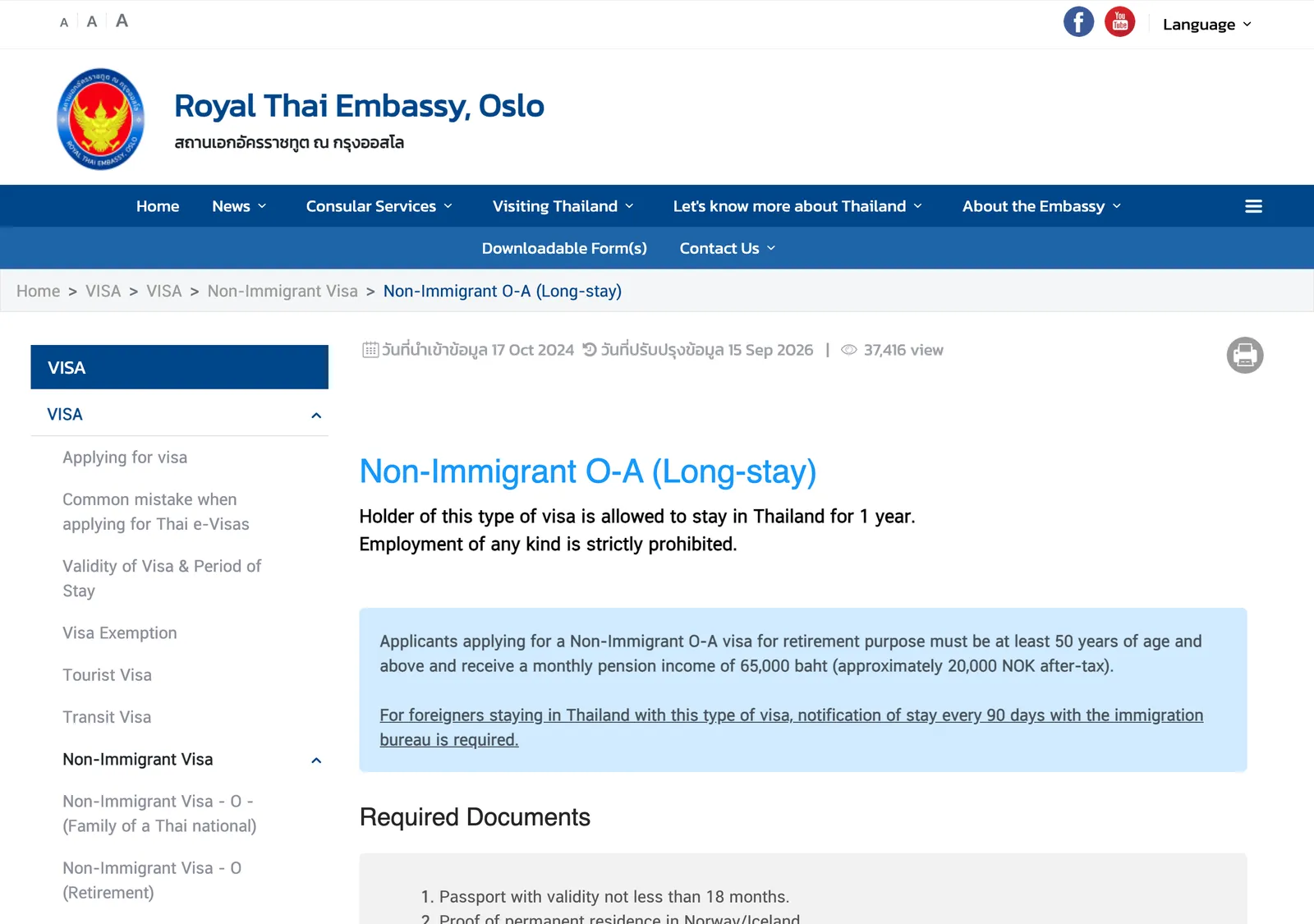
Applicants must be at least 50 years of age. The holder is allowed to stay in Thailand for 90 days. At the Oslo embassy it is a single-entry visa.
Under 50, none of the three retirement visas is open to you, so look at the DTV, LTR, ED or Non-B routes instead. The Phnom Penh embassy lists three copies of a bank statement showing a deposit of not less than THB 800,000. It also accepts an income certificate with a monthly income of not less than THB 65,000.
Non-Immigrant O-A
The holder is allowed to stay in Thailand for 1 year. The applicant must be at least 50 years of age and show a bank statement with a balance of not less than THB 800,000. An income certificate of at least THB 65,000 a month is accepted instead, as is a deposit plus income totalling THB 800,000 a year.
Non-Immigrant O-X
An O-X holder may stay in Thailand for up to 10 years with multiple entries. That is 5 years from first entry, with an option to extend for a further 5 years. The applicant must be at least 50 years old and a national of one of the listed countries, among them Australia, Germany, Japan, Canada and the United States of America.
There are two funds options. One is a deposit of minimum assets of THB 3 million in a Thai bank. The other is THB 1.8 million in a Thai bank plus a minimum income of THB 1.2 million per year.
Retirement extension at Chiang Mai Immigration
A retirement extension of stay needs the applicant to be 50 years of age or older. The criteria then ask for income of not less than THB 65,000 per month. The other route is a deposit of not less than THB 800,000 in a bank in Thailand.
A one-year extension may be granted at the discretion of the immigration officer if the requirements are met. See the retirement extension guide for the office steps.
Study: the ED visa
The Non-Immigrant ED visa is issued to applicants who wish to enter the Kingdom to study. Only a single entry is granted. A single-entry visa is valid for three months.
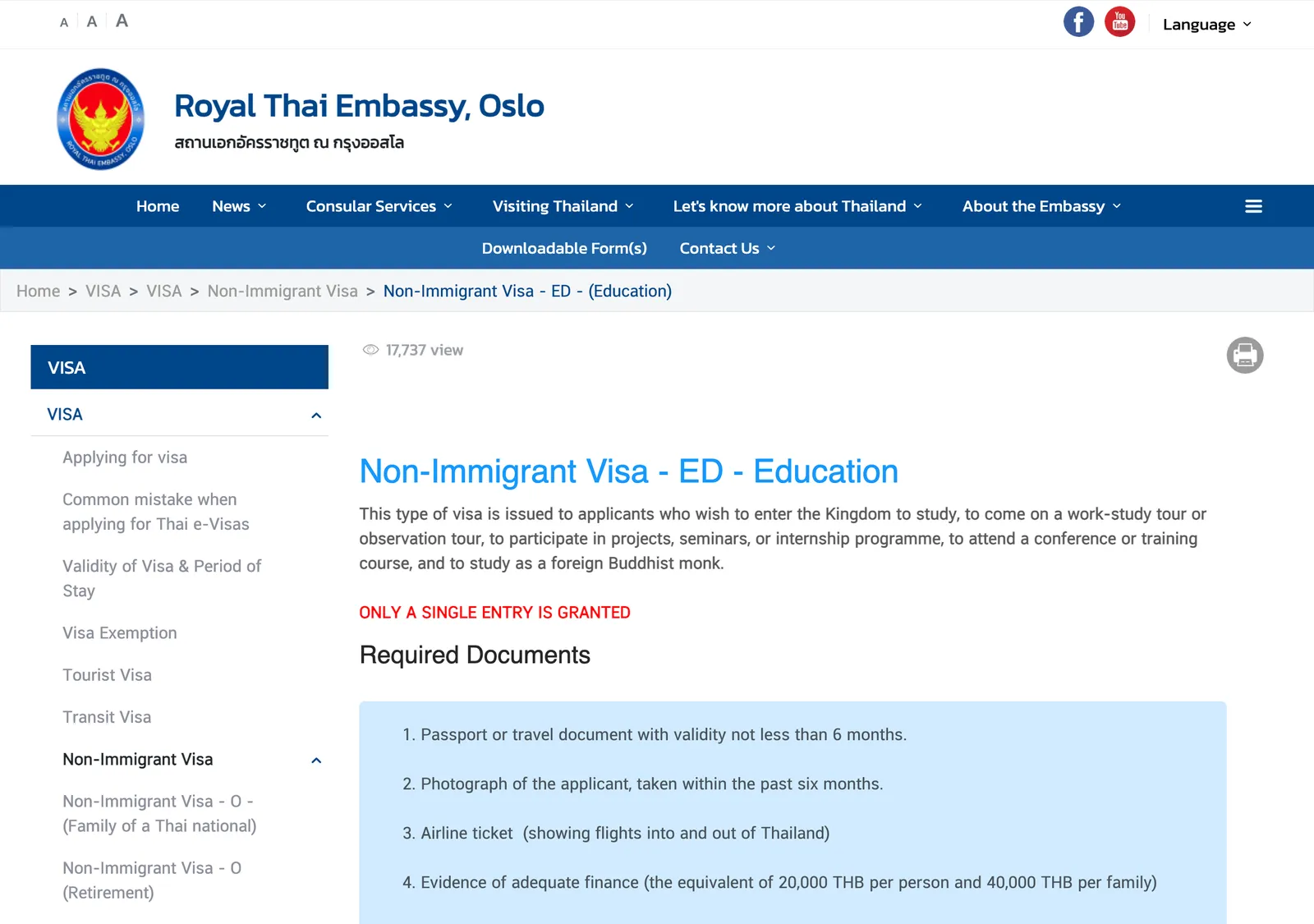
Extension of stay is at the discretion of the immigration officer.
Work: the Non-B visa and the work permit
For employment the embassy asks for a letter of approval from the Ministry of Labour. The prospective employer in Thailand submits Form WP3 at the Office of Foreign Workers Administration, Department of Employment. A single-entry Non-B visa is valid for three months.
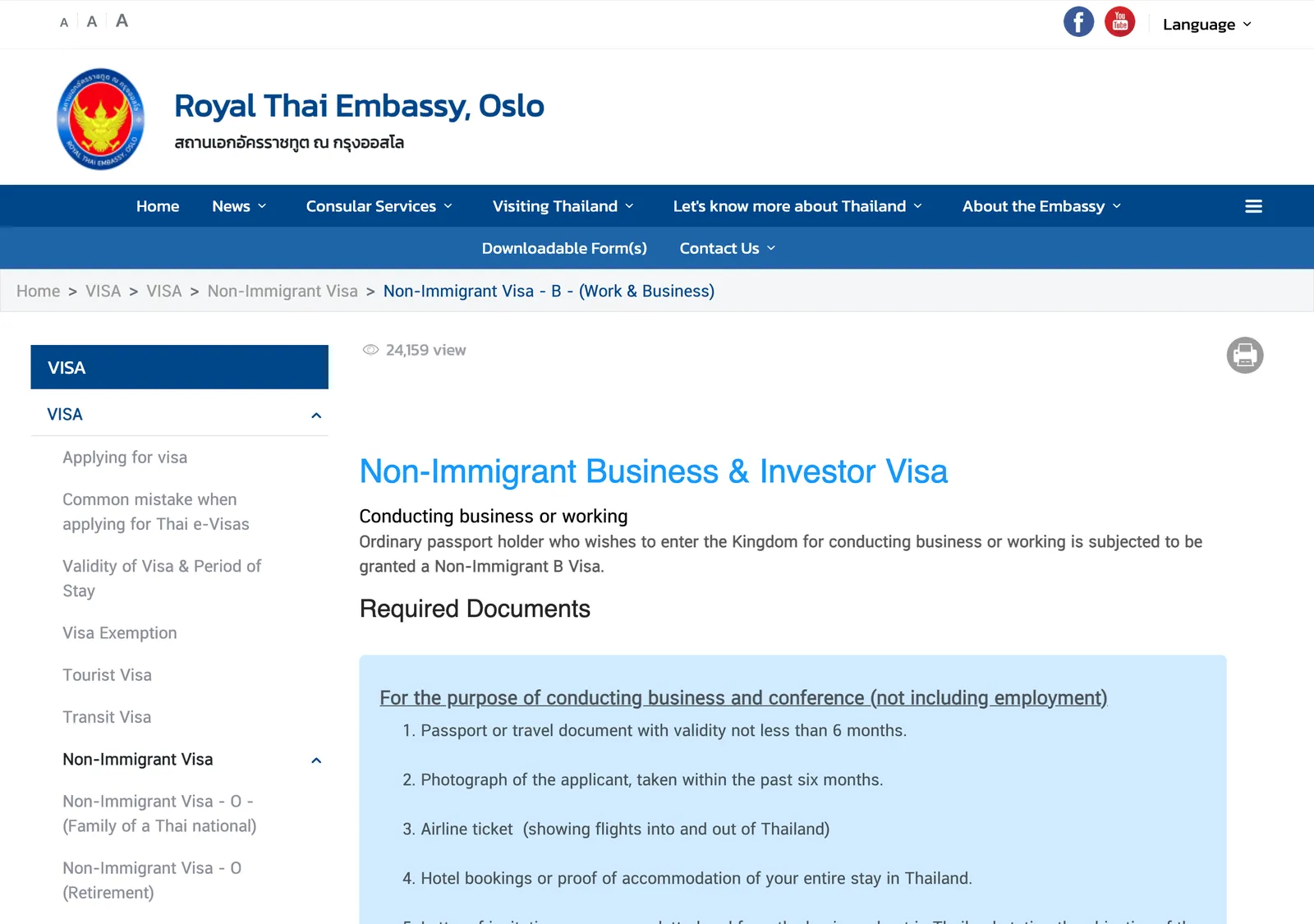
The Department of Employment’s e-WorkPermit system lists the application for a new work permit for a Non-Immigrant, Section 59, Form Bor Tor 25.
Marriage and family of a Thai national
The Immigration Bureau’s extension criteria for family ties follow money tests. In the case of marriage to a Thai woman, the alien husband must earn an average of no less than THB 40,000 per month. Alternatively he must have no less than THB 400,000 in a bank account in Thailand for the past two months.
For parents of a Thai national, the father or mother must keep an average income of no less than THB 40,000 per month. The alternative is deposited funds of no less than THB 400,000. In the case of a spouse, the relationship must be de jure and de facto.
Rules that apply on every visa
These rules sit on top of whichever visa you hold.
| Rule | What it says | Guide |
|---|---|---|
| Arrival card | Non-Thai nationals complete the TDAC online within 3 days prior to arrival | Arrival card guide |
| Address notice | Notify an immigration officer of your residence every ninety days | Address notice guide |
| Late notice | Report in person and pay a fine of THB 2,000 | Address notice guide |
| Residence notice | The house-master or hotel notifies within twenty-four hours | Residence notice guide |
| Overstay | THB 500 per day, up to THB 20,000 | Overstay guide |
| Re-entry | THB 1,000 single, THB 3,800 multiple | – |
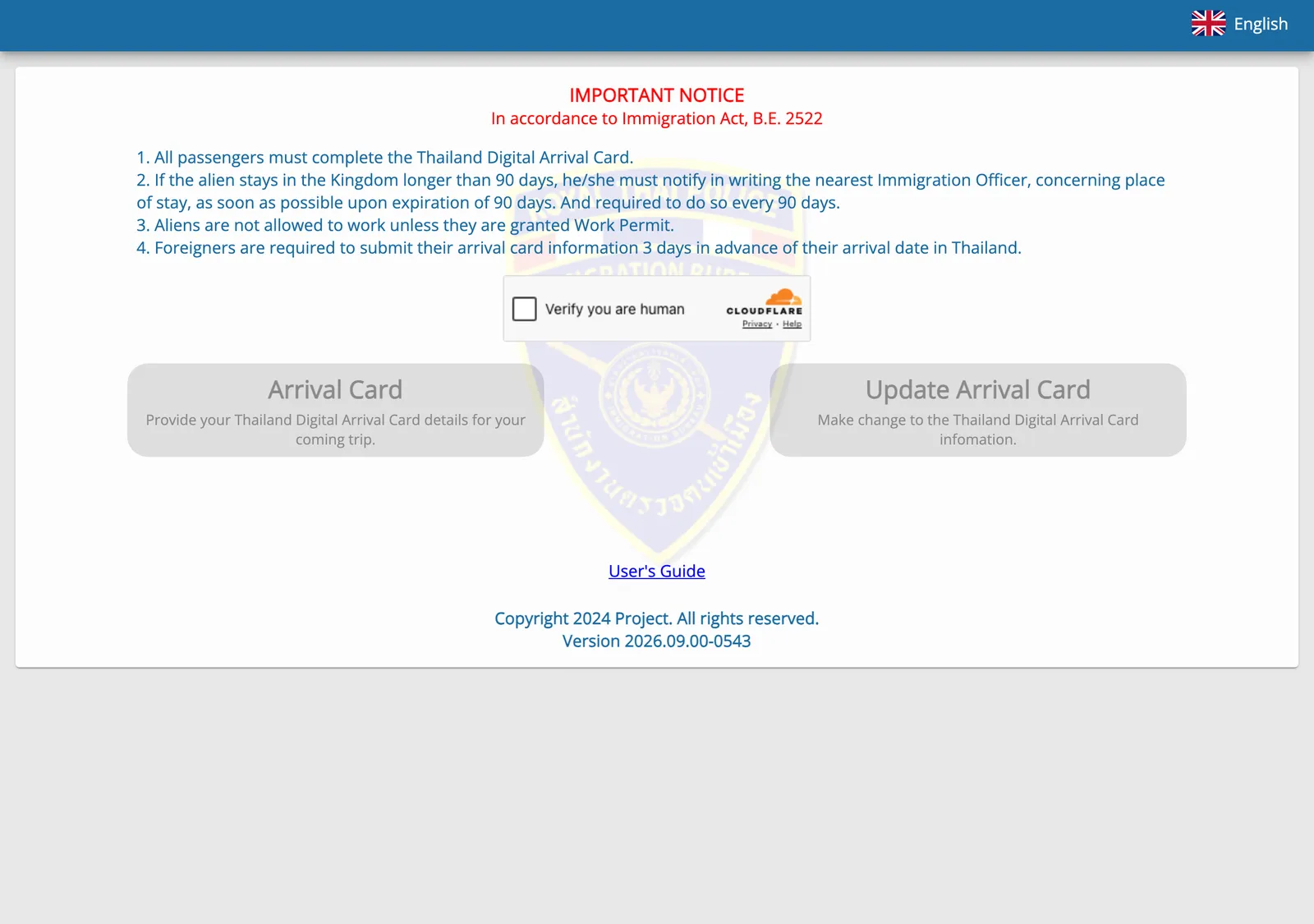
A foreigner who leaves the Kingdom without a re-entry permit is considered to have a temporary entry permit that has expired. An overstay of more than 90 days brings a ban from re-entering for 1 year from the departure date.
Chiang Mai Immigration Office
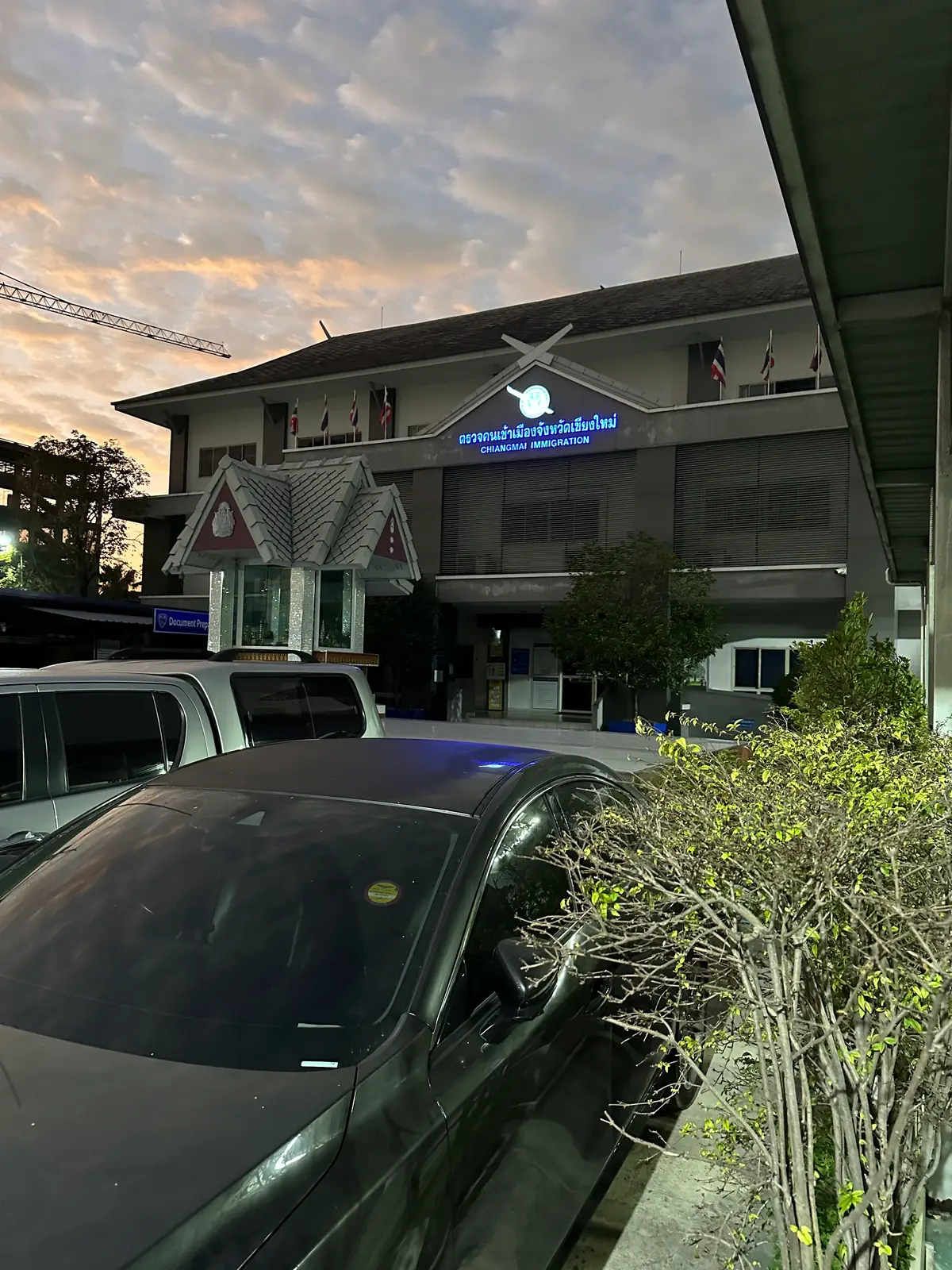
Chiang Mai Immigration is at 71 Moo 3, Sanam Bin Rd., Suthep Sub-district, Mueang District, Chiang Mai 50200. The telephone is 053 201 755. The office guide covers the counters and the queue.
71 ถนนสนามบิน Suthep, Mueang Chiang Mai District, Chiang Mai 50200, Thailand · Open in Google Maps (opens in a new tab)
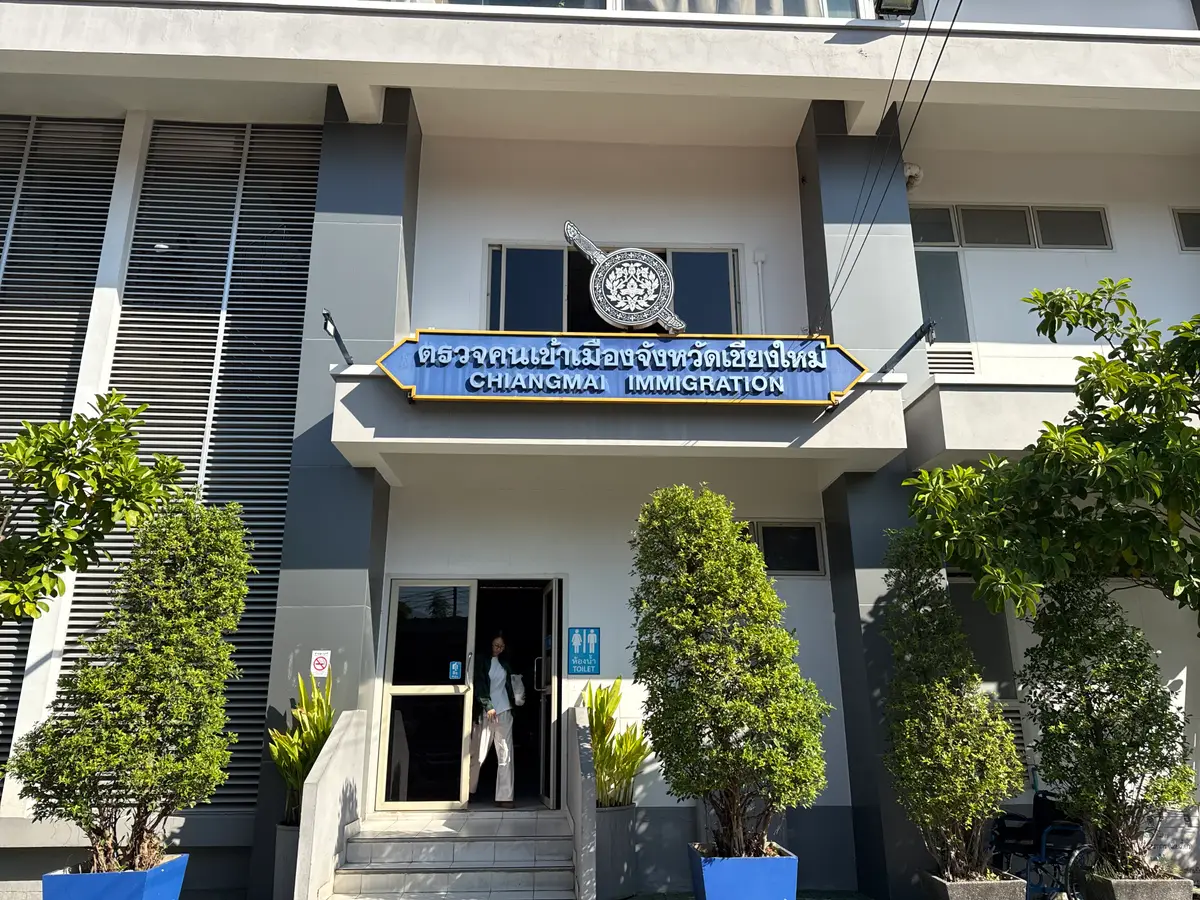
Photo credits
- Photos and clips uploaded to Google Maps (Chiang Mai Immigration Office on Google Maps (opens in a new tab)) by ben chidgey, Peter Miller (WHY THAI).
Not confirmed: Which documents and fees the embassy handling your application asks for. Check its page before you apply. The exact DTV fee in baht. Ask the embassy that will process the application.
Reach readers planning life in Chiang Mai. Advertise → hello@chiangmaijao.com
Common questions
Which visa suits a digital nomad in Chiang Mai?
The Destination Thailand Visa is issued to people who travel and work remotely, such as freelancers and digital nomads. The holder may stay a maximum of 180 days per stay.
Which visa suits a retiree?
Applicants for the Non-Immigrant O retirement visa must be at least 50 years of age. The O-A and O-X visas also need an applicant aged at least 50.
How long can I stay without any visa?
Holders of passports on the Gazette list may stay not more than thirty days for tourism. Visa on Arrival allows a stay of up to 15 days.
Can an LTR holder get a work permit as a remote worker?
A work permit will not be granted to Work-From-Thailand Professionals holders.
What does the DTV cost?
The financial evidence asked for is no less than THB 500,000. The visa fee is set per embassy, so check the page of the embassy that processes your application.
What is the address report for long stays?
An alien permitted to stay temporarily must notify an immigration officer of the residence every ninety days.
Do I need a TDAC whatever my visa?
All non-Thai nationals entering by air, land or sea complete the TDAC online within 3 days prior to arrival. It is submitted for every entry.
Where is the immigration office in Chiang Mai?
Chiang Mai Immigration is at 71 Moo 3, Sanam Bin Rd., Suthep Sub-district, Mueang District, Chiang Mai 50200. The telephone is 053 201 755.
Read next
General information checked against the sources listed above, not legal advice for your situation. Rules and office practice change; confirm with the immigration office or a licensed adviser before you act. See how guides are checked.
Spotted an error? Report it.