Thailand Visa Exemption: Who Enters Visa-Free Now
Passport holders of 60 listed countries and territories may stay in Thailand up to 30 days for tourism without a visa, effective 15 September 2026. Carry proof of accommodation, onward travel and THB 20,000 in funds. One extension of up to 30 days is possible, so 60 days is the most you can plan on.
On this page
At the immigration booth the officer stamps your passport, and that stamp shows the last day you may stay. Everything in this guide works back from that date. It covers which passports qualify, what officers ask for, and how to extend at Chiang Mai Immigration before the stamp runs out.
Which passports get 30 days
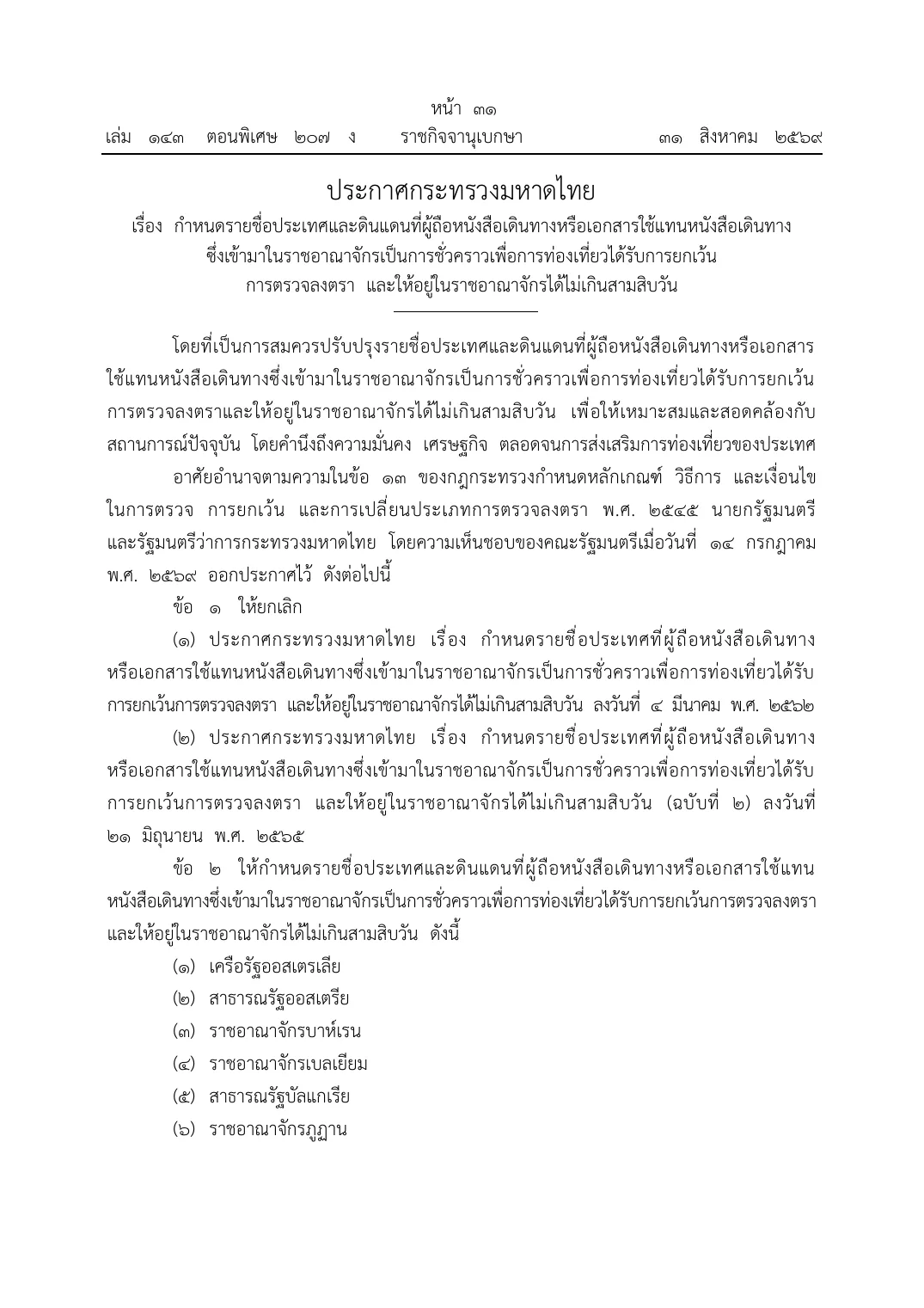
A Ministry of Interior announcement published in the Royal Gazette on 31 August 2026 lists the countries and territories whose holders enter temporarily for tourism without a visa. They may stay not more than thirty days. The announcement takes effect after fifteen days from its publication. The effective date is 15 September 2026.
The 60 countries and territories
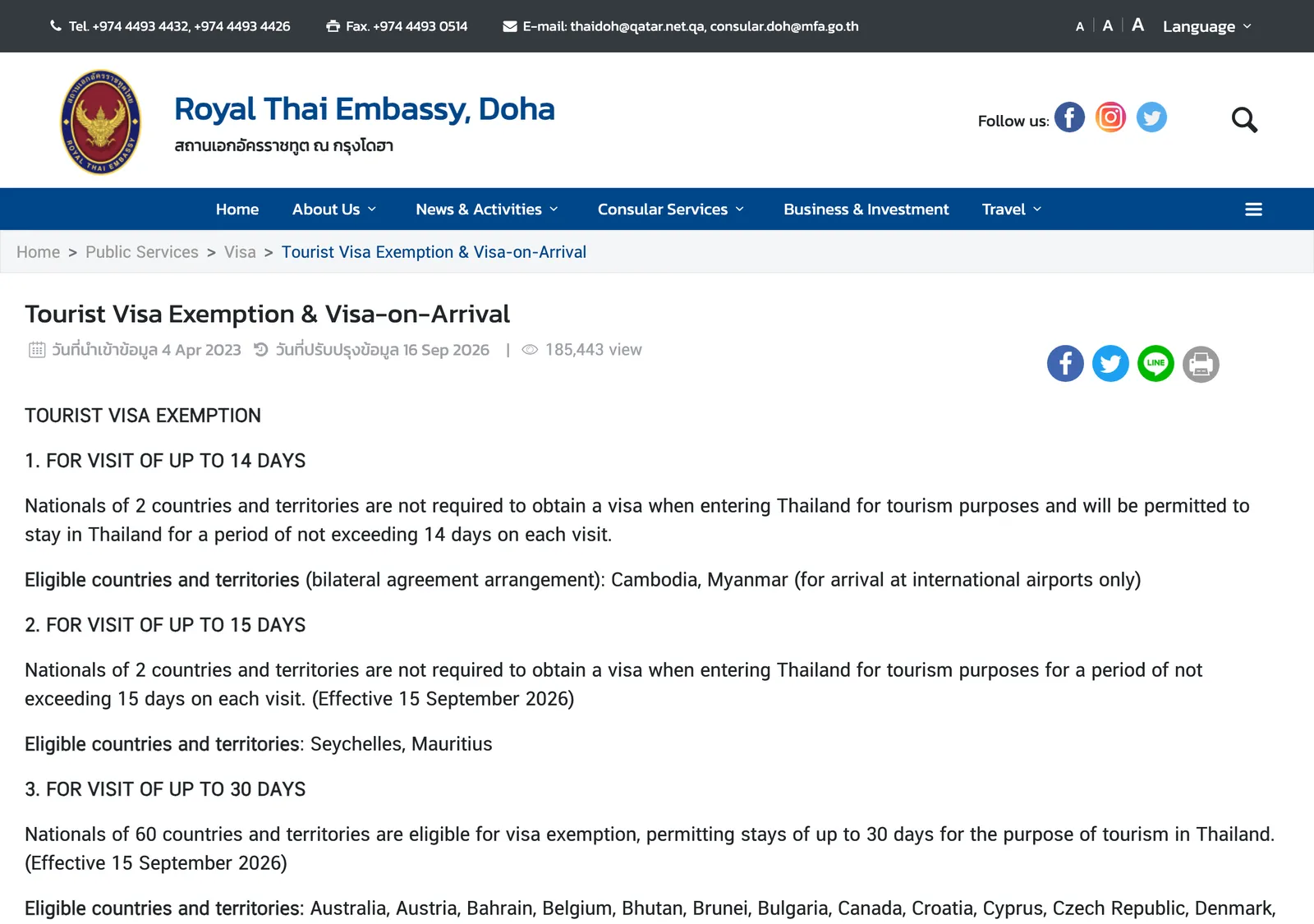
The Doha embassy’s English page counts 60 countries and territories on the 30-day list. In alphabetical order they are:
- Australia, Austria, Bahrain, Belgium, Bhutan, Brunei, Bulgaria, Canada, Croatia, Cyprus
- Czech Republic, Denmark, Estonia, Fiji, Finland, France, Georgia, Germany, Greece, Hungary
- Iceland, India, Indonesia, Ireland, Israel, Italy, Japan, Jordan, Kuwait, Kyrgyzstan
- Latvia, Liechtenstein, Lithuania, Luxembourg, Malaysia, Maldives, Malta, Netherlands, New Zealand, Norway
- Oman, Philippines, Poland, Portugal, Qatar, Romania, Saudi Arabia, Singapore, Slovakia, Slovenia
- South Africa, Spain, Sweden, Switzerland, Taiwan, Turkey, Ukraine, United Arab Emirates, United Kingdom, United States
The exemption does not apply to people holding a Travel Document for Aliens issued by these countries. Each country or territory sits on one list only, so your passport has a single stay length and cannot add the days of another scheme.
Other stay lengths
Some passports sit on shorter or longer lists. The Doha embassy page sets them out.
| Scheme | Stay | Countries |
|---|---|---|
| Main list | Up to 30 days | The 60 above |
| Gazette 15-day list | Up to 15 days | Seychelles and Mauritius |
| Bilateral, 14 days | 14 days each visit | Cambodia, Myanmar (international airports only) |
| Bilateral, 30 days | Up to 30 days | China, Hong Kong, Kazakhstan, Laos, Macao, Mongolia, Russia, Timor-Leste, Vietnam |
| Bilateral, 90 days | 90 days each visit | Argentina, Brazil, Chile, Korea (ROK), Peru |
| Visa on Arrival | Up to 15 days | Azerbaijan, Belarus, Serbia |
Visa on Arrival is a separate scheme with its own conditions. It costs THB 2,000, cash only and non-refundable. Those who enter this way generally cannot file for an extension, except in special cases of illness that prevent them from travelling. The embassy page does not say which illnesses count, so ask the Immigration Bureau.
If your passport is not on a list
After the old exemptions end, travellers may enter under the new visa schemes, under bilateral visa exemption agreements, or with an appropriate visa applied for through the Thailand e-Visa system. The bilateral 30-day row in the table above and the shorter lists cover most other passports. Russia is one example: its ordinary passport holders may stay up to 30 days.
If your passport appears nowhere above, apply for a visa before you fly. The tourist visa (TR) lets holders stay up to 60 days. The visa types guide compares it with the visas for longer stays.
What changed from 60 days
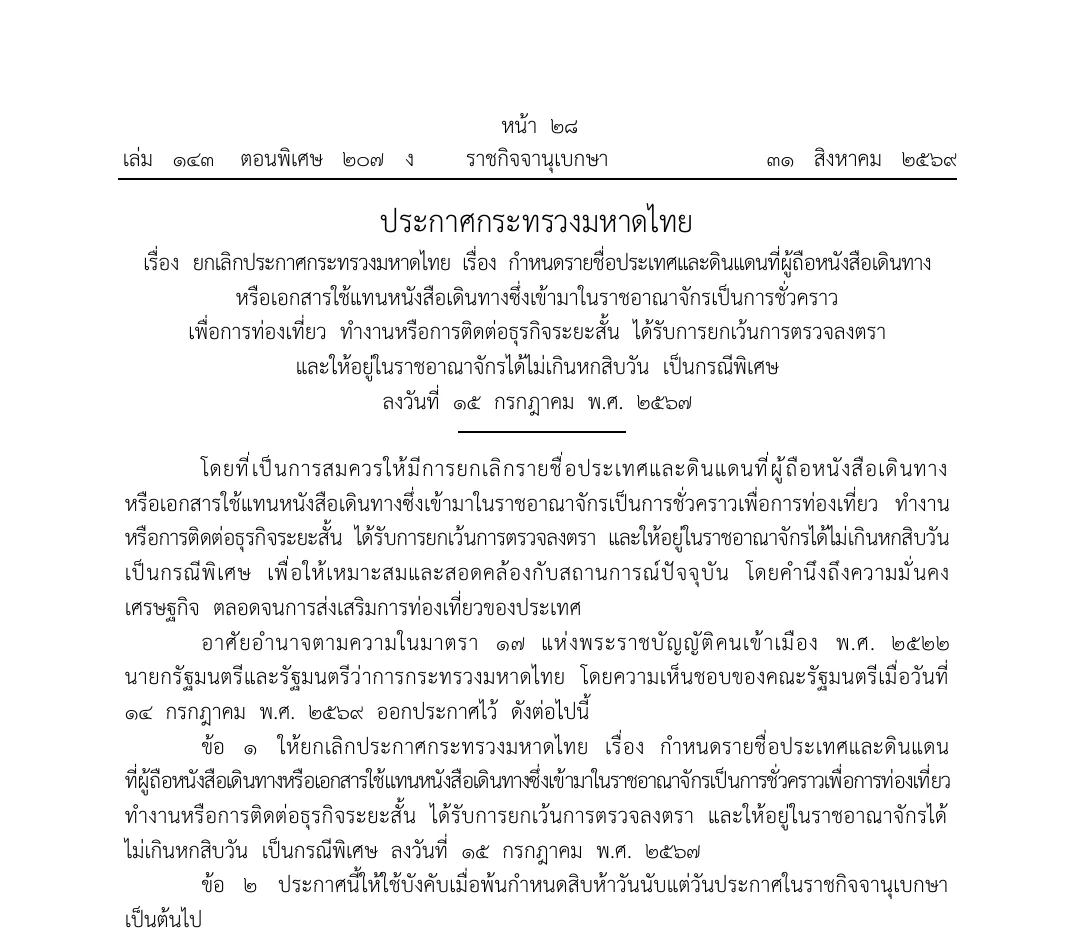
Until this change a special 60-day exemption existed. The Ministry of Interior announcement dated 15 July B.E. 2567 that gave it is repealed. The new announcement takes effect after fifteen days from its publication, which is 15 September 2026.
Foreign nationals admitted under the previous measures before 15 September 2026 may remain until the period of stay granted to them expires. The 2026 changes guide dates each step.
What officers check at the border
On arrival, foreign visitors must present the necessary documents, including proof of accommodation and proof of onward travel scheduled within 30 days of the arrival date. Officers may request additional documents at their discretion, such as proof of sufficient funds of THB 20,000 per person, or conduct an interview.
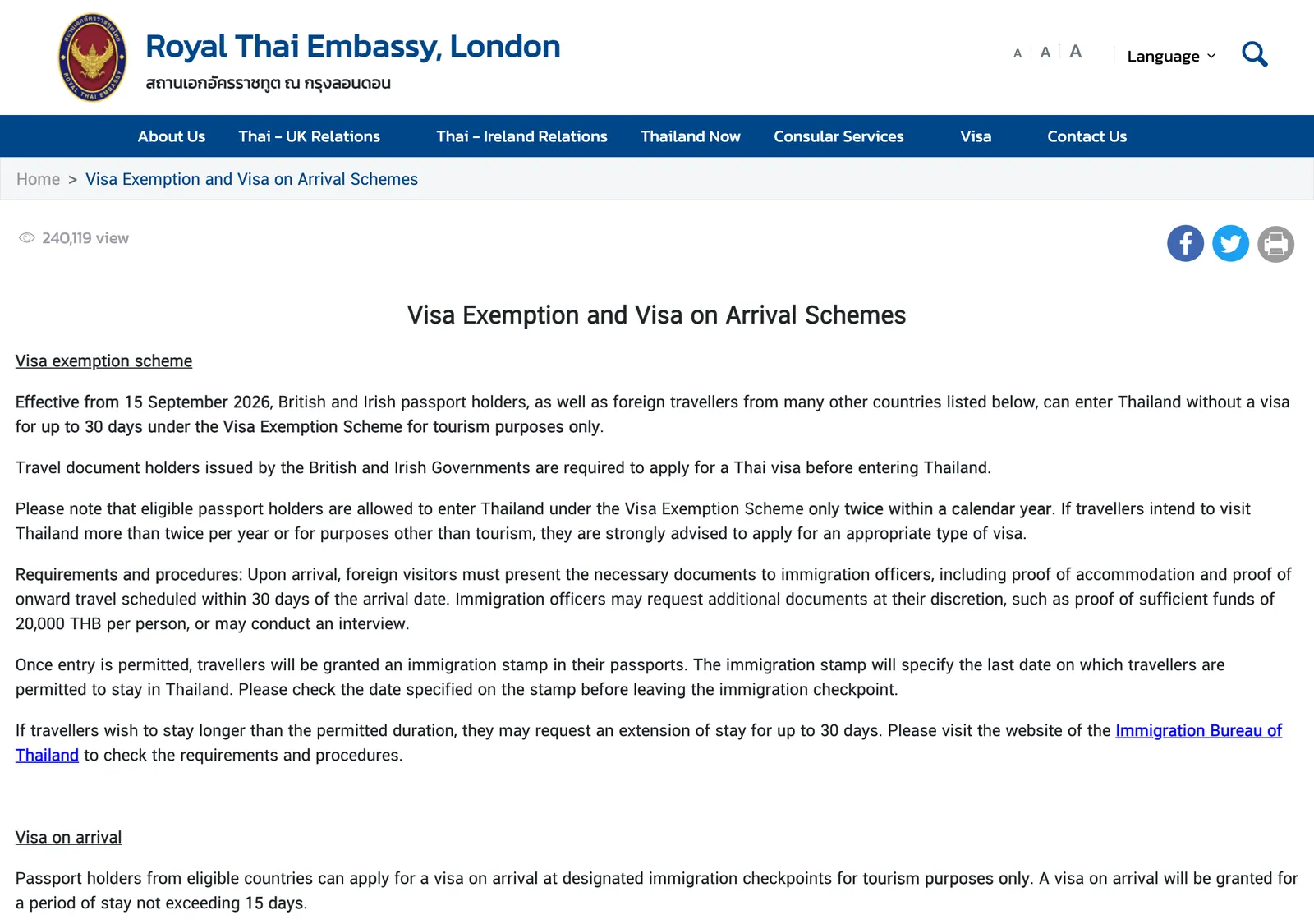
Two embassy pages word the funds rule differently. One wording requires adequate cash of or equivalent to THB 20,000 per person or THB 40,000 per family. The other adds that officers may ask for proof. Carry the amount either way.
The entry is for tourism purposes only. Foreigners are not allowed to work unless they are granted a work permit.
The arrival card
All non-Thai nationals entering by air, land or sea complete the Thailand Digital Arrival Card online within 3 days prior to arrival. It must also be submitted for every entry. The TDAC guide has the steps.
60 ถนน มหิดล Suthep, Mueang Chiang Mai District, Chiang Mai 50200, Thailand · Open in Google Maps (opens in a new tab)
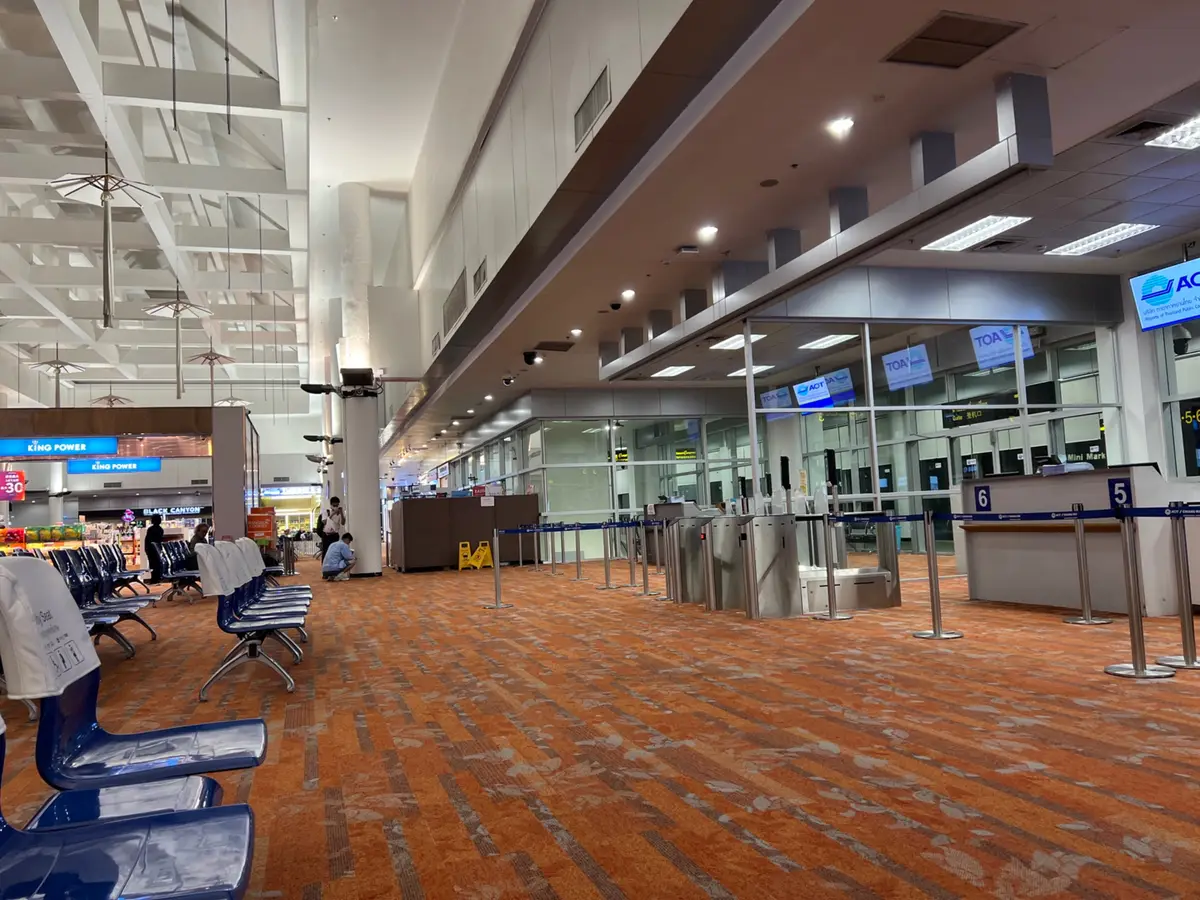
Entering by land
Where you enter via land-border checkpoints, entry is allowed not more than twice per calendar year. The limit excepts nationals of Malaysia, Brunei, Indonesia and Singapore. Travellers who plan more than twice a year, or something other than tourism, are strongly advised to apply for an appropriate visa. For remote work or activity stays that visa is the DTV, covered in the DTV guide.
Check the stamp
The stamp shows the last date on which you may stay. Read it before you leave the checkpoint.
How to extend your stay in Chiang Mai
If you wish to stay longer than the permitted duration, you may request an extension of stay for up to 30 days. The extension can be granted at the discretion of the immigration officer, and you must apply before the end of the permitted period of stay. The applicant contacts the immigration office in the area where they reside.
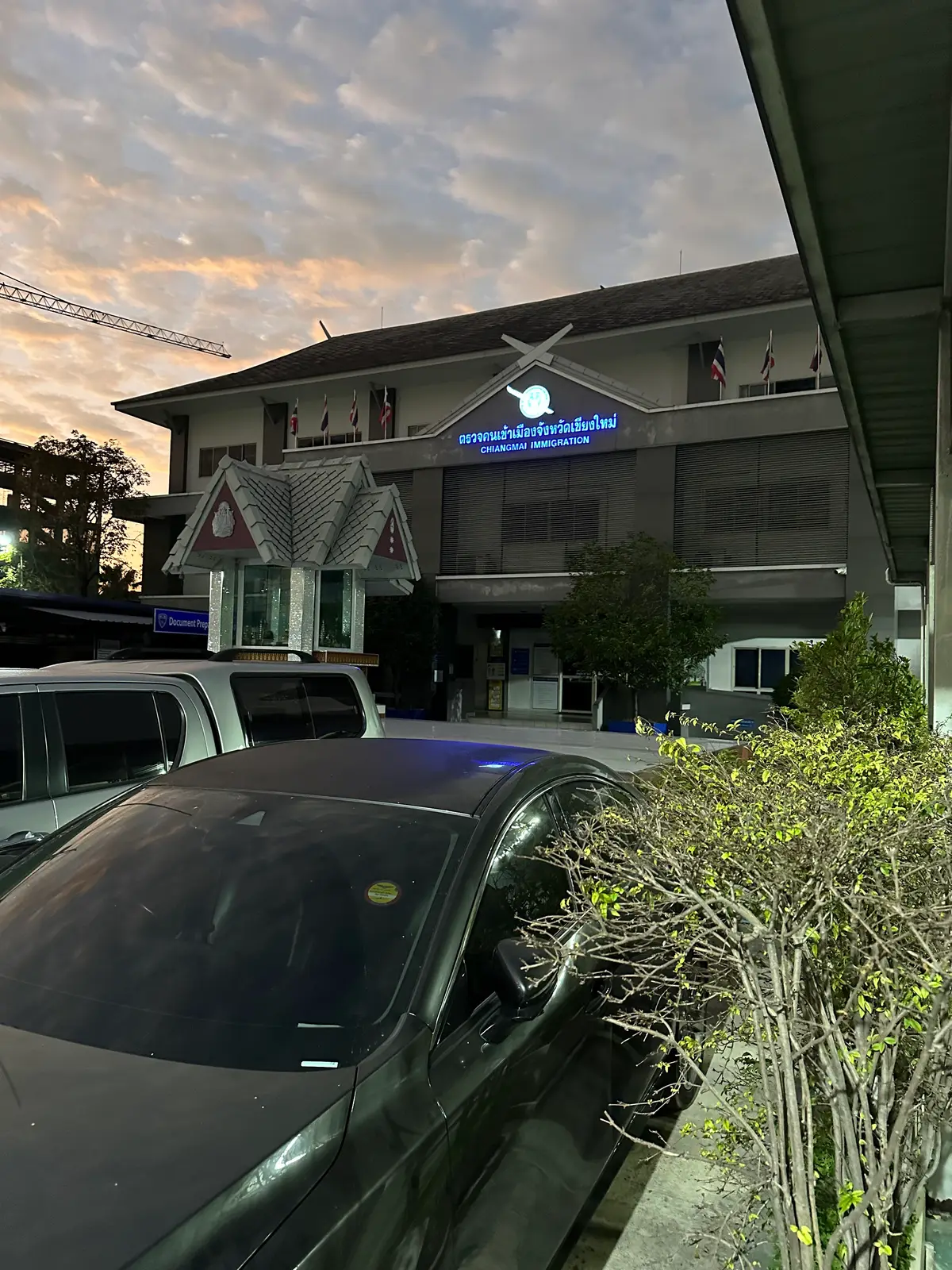
Where to file and the steps
For Chiang Mai that is Chiang Mai Immigration, 71 Moo 3, Sanam Bin Rd., Suthep Sub-district, Mueang District, Chiang Mai 50200. The office telephone is 053 201 755.
71 ถนนสนามบิน Suthep, Mueang Chiang Mai District, Chiang Mai 50200, Thailand · Open in Google Maps (opens in a new tab)
The Bureau’s handbook describes the tourist extension this way. A 2024 snapshot of its fee schedule shows the same fee:
- Fill in the application form TM.7.
- Bring your passport, the original and 1 copy.
- Pay the fee of THB 1,900.
The same handbook says the service runs Monday to Friday, except official holidays. It gives counter hours of 08.30-16.30, with a lunch break, and a total time of 40 minutes once the documents are complete. These are national handbook figures, so confirm the day’s hours and the paper list by phone.
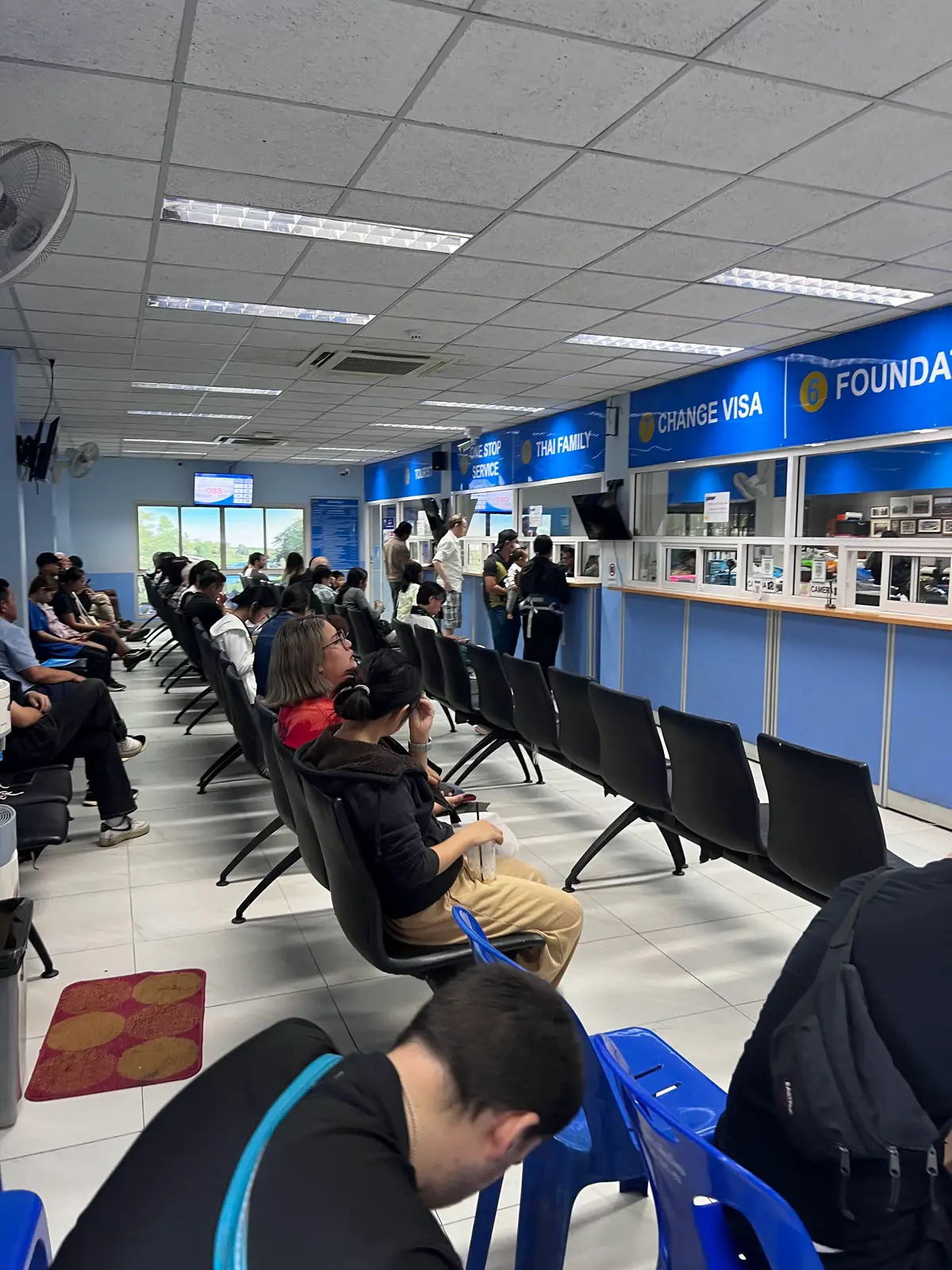
Online e-extension
Chiang Mai Immigration also offers to apply for an extension of stay in the Kingdom of Thailand through the online system. The office marks the service as valid only for certain visa types. Its poster is titled E-Extension for Tourism. The office’s news page points to the e-extension site.
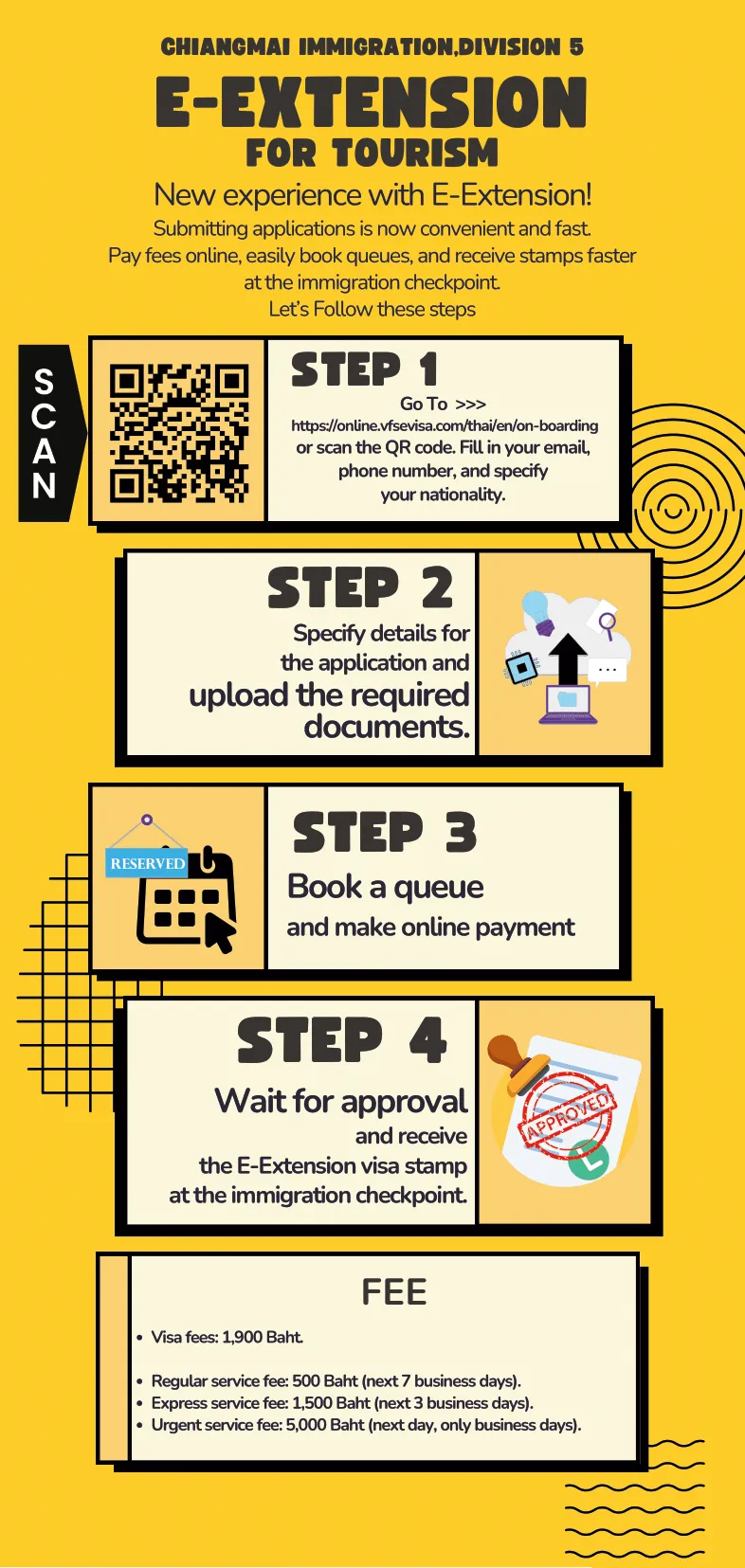
The poster lists four steps:
- Fill in your email, phone number and nationality.
- Specify the details of the application and upload the required documents.
- Book a queue and make the online payment.
- Wait for approval and receive the e-extension stamp at the immigration checkpoint.
The fee box lists a visa fee of THB 1,900. It adds a service fee that depends on speed:
| Service | Fee | Time |
|---|---|---|
| Regular | THB 500 | Next 7 business days |
| Express | THB 1,500 | Next 3 business days |
| Urgent | THB 5,000 | Next day, business days only |
The poster is from 2024, so check the current fees on the portal.
If 30 days is not enough
An extension adds up to 30 days at most. With the 30 days on entry, the ceiling is 60 days. The officer decides whether to grant it.
For a longer plan, look at the other visa routes. The visa types guide compares the routes, and the tourist extension guide goes deeper on the office visit. The DTV guide covers remote work and activity stays.
The overstay fines guide covers what happens after the stamp date. Apply for any extension before the permitted period ends.
Photo credits
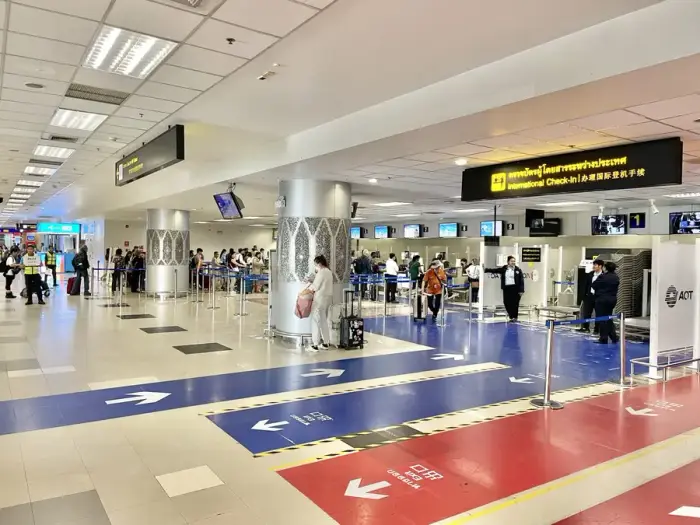
- Photos and clips uploaded to Google Maps (Chiang Mai International Airport on Google Maps (opens in a new tab), Chiang Mai Immigration Office on Google Maps (opens in a new tab)) by Jordan Kuo, ben chidgey, Seline.
Step by step
- Check your passport against the listsFind your country on the list of 60, or on one of the shorter lists.
- File your TDACAll non-Thai nationals complete the Thailand Digital Arrival Card online within 3 days before arrival.
- Show your documents at the borderPresent proof of accommodation and of onward travel scheduled within 30 days of arrival; officers may ask for more.
- Read the date on your stampThe stamp shows the last date you may stay; check it before you leave the checkpoint.
- Extend before the stamp dateApply for an extension before the end of the permitted period, at the office for your area.
Not confirmed: Whether a visa-exempt entry qualifies for the online e-extension. Check the portal before you queue. Which papers and hours the counter uses today. Call 053 201 755 before you go. How many extension days the officer grants. Ask at the counter.
Reach readers planning life in Chiang Mai. Advertise → hello@chiangmaijao.com
Common questions
Do I need a visa for Thailand in 2026?
Nationals of 60 countries and territories are eligible for visa exemption, for stays of up to 30 days for tourism, effective 15 September 2026. Other passports may enter under bilateral agreements, or with a visa applied for through the e-Visa system.
Is the 60-day visa exemption still in force?
The Ministry of Interior announcement that gave a special 60-day exemption, dated 15 July B.E. 2567, is repealed.
How do I extend a visa-free stay in Chiang Mai?
File form TM.7 with your passport at the immigration office for the area where you live. The fee is THB 1,900. Apply before the permitted stay ends.
How much cash must I show at the border?
Travellers under the tourist exemption schemes must possess adequate cash of or equivalent to THB 20,000 per person or THB 40,000 per family. Officers may ask for proof of funds at their discretion.
How many times can I enter visa-free in a year?
Entry through land-border checkpoints is allowed not more than twice per calendar year. Malaysia, Brunei, Indonesia and Singapore are excepted.
I entered before the change took effect. Did I lose days?
Foreign nationals admitted under the previous measures before 15 September 2026 may remain until the period of stay granted to them expires.
Can I work on a visa-exempt entry?
The entry is for tourism purposes only. Foreigners are not allowed to work unless they are granted a work permit.
What is the address of Chiang Mai Immigration?
71 Moo 3, Sanam Bin Road, Suthep Sub-district, Mueang District, Chiang Mai 50200. The telephone is 053 201 755.
Read next
Places in this guide
General information checked against the sources listed above, not legal advice for your situation. Rules and office practice change; confirm with the immigration office or a licensed adviser before you act. See how guides are checked.
Spotted an error? Report it.