Air Quality in Chiang Mai: Reading PM2.5, AQI and Masks
Open Air4Thai and read the colour. AQI 100 equals the Thai PM2.5 standard of 37.5 micrograms. From orange, 101 and up, the index asks the general public to wear a PM2.5 mask outdoors. At red, 201 and up, it asks everyone to stop outdoor activities.
On this page
Your phone shows a number and a colour. The Thai index turns that number into five levels, from light blue at 0 to 25 up to red above 200. AQI 100 equals the standard, and a value above 100 means pollution exceeds it.
The five Thai AQI levels
The Pollution Control Department published the index in the Royal Gazette in July 2023, with set advice for each colour.
- Light blue, AQI 0-25, very good: everyone can live normally.
- Green, AQI 26-50, good: the general public can do outdoor activities as normal. At-risk people watch for abnormal symptoms such as frequent cough, shortness of breath, chest pain or dizziness.
- Yellow, AQI 51-100, moderate: the general public reduces time on strenuous outdoor activity or exercise. At-risk people use a PM2.5 mask every time they go outside, reduce strenuous activity and consult a doctor quickly if symptoms appear.
- Orange, AQI 101-200, starting to affect health: the general public uses a PM2.5 mask every time outside and limits strenuous outdoor activity. It watches for cough, difficulty breathing and eye irritation.
- Red, AQI 201 and above, affecting health: all people stop outdoor activities. Anyone who has to go out uses protection such as a PM2.5 mask every time.
The at-risk group is people over 60, children aged 5 or under, pregnant women, and people with heart, blood-vessel or respiratory disease. At orange they avoid strenuous outdoor activity, follow their doctor’s advice and go to a doctor quickly if symptoms appear. At red, people with underlying disease stay in an area safe from air pollution and keep medicine and equipment ready.
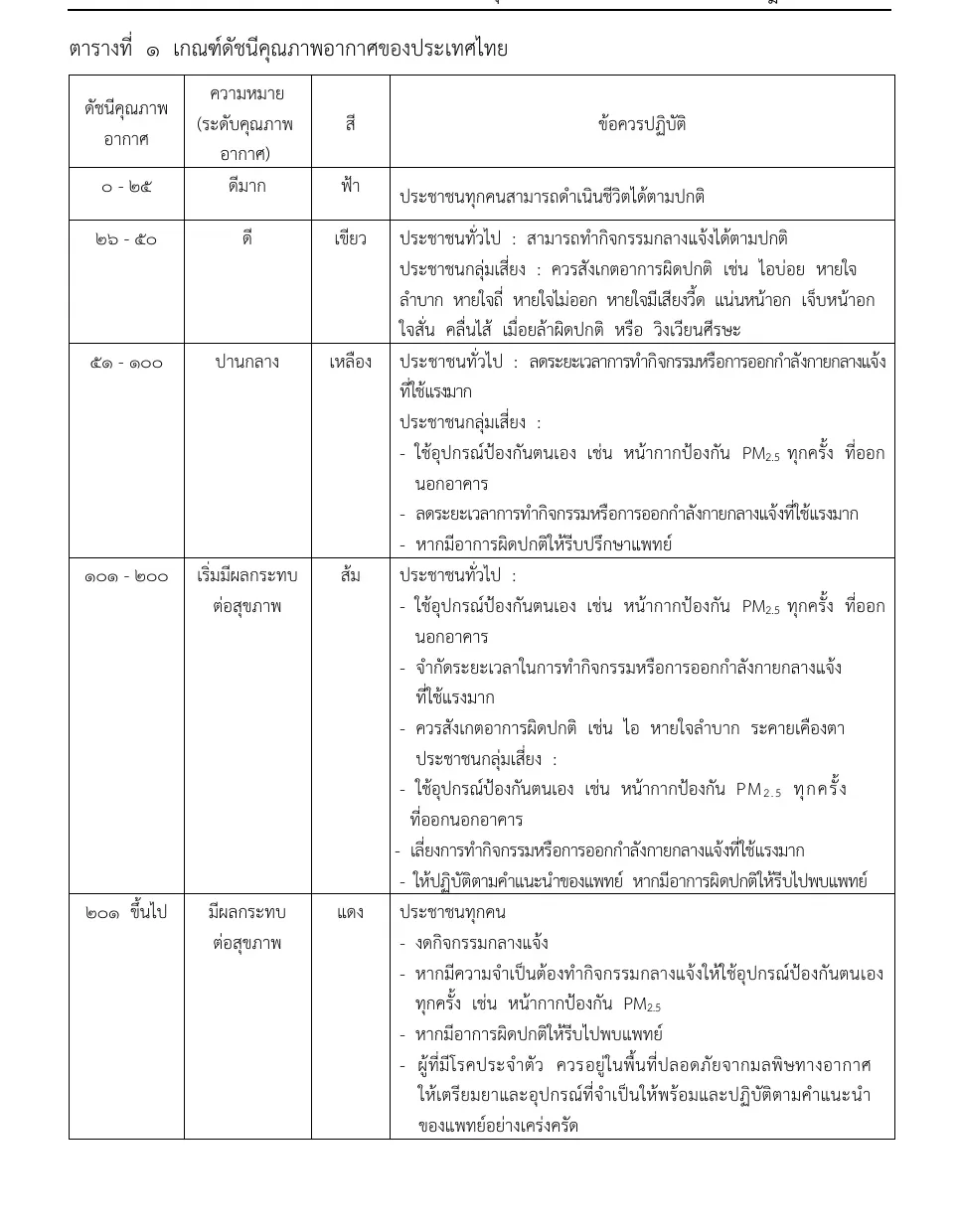
PM2.5 limits per level are in the table the notice attaches. Light blue is PM2.5 of 0 to 15.0, green 15.1 to 25.0, yellow 25.1 to 37.5, orange 37.6 to 75.0, and red 75.1 and above.
Where to read the official numbers
The Pollution Control Department’s Chiang Mai office names the Air4Thai website, air4thai.pcd.go.th, and the Air4Thai app for following air quality reports.
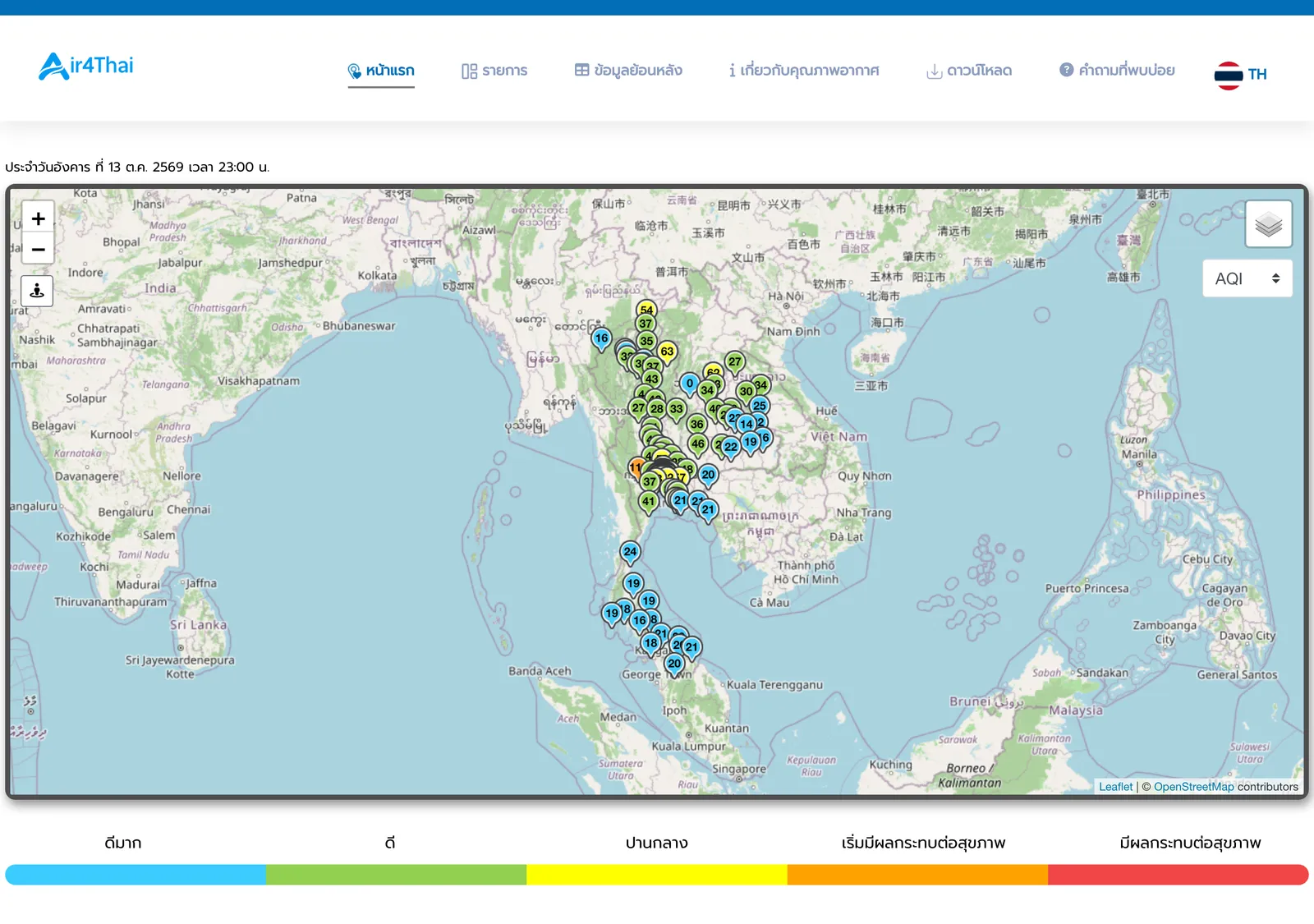
Air4Thai’s station feed lists City Hall, Chiangmai, at Chang Phueak in Mueang. It also lists Yupparaj Wittayalai School at Si Phum in Mueang. Those are the two city stations in the feed; pick the one closer to where you live or sleep.
A dated snapshot from the City Hall entry shows the format. On 14 October 2026 at 06:00 it showed PM2.5 of 19.2 and an AQI of 36. It is an example, so open Air4Thai for the live number.
The Chiang Mai PCD office’s red-day announcements add more places. On 1 April 2026 it listed Si Phum at 82.0 and Suthep at 80.3, both in the city.
Three details keep you from misreading a number:
- The index takes the highest of six pollutants’ sub-indices as the AQI at that moment, so PM2.5 is one input among six.
- PM2.5 enters the index as a continuous 24-hour average. The Chiang Mai office’s announcements use the 24-hour average at 07:00.
- An announcement is a dated reading. On 1 April 2026 the office reported 110.3 micrograms at Chang Phueak.
The Thai AQI against the US scale
IQAir’s AirVisual uses the US EPA standard to calculate AQI and its colour code. IQAir itself says AQI is computed in different ways around the world. Air4Thai follows the Thai index described above.
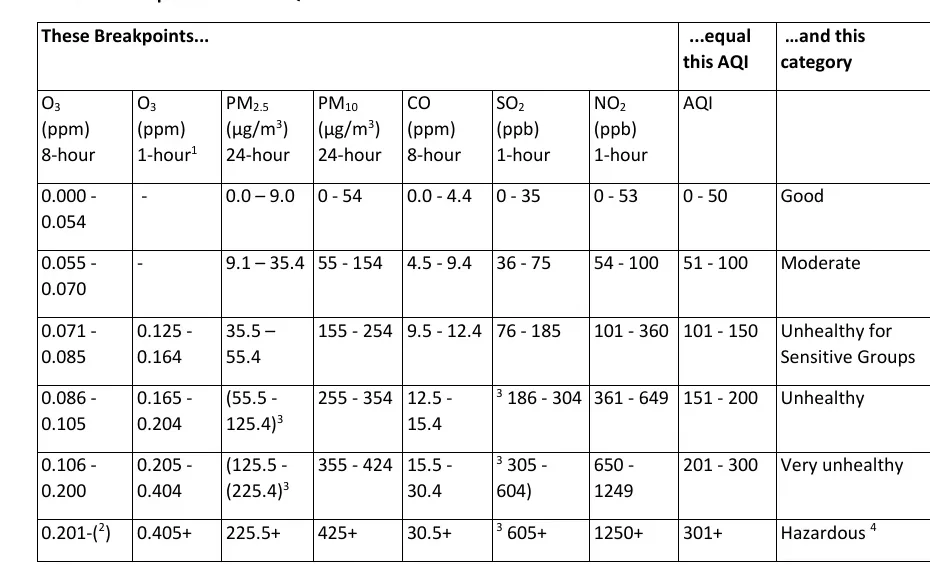
The US and Thai scales differ, so the same colour name does not mean the same PM2.5. Compare the micrograms, not the colour name. A US EPA document of May 2026 puts PM2.5 of 9.1 to 35.4 in “Moderate”, AQI 51 to 100. Its “Good” level stops at 9.0.
On the Thai table, the City Hall reading of 19.2 sits in the green “good” band of 15.1 to 25.0. The same reading falls inside the US “Moderate” range of 9.1 to 35.4. So an app on the US scale can show a worse colour than Air4Thai for the same air. Thai yellow ends at 37.5, where the Thai standard sits.
Choose and fit a mask
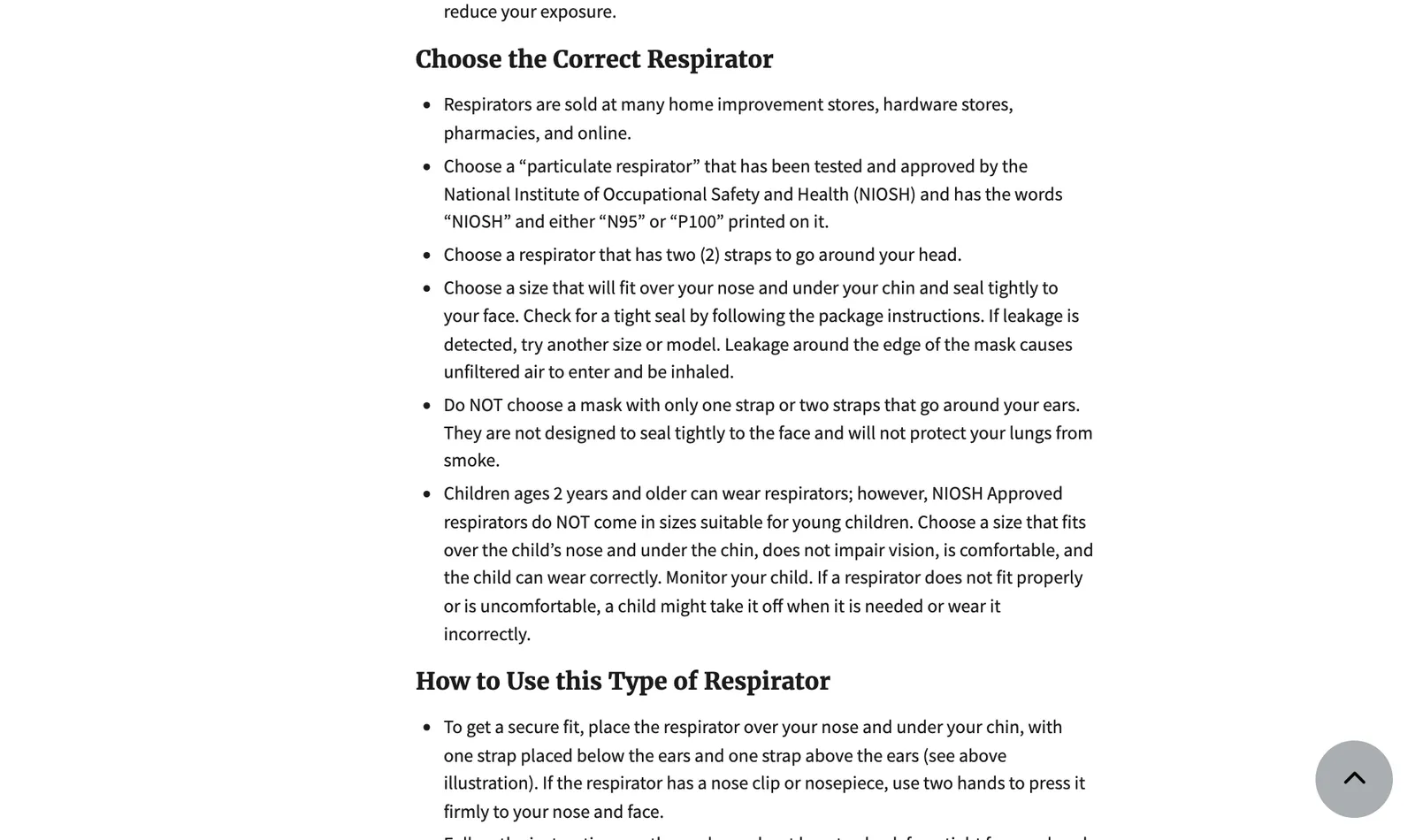
The Thai index names a “PM2.5 mask” without a rating. US EPA guidance says what to look for. N95 respirators, worn as the maker instructs with gaps between face and mask minimised, significantly reduce exposure to smoke particles.
- Choose a particulate respirator approved by the US institute NIOSH, with “NIOSH” and either “N95” or “P100” printed on it.
- Choose one with two straps that go around the head.
- Do not choose a mask with one strap or two ear loops. They are not designed to seal tightly and will not protect the lungs from smoke.
- Do not rely on dust masks or bandanas.
- Keep the skin clean-shaven where the respirator touches the face, because a good seal is not possible with facial hair.
- Throw the respirator away when it gets harder to breathe through or if it gets dirty.
People with heart or lung problems, and pregnant women, are told to ask a doctor before using a respirator. EPA also says children under 2 years old should not wear one.
Children aged 2 and older can, but NIOSH-approved respirators do not come in sizes for young children. The index counts children aged 5 or under as at risk. For a child in that group, the steps that remain are staying inside and a cleaner-air room.
Where to buy a mask in Chiang Mai
There is no official list of shops. HomePro, a national chain that opened a Chiang Mai branch, HomePro Ruamchok, opposite Kad Ruam Chok in late 2024, shows mask prices online. On 14 October 2026 its listing had a 5-piece pack named as a FLOMAX N95 dust mask at THB 50 and a single YAMADA KN95 carbon mask at THB 29.
Those are the seller’s product names. EPA’s test is the word “NIOSH” with N95 or P100 printed on the respirator, so read the pack before you pay. For other shops, see the pharmacies guide.
Keep indoor air clean
EPA’s smoke guidance for homes is short and concrete.
- Stay inside with the doors and windows closed.
- Use a portable air cleaner powerful enough for the room that produces little or no ozone. Choosing an air purifier in Chiang Mai covers the sizing.
- Create a cleaner air room in your home, big enough for everyone in the household, with a portable air cleaner in it.
- Do not burn candles or incense or use gas, propane or wood-burning stoves, fireplaces or aerosol sprays.
- Do not smoke or vape, and do not vacuum unless the vacuum has a HEPA filter.
- Avoid cooking on a stove or in an oven, especially at high heat or for a long time.
- Close the windows and run the air conditioner in recirculate mode in a car.
- Keep enough food and medication on hand to last several days, so you do not have to go out for supplies.
- Air out the home when air quality improves.
The Thai index defines a safe area from air pollution as a place or room prepared in a public place or home to reduce exposure. EPA also suggests an air sensor to see which steps work.
If you feel unwell
At orange the Thai index asks people with symptoms to see a doctor quickly. At red it asks anyone with abnormal symptoms to go to a doctor quickly.
For a medical emergency, call 1669. The national emergency institute’s page also carries 1669 for a medical emergency.
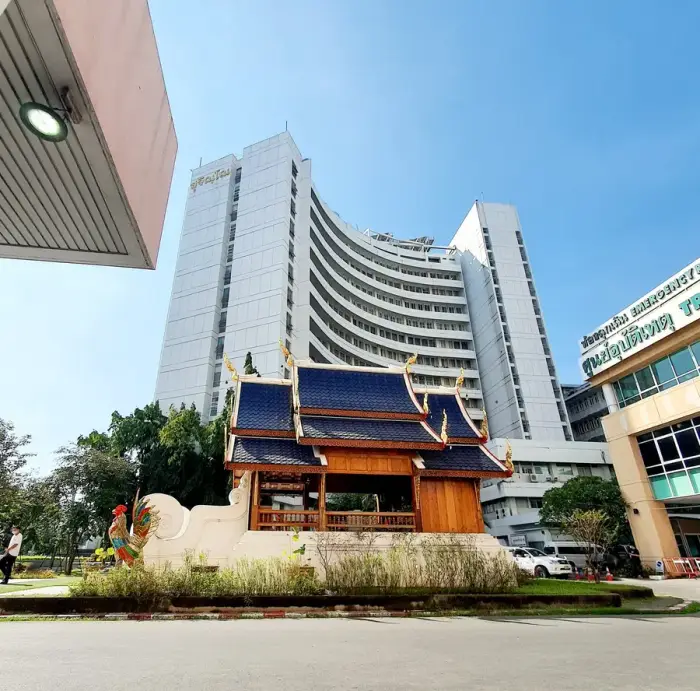
Maharaj Nakorn Chiang Mai Hospital is at 110 Inthawarorot Rd., Sri Phum, Mueang Chiang Mai 50200. Its Emergency Room is open 24 hours a day, 7 days a week.
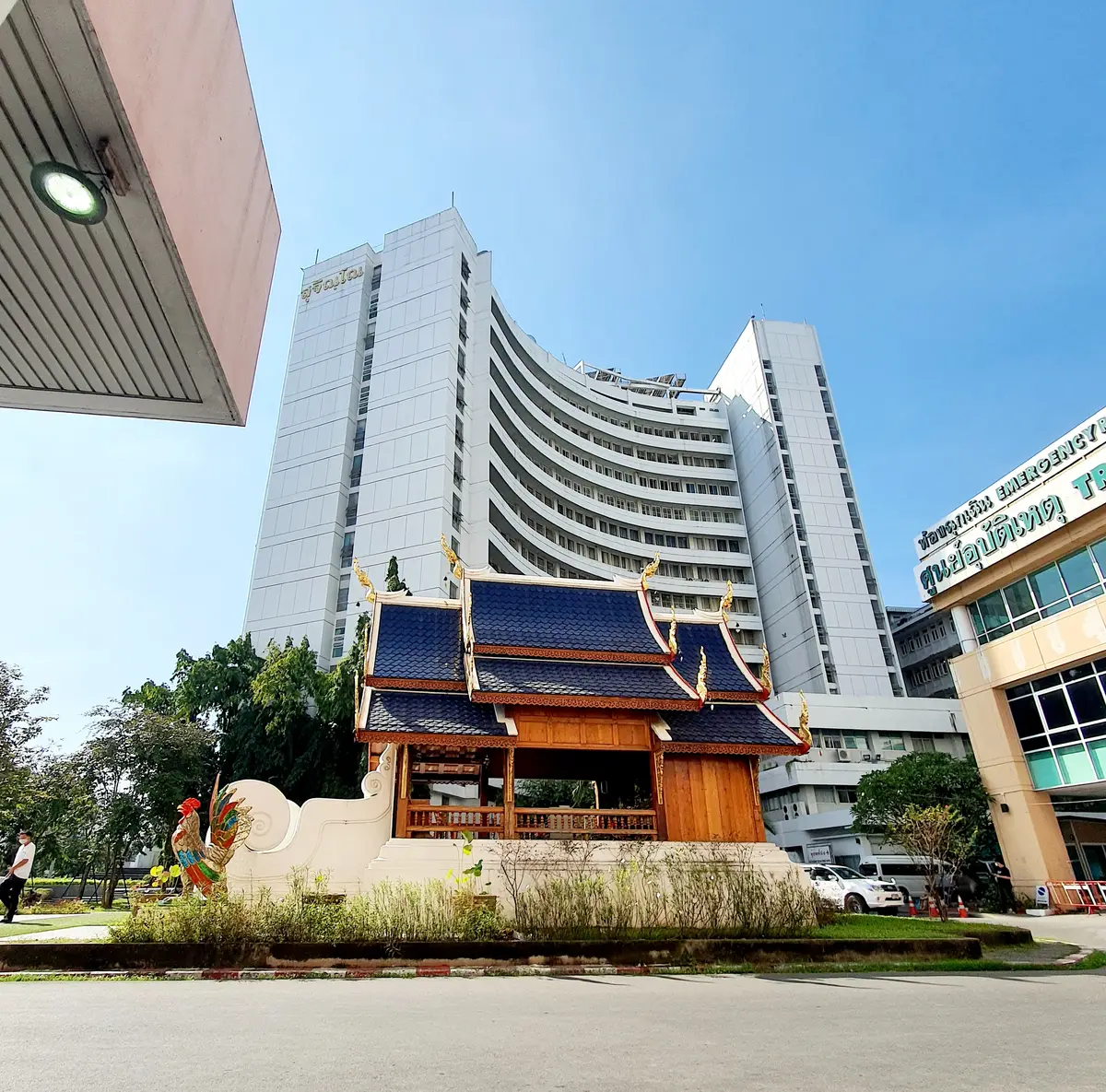
110 Intrawarorot Rd, Si Phum, Mueang Chiang Mai District, Chiang Mai 50200, Thailand · Open in Google Maps (opens in a new tab)
Open in Google Maps (opens in a new tab)
The wider season guide, with dates and the leave-or-stay question, is Chiang Mai burning season.
Photo credits
- Photos and clips uploaded to Google Maps (Maharaj Nakorn Chiang Mai Hospital on Google Maps (opens in a new tab)) by NICHY PRADA.
Step by step
- Open Air4ThaiUse air4thai.pcd.go.th or the Air4Thai app.
- Pick a Chiang Mai stationCity Hall in Chang Phueak and Yupparaj Wittayalai School in Si Phum are listed in the feed.
- Match the colour to the adviceAt orange, use a PM2.5 mask every time you go outside. At red, stop outdoor activities.
- Fit a respiratorChoose a NIOSH-approved N95 or P100 with two head straps and a tight seal.
- Clean the air at homeStay inside with doors and windows closed and use a portable air cleaner sized for the room.
- Get help for symptomsIf symptoms appear at orange or red, go to a doctor quickly.
Not confirmed: Whether masks sold in Chiang Mai carry the NIOSH mark EPA asks for: the HomePro listings name them N95 or KN95 without it, so read the pack. Which scale apps other than IQAir and Air4Thai use: not checked.
Reach readers planning life in Chiang Mai. Advertise → hello@chiangmaijao.com
Common questions
What AQI is unhealthy in Chiang Mai?
On the Thai index, AQI 100 equals the standard. Orange starts at 101 and the index calls it starting to affect health. Red starts at 201.
What PM2.5 number is the Thai limit?
The 24-hour limit is 37.5 micrograms per cubic metre. The yearly limit is 15.
Where do I see official readings?
Air4Thai, at air4thai.pcd.go.th or in its app. Its feed lists City Hall in Chang Phueak and Yupparaj Wittayalai School in Si Phum.
Do I wear a mask at orange?
The index asks the general public to use a PM2.5 mask every time they go outside at orange. At yellow, it asks at-risk people.
Which mask does EPA recommend?
A NIOSH-approved particulate respirator marked N95 or P100 with two head straps.
Do dust masks or bandanas protect?
Do not rely on dust masks or bandanas for protection from smoke.
Can children wear a respirator?
Children under 2 years old should not wear one. NIOSH-approved respirators do not come in sizes made for young children.
Is the Thai AQI the same as the US AQI?
The PM2.5 ranges differ. PM2.5 of 9.1 to 35.4 is US Moderate, while on the Thai table 25.1 to 37.5 is yellow.
Which scale does my app use?
IQAir uses the US EPA standard. Air4Thai is the Pollution Control Department's site, and it shows the Thai index.
Can a young child wear a mask?
Children aged 2 and older can wear respirators, but NIOSH-approved ones do not come in sizes for young children.
Read next
Places in this guide
General information checked against the sources listed above, not legal advice for your situation. Rules and office practice change; confirm with the immigration office or a licensed adviser before you act. See how guides are checked.
Spotted an error? Report it.