Dependent Visa in Thailand for Kids and Spouse: Chiang Mai
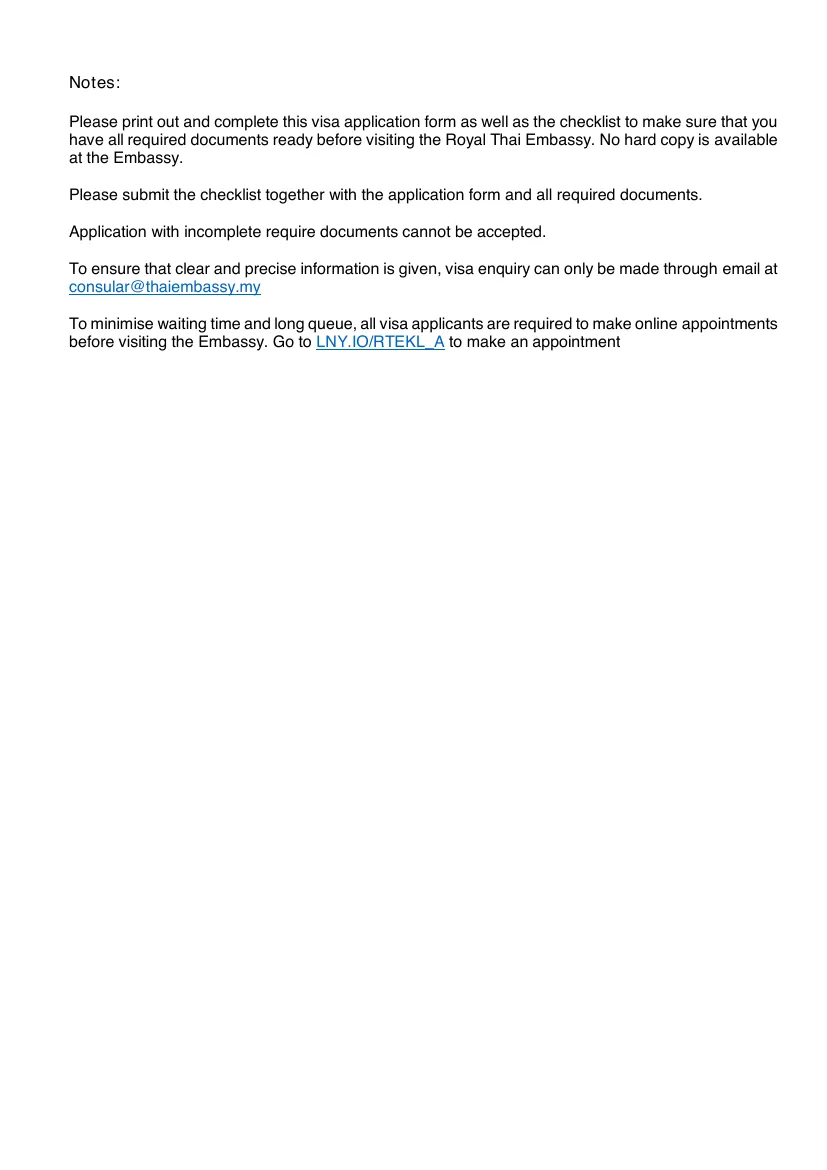
Spouses and children of a Non-B, ED or O-A holder apply for a Non-Immigrant O dependant visa at a Thai embassy. It is single entry and used within 90 days of issue. In Thailand the family extends to 1 year. A child must be unmarried, live in the household and be at most 20 full years old.
On this page
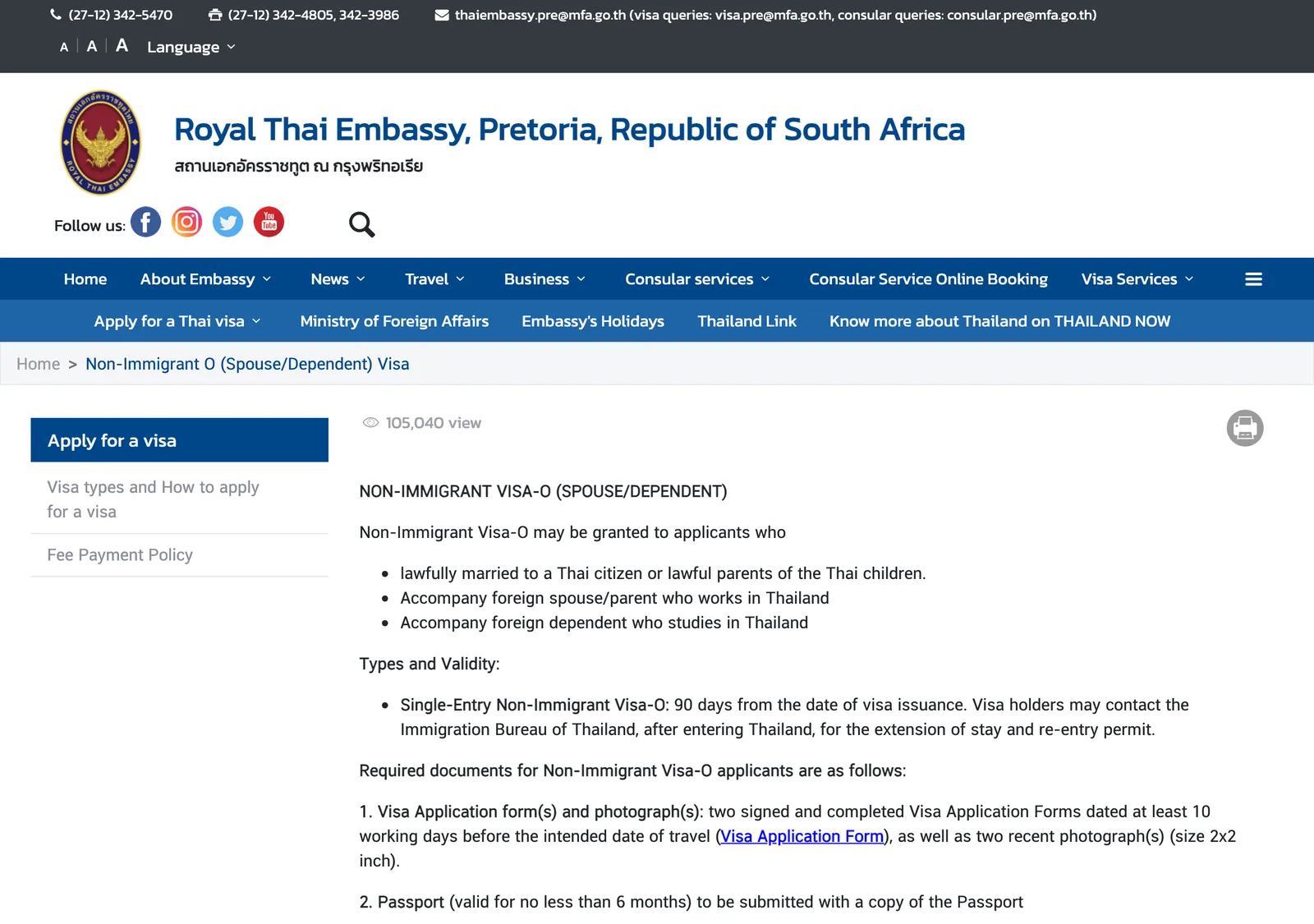
At the embassy counter the officer first looks for proof of the relationship, such as a marriage or birth certificate. For a child, the Pretoria embassy asks for a copy of the birth certificate, passport and identity card. Use the document list of the embassy in the country where you apply.
Which route fits your family
The Kuala Lumpur embassy issues the dependant visa to the spouse and children of an applicant for Non-Immigrant B (work), ED (study) or O-A. The Pretoria embassy adds accompanying a foreign spouse or parent who works in Thailand and a foreign dependant who studies there.
The codes in the visa name say what the main holder is doing in Thailand: Non-B is work, ED is study, and O-A is the long-stay retirement code. In Chiang Mai the extension is filed under a numbered clause of the Immigration Bureau order. Find your row:
| The main person in Thailand is | Clause |
|---|---|
| Working, retired or on another listed temporary stay, or on a visa code ending in A | 2.20 |
| Studying at a state or private school | 2.11 |
| A Thai national (you are their foreign family) | 2.18 |
| A person who has a residence in the Kingdom | 2.19 |
DTV and LTR families use their own rules. The spouse and children of a DTV holder can also get a DTV. The spouse and children of an LTR holder or applicant can apply for a dependants’ visa.
Step 1: the Non-Immigrant O visa at an embassy
The visa is single entry and must be used within 90 days of issue. On arrival the holder gets an initial stay of up to 90 days.
For a worker’s family, the Kuala Lumpur embassy asks for a copy of the main applicant’s Thai work permit, if applicable. For a student’s family, it asks for a cover letter from the main applicant’s university, college or school.
For a child who studies in Thailand, the Pretoria embassy also asks for proof of enrolment in a Thai school. It asks for a bank statement of at least THB 400,000 or equivalent for the last 3 months. That is the embassy’s finance test at the visa stage. The THB 500,000 in clause 2.11 below is a separate test for a student’s parent at the extension stage, not an alternative.
Documents issued by non-Thai authorities must be certified by the foreign ministry of the issuing country before submission.
If you apply in the US or the UK
A US or UK family files with its own embassy, and its checklist differs from the Kuala Lumpur and Pretoria ones above.
In the US, the Washington D.C. embassy’s Non-Immigrant O page is for foreign nationals staying with non-Thai family members residing in Thailand. The fee is USD 80 for a single entry valid 90 days. You upload every document online at the Thai e-visa site.
- Bank statements for three months, ending balance at least USD 1,000 per person per month or USD 2,000 per family.
- Proof of relationship, immediate family only: a marriage, birth or adoption certificate.
- Details of the family member in Thailand: ID card, passport with Thai visa page, work permit or stay permit.
- For a child under 20: the parents’ marriage certificate, or a notarized court order for sole custody.
Apply no more than 90 days before travel. Family members of Non-O holders do not qualify for a Non-O themselves. A family in California, Arizona, Washington state or the other western states listed by the Los Angeles consulate applies there instead. Los Angeles quotes up to 15 business days for processing.
In the UK, the London embassy has a Non-Immigrant Type O for staying with family resident in Thailand for more than 60 days, single entry. It asks for proof of relationship. It also asks for the family member’s ID, passport and visa page or stay permit.
Parents of an ED applicant under 20 use the same Non-O. The London fee page, last updated 1 Sep 2022, lists GBP 60 for a 3-month single-entry Non-Immigrant visa. Check the current fee before you pay.
Step 2: the 1-year extension in Chiang Mai
Once in Thailand, a Non-Immigrant O holder can apply to the Immigration Bureau to extend the stay to 1 year. The extended permit is valid for multiple entries.
Order 12/2568 has applied since 23 January 2025 and repealed Order 242/2566. A later bureau order replaced the attached table; see Not confirmed. Permission on grounds of necessity runs no more than 1 year at a time.
Families of workers, retirees and A-suffix codes
Clause 2.20 covers the family of an alien permitted to stay temporarily under a list of clauses, including 2.1 (business), 2.22 (retirement) and 2.32.
It also covers the family of a holder whose visa code ends in the letter A, except Non-Immigrant L-A. Permission is up to 1 year at a time. As in clause 2.11, the family member must hold an official or temporary-stay visa.
- A spouse must have a relationship that is genuine in law and in fact.
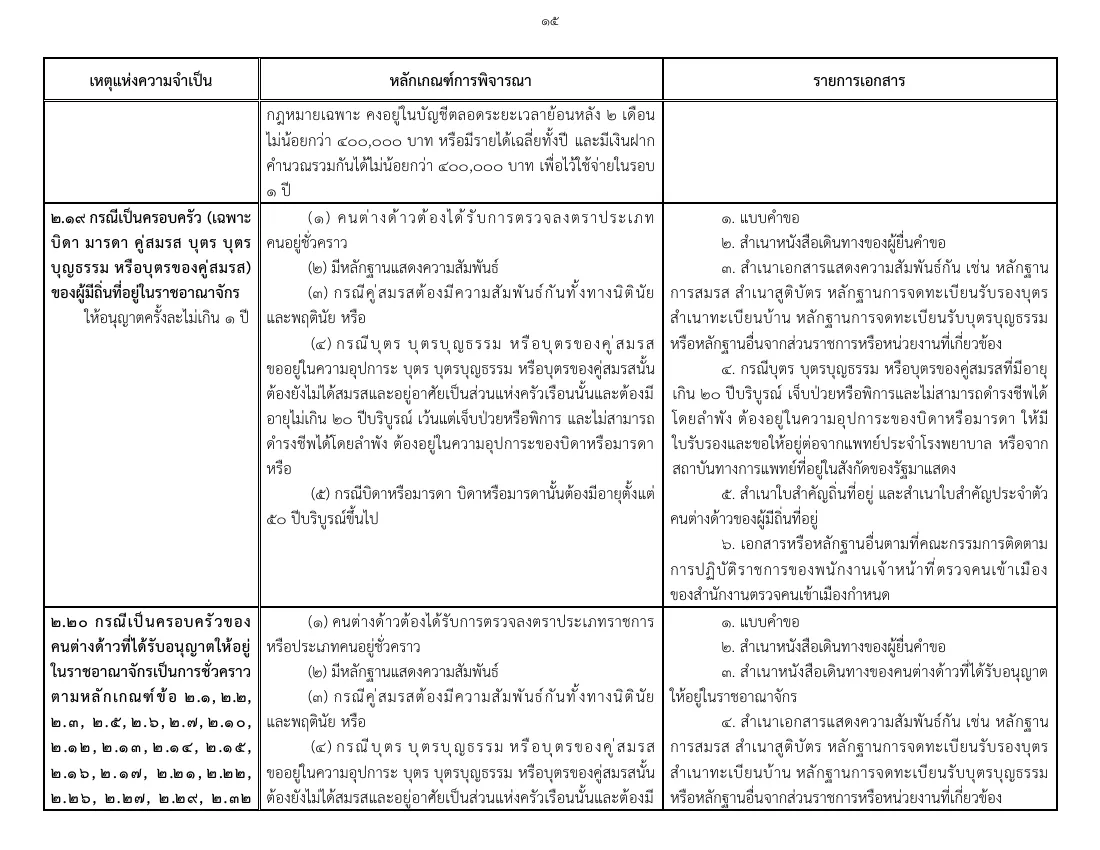
- A child must be unmarried, live as part of the household and be no more than 20 full years old.
- An ill or disabled child who cannot live alone must be under a parent’s care.
- A parent must be at least 50 full years old.
Families of students
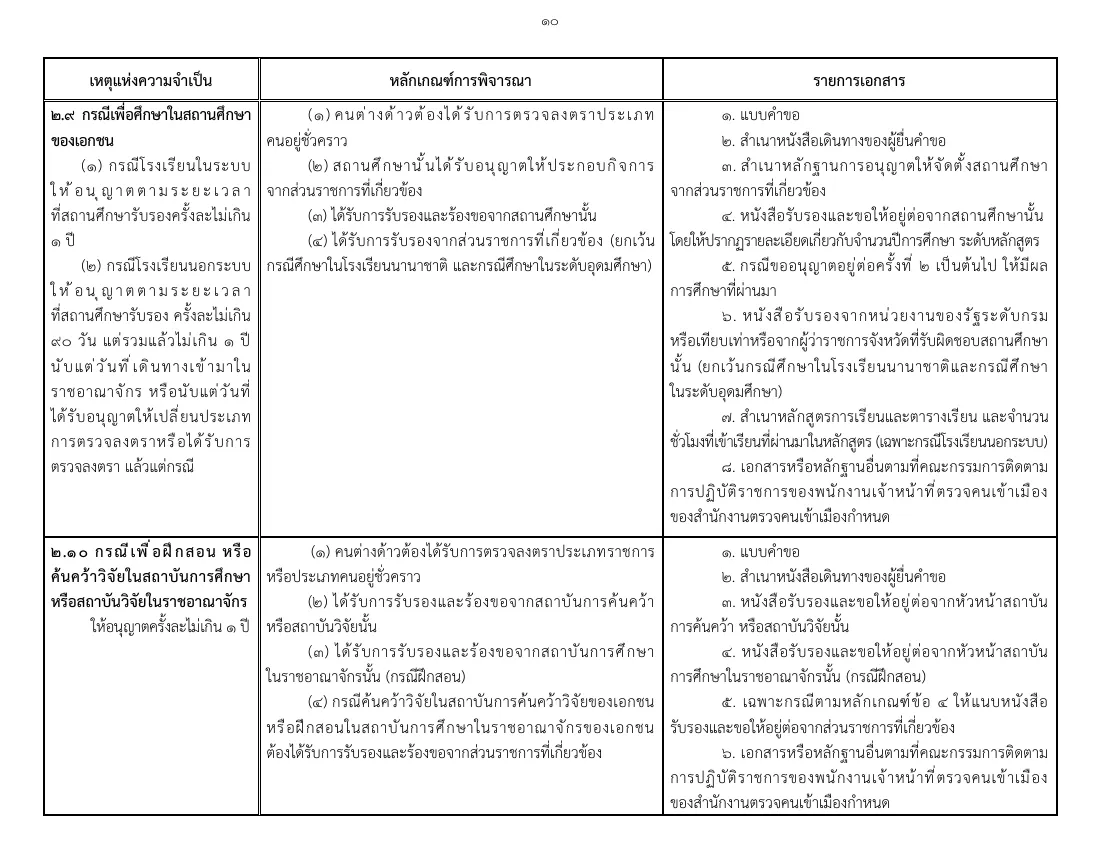
Clause 2.11 covers the father, mother, spouse, child, adopted child or spouse’s child of a foreigner permitted to stay to study under clause 2.8 or 2.9. Permission is up to 1 year at a time. The spouse and child tests read the same as for other families. A parent needs at least THB 500,000 in a Thai commercial bank, in the parent’s name, for the 3 months before filing.
Clause 2.8 covers study at a state school for the period the school certifies, no more than 1 year at a time. Clause 2.9 gives formal private schools up to 1 year at a time and non-formal schools 90 days at a time.
Documents for the relationship
The file includes a copy of the main permit holder’s passport and proof of the relationship. The proof can be a marriage record, a copy of the birth certificate, recognition of a child, a house registration copy or an adoption record.
A baby born in Thailand to a parent on one of these permits fits the child test and the birth-certificate copy above. No official page found describes a newborn’s first permit, so ask the office early; the birth registration guide covers the certificate itself.
While the application is considered, the officer can stamp appointments to hear the result, in total no more than 30 days from the day the permission ended. If the criteria are not met, the officer refuses and the foreigner leaves within 7 days of the day permission ended.
School enrolment and the visa
A child who studies at a school can hold the study permission, and the parents then apply as family under clause 2.11. The Pretoria embassy asks for proof of enrolment for a child who studies in Thailand. Schools, curricula and fees are in the international schools guide and the school fees comparison.
DTV and LTR families
A DTV holder’s spouse and children under 20 can also get a DTV.
LTR dependants include the spouse and children, and a child receives the visa until 20 years of age. The BOI’s 2025 criteria update says there is no limit on the number of dependants. The site’s table still shows a maximum of 4 per holder, so ask BOI when you apply.
Each LTR dependant creates a separate account, one account per person. The LTR visa fee is THB 50,000 per person.
After the extension: fees, reports and re-entry
The Immigration Bureau fee schedule lists THB 1,900 for an extension of stay, not refunded. A single re-entry permit costs THB 1,000 and a multiple one THB 3,800. Leaving without one cancels the permitted stay.
A foreigner permitted to stay temporarily notifies an immigration officer of the address every 90 days. The report can be made 15 days before the appointment date but not less than 7 days before. The 90-day report guide has the channels and the late fine.
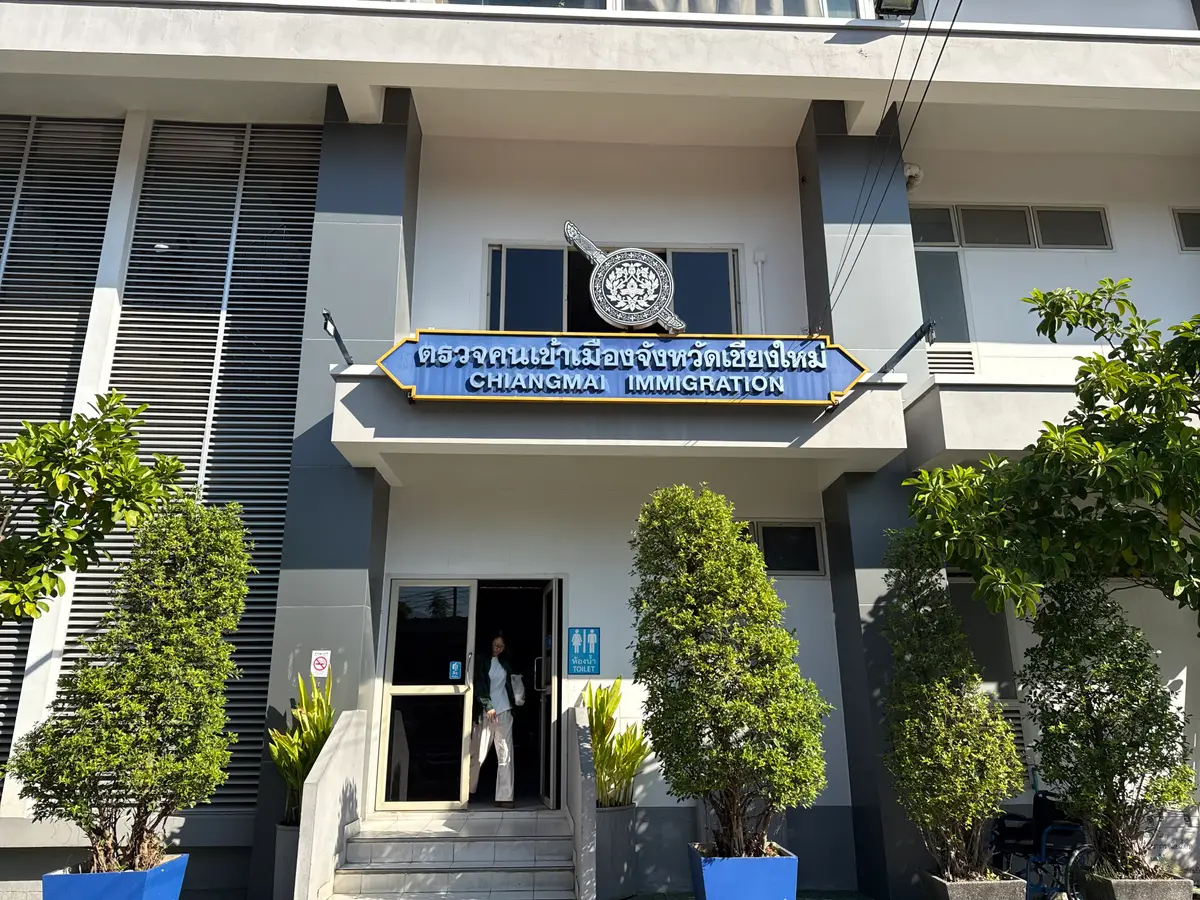
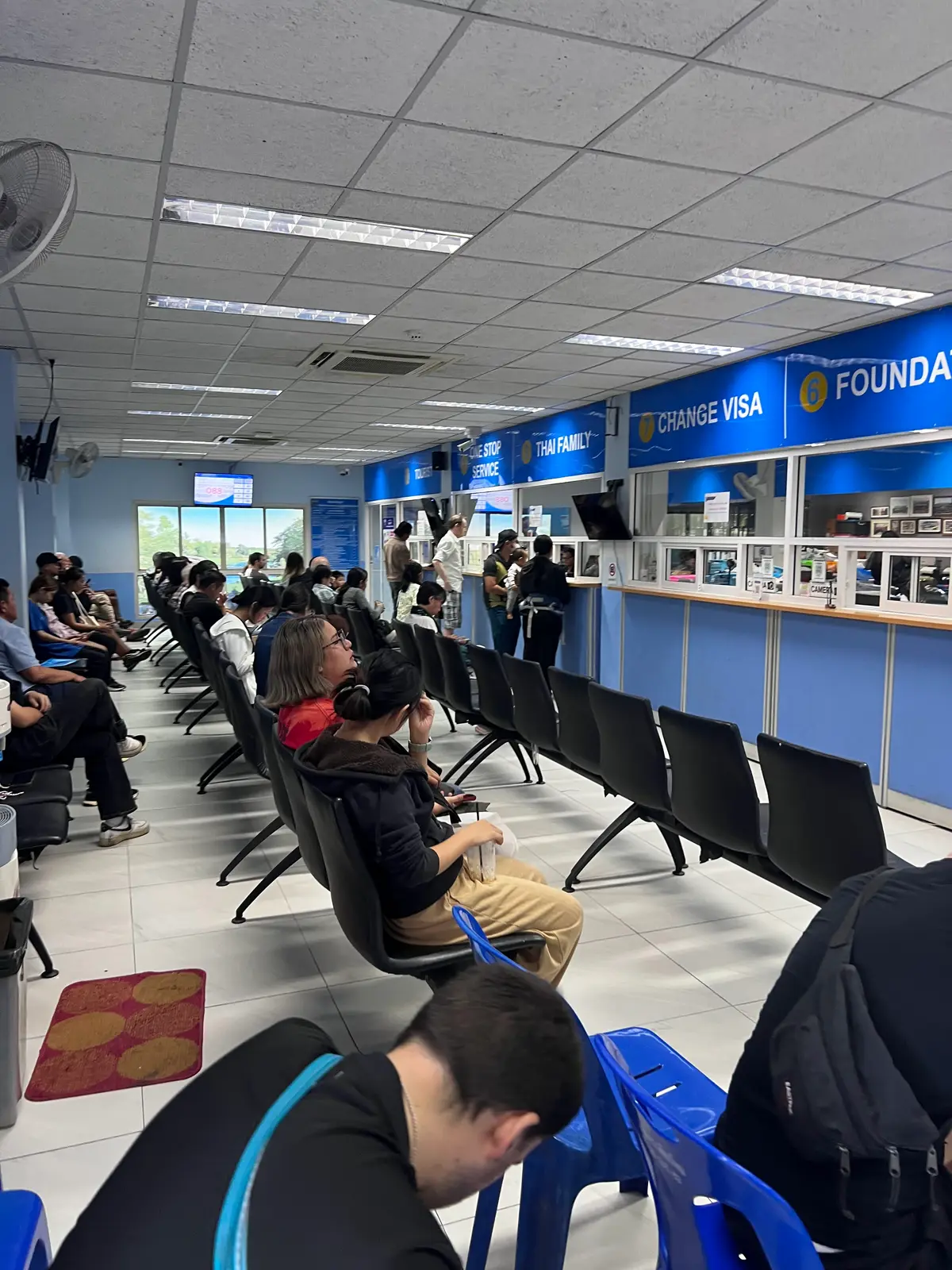
71 ถนนสนามบิน Suthep, Mueang Chiang Mai District, Chiang Mai 50200, Thailand · Open in Google Maps (opens in a new tab)
Related guides
- Chiang Mai Immigration Office: Address, Hours, Services
- Thailand Immigration Fees: Extension, Re-Entry, Visas
- Thailand DTV Visa in Chiang Mai: Funds, Fees, Extension
- Birth registration in Chiang Mai
Photo credits
- Photos and clips uploaded to Google Maps (Chiang Mai Immigration Office on Google Maps (opens in a new tab)) by Peter Miller (WHY THAI), Seline.
Step by step
- Apply at a Thai embassyThe spouse and children of a Non-B, ED or O-A applicant apply for the Non-Immigrant O dependant visa with proof of relationship.
- Enter within 90 daysThe visa is single entry and must be used within 90 days of issue; on arrival the initial stay is up to 90 days.
- Extend in Chiang MaiApply to the Immigration Bureau to extend the stay to 1 year, with the passport of the main permit holder and proof of the relationship.
- Keep the dependant on the 90-day cycleA foreigner permitted to stay temporarily notifies an immigration officer of the address every 90 days.
Not confirmed: Unconfirmed: whether a family member already in Thailand switches to a dependant visa without leaving, and how a newborn gets a first permit. No official page covers either. A later bureau order replaced the family clause table; its reprint was read from press images, so confirm the wording at the office.
Reach readers planning life in Chiang Mai. Advertise → hello@chiangmaijao.com
Common questions
Which visa does a child of a worker or student hold?
A Non-Immigrant O visa for dependants, issued by a Thai embassy to the spouse and children of a Non-B, ED or O-A applicant.
How long is the dependant visa valid?
It is single entry and must be used within 90 days of issue. On arrival the holder gets an initial stay of up to 90 days.
Can the stay be extended in Chiang Mai?
Yes. A Non-Immigrant O holder can apply to the Immigration Bureau to extend the stay to 1 year.
How old can a child be for the extension?
No more than 20 full years, and unmarried and living in the household, except an ill or disabled child who cannot live alone.
Can a parent come as a dependant?
Clause 2.20 covers a father or mother who is at least 50 full years old.
What does a student's parent need?
Under clause 2.11 a parent needs at least THB 500,000 in a Thai bank account in the parent's name for the 3 months before filing.
Which documents prove the relationship?
A marriage record, a copy of the birth certificate, recognition of a child, a house registration copy or an adoption record. Embassies want foreign documents certified by the home foreign ministry.
Do LTR and DTV families use the same route?
No. LTR dependants apply through their own accounts, and the spouse and children of a DTV holder can get a DTV.
Read next
General information checked against the sources listed above, not legal advice for your situation. Rules and office practice change; confirm with the immigration office or a licensed adviser before you act. See how guides are checked.
Spotted an error? Report it.