Buy a Condo in Chiang Mai as a Foreigner: Quota, Fees, Steps
Foreigners together may hold no more than 49% of the unit area of a condominium building. A buyer shows foreign-currency evidence for not less than the unit price. The registration fee is 2% of the appraised value, and the seller pays 3.3% specific business tax when it applies.
On this page
Check one number before paying a deposit: the share of the building already held by foreigners. Foreigners together may hold no more than 49% of the unit area of each condominium building.
The 49% foreign quota
The quota sits in section 19 bis of the Condominium Act. It counts against the total unit area of the condominium at the time it was registered.
When a unit is transferred to a foreigner, the person transferring tells the official the foreign owners and the share of unit area they already hold. Ask for that share before you pay a deposit.
The Act text hosted by the Department of Lands carries amendment notes up to the 2008 No. 4 Act. Any later amendment is not confirmed.
Who can buy and how to show the money
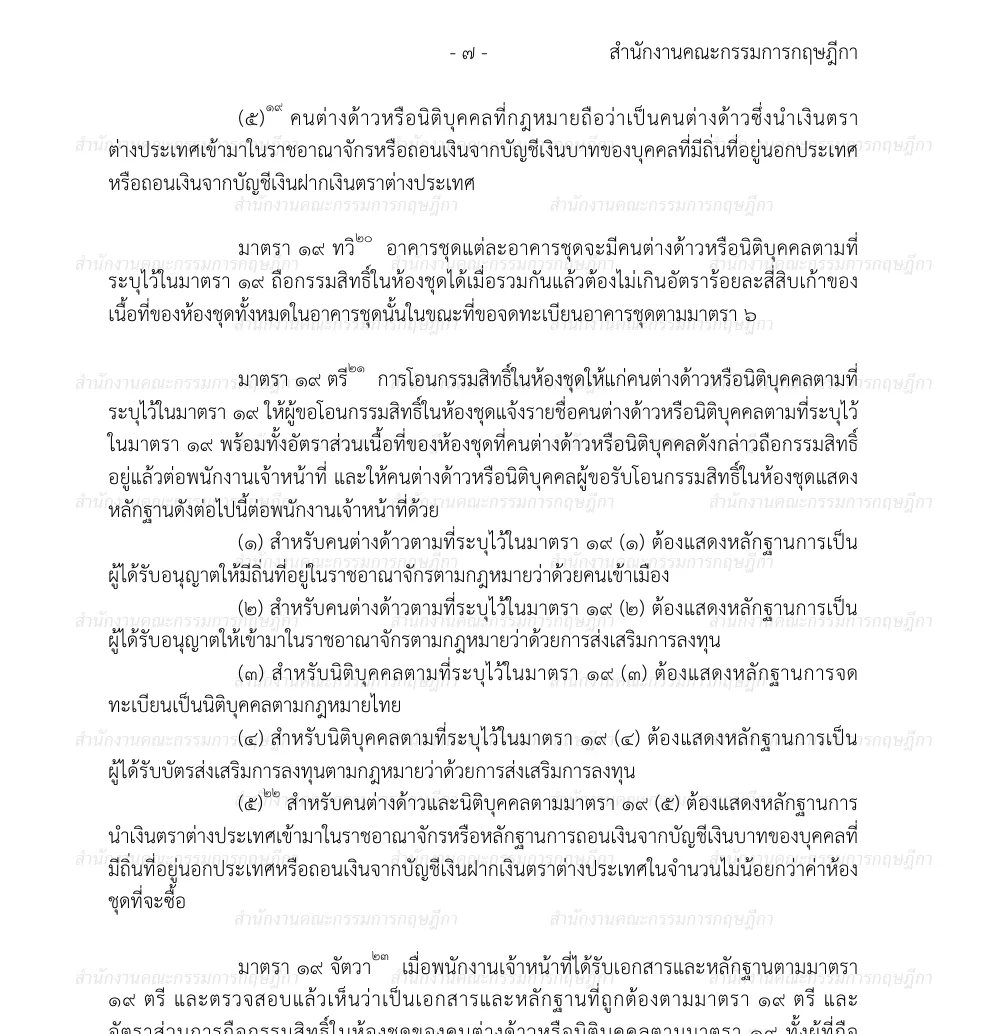
A foreigner permitted to reside in Thailand under the immigration law may hold a unit. Section 19(5) also covers a foreigner who brings foreign currency into Thailand, or withdraws from a baht account of a person resident abroad or a foreign-currency deposit account.
A retiree on a long-stay visa is not named in either clause. Whether permission to stay counts as “residence” under the first clause is not confirmed. The money route in section 19(5) names no visa category.
The evidence rule is in section 19 ter (5): the buyer shows evidence of the foreign money, for an amount not less than the unit price. The two quotes below are from section 19 ter.
การโอนกรรมสิทธิ์ในห้องชุดให้แก่คนต่างด้าวหรือนิติบุคคลตามที่ระบุไว้ในมาตรา ๑๙ ให้ผู้ขอโอนกรรมสิทธิ์ในห้องชุดแจ้งรายชื่อคนต่างด้าวหรือนิติบุคคลตามที่ระบุไว้ในมาตรา ๑๙ พร้อมทั้งอัตราส่วนเนื้อที่ของห้องชุดที่คนต่างด้าวหรือนิติบุคคลดังกล่าวถือกรรมสิทธิ์อยู่แล้วต่อพนักงานเจ้าหน้าที่
Editor’s translation: A transfer of ownership of a unit to a foreigner or juristic person under section 19: the person applying to transfer must tell the competent official the names of the foreigners or juristic persons under section 19, together with the share of unit area they already hold.
หรือถอนเงินจากบัญชีเงินฝากเงินตราต่างประเทศในจํานวนไม่น้อยกว่าค่าห้องชุดที่จะซื้อ
Editor’s translation: …or withdrawal from a foreign-currency deposit account, in an amount not less than the price of the unit to be bought.
Condominium Act B.E. 2522 (1979), section 19 ter (มาตรา ๑๙ ตรี)
The bank paper that proves the money
The Act asks for evidence and names no form. Older guides still mention an “FX form”. The Bank of Thailand said in 2017 that it abolished that form. Banks now issue a credit or debit advice with the data the Bank of Thailand requires, as evidence for the customer.
So ask the receiving bank for its credit advice on the day the money lands. No Department of Lands text names the paper, so show the credit advice to the Land Office public-relations officer before you transfer; see the box above.
Expect questions about where the money came from. Below USD 200,000 the customer states the purpose and the bank asks for no documents.
At USD 200,000 or more the bank asks for documents showing the source of the foreign currency. That is the Sep 2026 circular to banks, which covers customers resident in Thailand. A Dec 2025 circular first set the USD 200,000 line for property money.
For moving money in, see Currency Exchange in Chiang Mai: Licensed Changers, Rates and Open a Bank Account in Chiang Mai as a Foreigner (2026).
Steps from deposit to transfer
- Check the building’s foreign share against the 49% cap. The seller reports the foreign owners and the share they already hold.
- Confirm your category: residence permitted under the immigration law, or foreign currency brought in.
- Ask the building’s manager for the no-debt certificate. The officer registers a transfer when the unit is free of the section 18 debts, shown by that certificate. The manager must arrange its issue.
- Prepare the money evidence, for an amount not less than the unit price.
- Go to the Chiang Mai Provincial Land Office and see the public-relations officer first, for advice, a document check and a queue ticket.
The office is at the Chiang Mai Provincial Government Centre, Chotana Road, Chang Phueak, Mueang Chiang Mai, 50300. Its phone number is 0-5311-2983-4.
ศูนย์ราชการ, Chotana Rd, Tambon Chang Phueak, Mueang Chiang Mai District, Chiang Mai 50300, Thailand · Open in Google Maps (opens in a new tab)
Offices open Monday to Friday, except official holidays, from 08:30 to 16:30. That hours statement is general; no Chiang Mai hours are published. A transfer goes to the office or branch for the area where the unit stands.
Transfer charges
The Department of Lands schedule gives these rates. It names the seller as the payer of specific business tax. It does not say who bears the registration fee or stamp duty, so put the split in the sale contract. Stamp duty is charged on a transfer with consideration, as a receipt; the page names no base figure, so the example below uses the price paid.
| Charge | Rate |
|---|---|
| Registration fee, condominium unit | 2% of the appraised value, minimum THB 20 |
| Specific business tax, paid by the seller | 3.3% of the higher of the appraised value or the sale price |
| Stamp duty | THB 1 for every THB 200, or part of THB 200 |
| Income tax withheld, company or juristic partnership as seller | 1% of the higher of the sale price or the appraised value |
| Income tax withheld, individual seller | Set on the appraised value by the Land Office formula; years held count at most ten |
Worked example: total transfer cost
The price and appraised value below are assumed, to show the arithmetic. The Land Office uses its own appraised value, which can differ from the price. Take a price of three million baht and an appraised value of two million baht.
| Item | Sum | Result |
|---|---|---|
| Registration fee, 2% of appraised value | 2% of two million baht | THB 40,000 |
| Specific business tax, if it applies | 3.3% of the higher figure, three million baht | THB 99,000 |
| Stamp duty, if no specific business tax | THB 1 per THB 200 of three million baht | THB 15,000 |
| Withholding, company seller | 1% of three million baht | THB 30,000 |
Seller sold within five years: registration fee plus specific business tax is THB 139,000, with no stamp duty. Seller held it longer: registration fee plus stamp duty is THB 55,000.
When specific business tax applies
Selling a unit within five years of acquiring it attracts specific business tax. So does a developer selling a unit as the registrant of the condominium. A sale registered more than five years after the seller acquired the property is outside the tax.
Stamp duty is not charged where the person receiving the payment pays specific business tax.
Leasehold limits
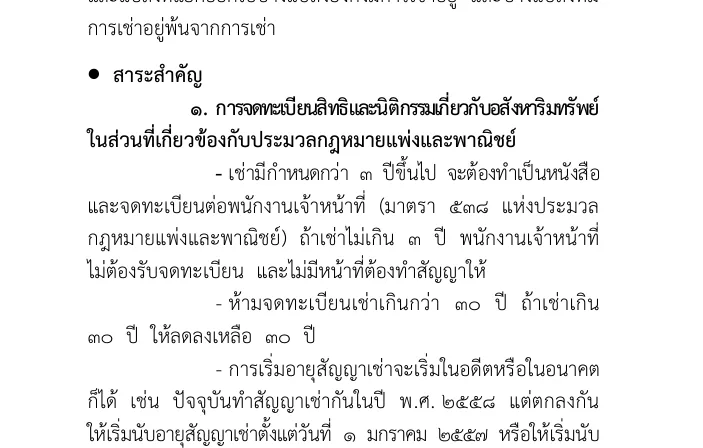
A lease of more than three years must be in writing and registered with the competent official. The registration fee for a lease is 1% of the rent over the lease term, or of key money, or of both together.
The Land Office does not register a lease longer than 30 years; a longer lease is cut to 30 years. A separate Act covers leases of more than 30 and up to 50 years for commerce and industry.
Renting is covered in Rent an Apartment in Chiang Mai: Deposit, Contract, TM30 and Where to Live in Chiang Mai: Areas, Rent, Who Each Suits.
Photo credits
- Chiang Mai seen from Suthep mountain in an early photograph: Chiang Mai viewed from Suthep mountain, Wikimedia Commons (opens in a new tab) (Public domain)
Step by step
- Check the building's foreign shareThe cap is 49% of the total unit area. The seller reports the foreign owners and the share they already hold.
- Confirm your categoryA foreigner permitted to reside in Thailand under the immigration law may hold a unit. Section 19(5) covers a foreigner who brings foreign currency into Thailand.
- Get the no-debt certificateThe officer registers when the unit is free of section 18 debts, shown by the certificate. The manager arranges its issue.
- Prepare the money evidenceShow foreign-currency evidence for an amount not less than the unit price. Ask the receiving bank for its credit advice.
- Go to the Land OfficeSee the public-relations officer first for advice, a document check and a queue ticket.
Not confirmed: Which bank paper the Land Office accepts as proof of the foreign money. Ask its public-relations officer first, with the bank's credit advice. Who bears the registration fee and withholding. Settle it in the sale contract. Sinking fund and prepaid common fees. Ask the building's juristic person for its schedule.
Reach readers planning life in Chiang Mai. Advertise → hello@chiangmaijao.com
Common questions
Can a foreigner own a condo in Chiang Mai outright?
A foreigner permitted to reside in Thailand under the immigration law may hold a unit. So may a foreigner who brings foreign currency in, for an amount not less than the unit price. Foreigners together may hold no more than 49% of the unit area of a building.
How much of a building can foreigners own?
Together they may hold no more than 49% of the total unit area of the condominium. The seller reports the foreign owners and the share of area they already hold.
What proof of money does the Land Office look for?
The Act asks for evidence of foreign currency brought into Thailand, or of a withdrawal from the baht account of a person resident abroad. A withdrawal from a foreign-currency deposit account also counts, for an amount not less than the unit price. Banks issue a credit or debit advice as evidence of a foreign-currency transaction.
What does a condo transfer cost in total?
On an assumed price of three million baht and appraised value of two million baht, the registration fee is THB 40,000. Add THB 99,000 specific business tax if the seller sold within five years, or THB 15,000 stamp duty if not.
When is the Land Office open?
Offices open Monday to Friday, except official holidays, from 08:30 to 16:30. The transfer is at the office or branch for the area where the unit stands.
Who pays specific business tax?
The seller pays it, at 3.3%. It applies to a sale within five years of acquiring the unit and to a developer's sale.
What is the stamp duty on a transfer?
It is THB 1 for every THB 200, or part of THB 200. It is not charged where the person receiving the payment pays specific business tax.
How long can a lease run?
The Land Office does not register a lease longer than 30 years. A separate Act covers commercial or industrial leases of more than 30 and up to 50 years.
What is the no-debt certificate?
The officer registers a transfer when the unit is free of the section 18 debts, shown by a certificate from the juristic person. The manager arranges its issue.
Where is the Chiang Mai Land Office?
At the Chiang Mai Provincial Government Centre, Chotana Road, Chang Phueak, Mueang Chiang Mai, 50300. The phone is 0-5311-2983-4.
Read next
General information checked against the sources listed above, not legal advice for your situation. Rules and office practice change; confirm with the immigration office or a licensed adviser before you act. See how guides are checked.
Spotted an error? Report it.