Rental Deposit in Chiang Mai: Cap, Return Deadline, Disputes
For a landlord who lets three or more units, the standard short-term lease bans advance rent plus deposit above three months of monthly rent. With no damage, the deposit comes back within seven days of the lease ending. After a repair deduction, the rest follows within fourteen days.
On this page
For a landlord who lets three or more units, advance rent plus deposit may not add up to more than three months of the monthly rent. Multiply the monthly rent in your lease by three: that figure is the ceiling.
The cap, the return deadlines and the deductions all come from the Royal Gazette notification on residential building rental and its standard lease form. A landlord with one or two units is outside it, and the sections below say what to do in that case.
The full lease checklist is in the rental contract guide, and the wider move-in steps are in Rent an Apartment in Chiang Mai.
Who is covered, and what counts as a deposit
The Contract Committee notification makes residential building rental a contract-controlled business. The Office of the Consumer Protection Board (OCPB) says it has been in force since 4 September 2025. The rule applies to an operator who lets a building to an individual tenant, with three or more units in one building or several.
Dormitories under the dormitory law and hotels under the hotel law are not covered. A landlord with one or two units falls outside clause 4.
Ask how many rooms or houses the landlord lets in total before you rely on the cap. A one- or two-unit landlord has no cap and no return deadline under the notification, so the lease itself is your protection. Write the amounts and the return days into it, and get it signed.
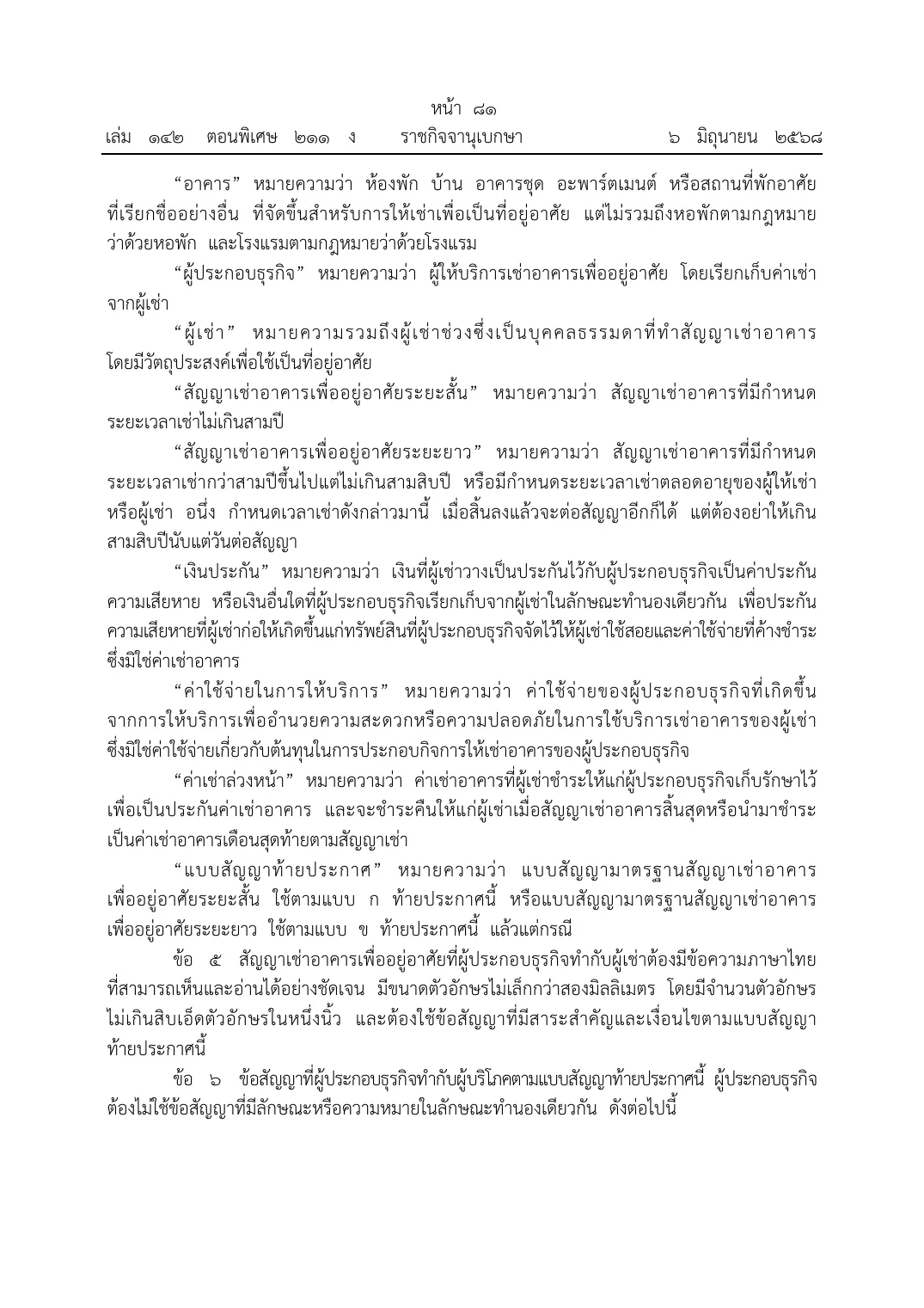
The notification separates two sums. A deposit is money the tenant places with the operator as security against damage, or similar money collected the same way. Advance rent is rent the operator holds as security for the rent. It is returned when the lease ends or applied to the last month’s rent.
How much a landlord can ask
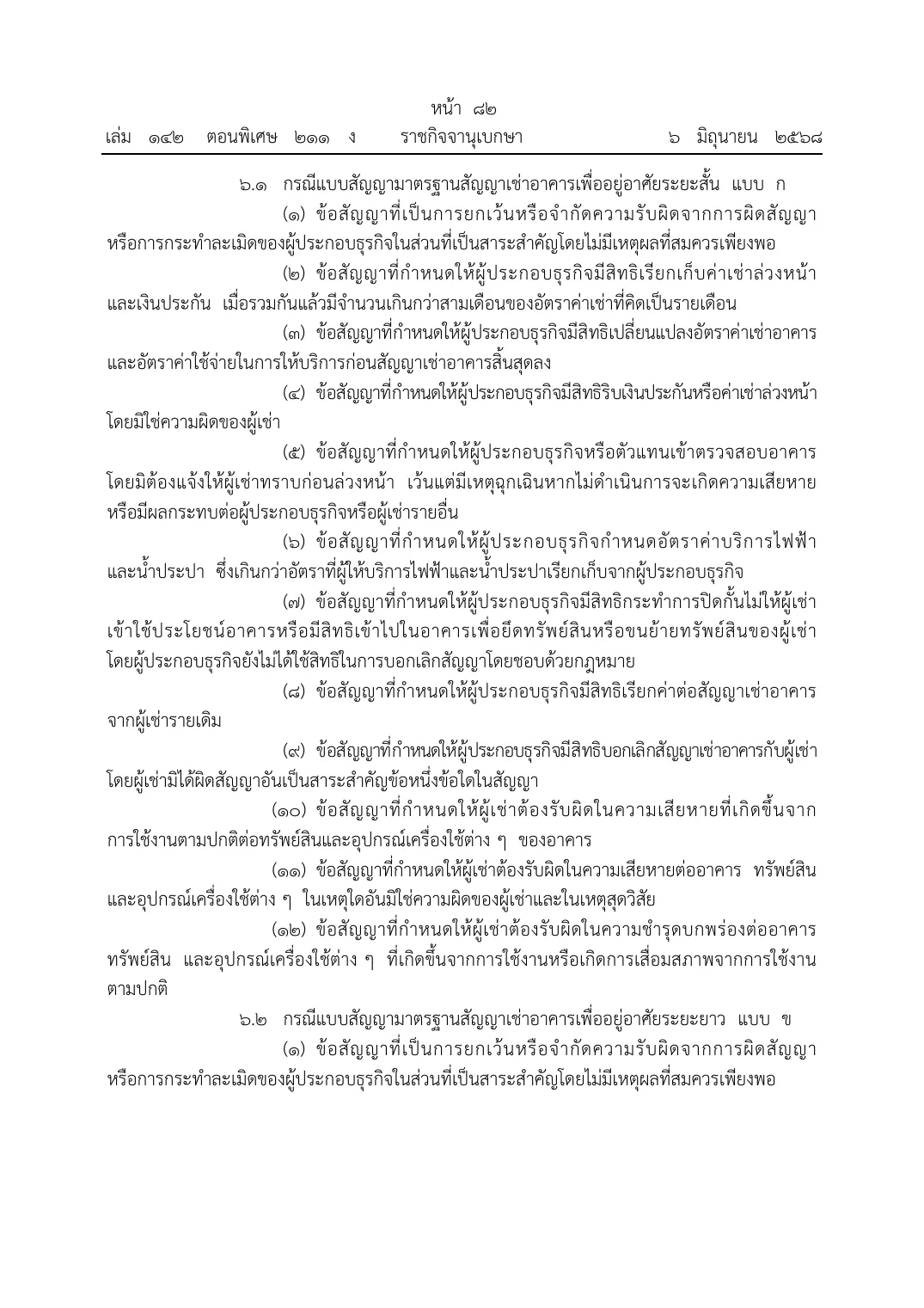
In the standard short-term lease, a term letting the operator collect advance rent and deposit that together exceed three months of the monthly rent is prohibited. A short-term lease is one with a rental period of no more than three years.
ข้อสัญญาที่กำหนดให้ผู้ประกอบธุรกิจมีสิทธิเรียกเก็บค่าเช่าล่วงหน้าและเงินประกัน เมื่อรวมกันแล้วมีจำนวนเกินกว่าสามเดือนของอัตราค่าเช่าที่คิดเป็นรายเดือน
Editor’s translation: A contract term that lets the operator collect advance rent and deposit which together exceed three months of the monthly rent rate.
Royal Gazette vol. 142, special part 211 ง, 6 June 2025, clause 6.1(2) (ข้อ ๖.๑ (๒))
That adds up to three months, so it sits exactly at the cap. A landlord asking for more than that on a short-term lease is asking for a term the standard lease bans.
A long-term lease, of more than three years up to thirty, has the same three-month cap for monthly rent. For rent calculated per year, advance rent plus deposit above one year of rent is banned.
A term letting the operator forfeit the deposit or advance rent when the tenant is not at fault is also prohibited.
Put the amounts in writing and pay safely
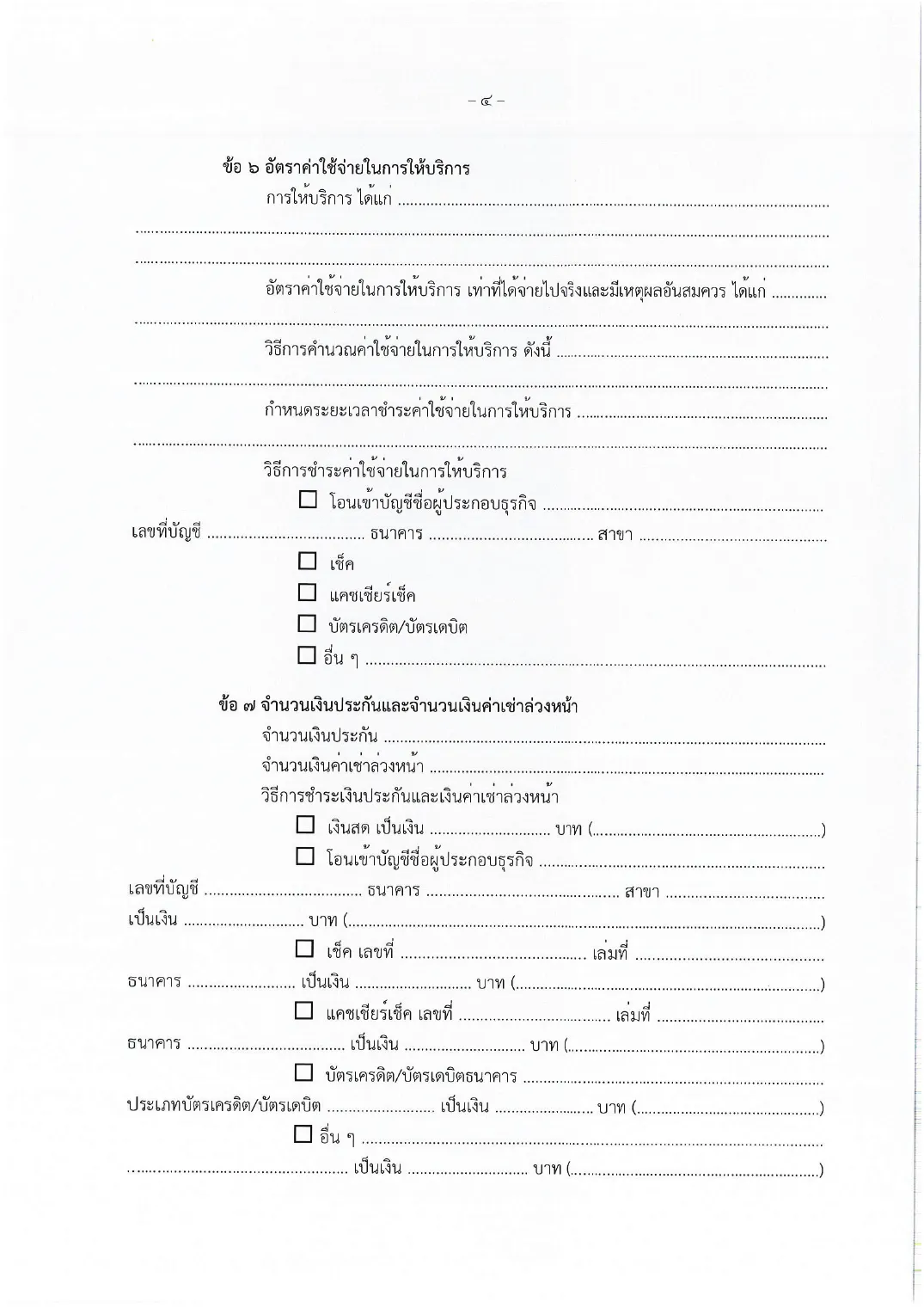
The standard form has lines for the amount of the deposit and the amount of the advance rent. Fill both in separately, so the lease shows which sum is which.
The form lists the ways to pay, including a transfer into an account in the operator’s name.
The operator must prepare a written record of the building’s condition, attach it to the lease and give the tenant one copy. Walk the unit with that record before you sign, and keep your copy. The lease is drawn up in two matching copies.
Sample lines to ask for, in any lease:
- “The deposit and the advance rent are two separate sums, each written on the lease”.
- “If there is no damage, the landlord returns the deposit within seven days after the lease ends and the landlord retakes the unit”.
- “If there is a deduction, the landlord returns the rest within fourteen days and gives the repair receipts”.
Getting it back: deadlines and deductions
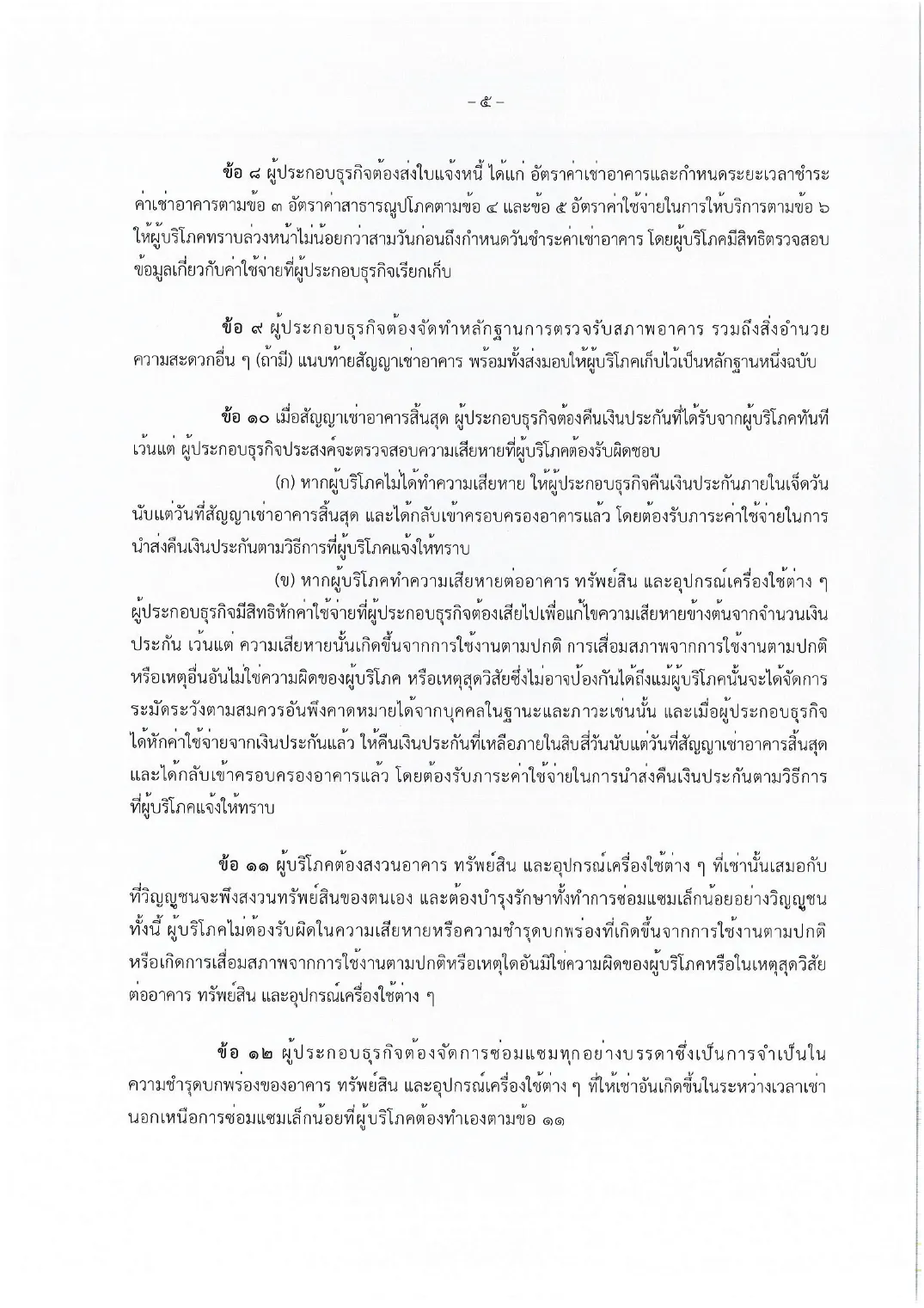
When the lease ends, the operator must return the deposit immediately, unless the operator wants to check for damage the tenant is responsible for. Then two clocks apply. They are terms of the standard form, and a covered operator’s lease must use the substance and conditions of that form.
No damage: seven days
If the tenant caused no damage, the operator returns the deposit within seven days after the lease ends and the operator has retaken possession. The operator bears the cost of sending it back by the method the tenant names.
Damage: a deduction, then fourteen days
If the tenant damaged the building or its fittings, the operator may deduct from the deposit the cost the operator had to pay to fix that damage. After the deduction, the rest is returned within fourteen days after the lease ends and the operator has retaken possession.
Damage or normal wear?
The test is whose doing the damage is.
No deduction is allowed for damage from normal use or wear from normal use. None is allowed for causes that are not the tenant’s fault, or for force majeure that could not be prevented despite reasonable care.
The landlord may take only the cost the operator had to pay to fix the damage, so ask for the repair receipts. No list of examples exists in the form, so the condition record you keep from move-in is your evidence.
The notification also bans a term making the tenant liable for damage from normal use. It bans a term making the tenant liable for damage that is not the tenant’s fault or caused by force majeure.
A landlord outside the notification is not bound by these days, so write the return period into the lease.
Leaving early
A tenant on a fixed-term lease may end it early after living there at least half the term, with at least thirty days’ written notice and no arrears. The operator then returns rent and other costs paid in advance for future occupancy within seven days of the notice.
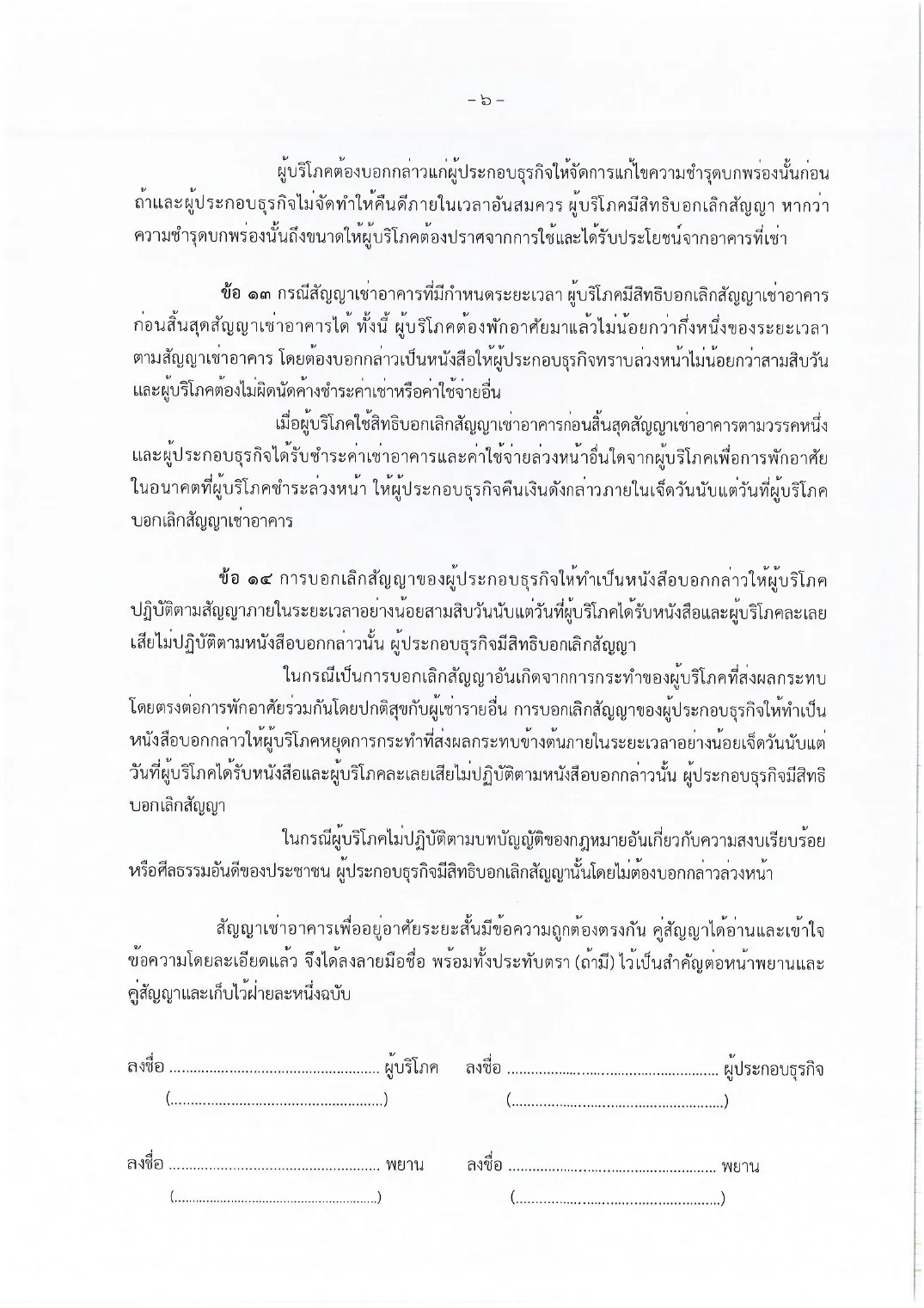
Give the notice in writing and keep a copy. The form sets the notice, not the deposit return, in this clause.
If the landlord keeps the deposit
- Send a written demand quoting the return deadline in your lease. Keep a copy.
- Call the OCPB hotline, 1166, which gives advice to tenants exploited under a residential lease.
- File a consumer case. A consumer may bring it orally or in writing. The standard form calls the tenant a “consumer” (ผู้บริโภค).
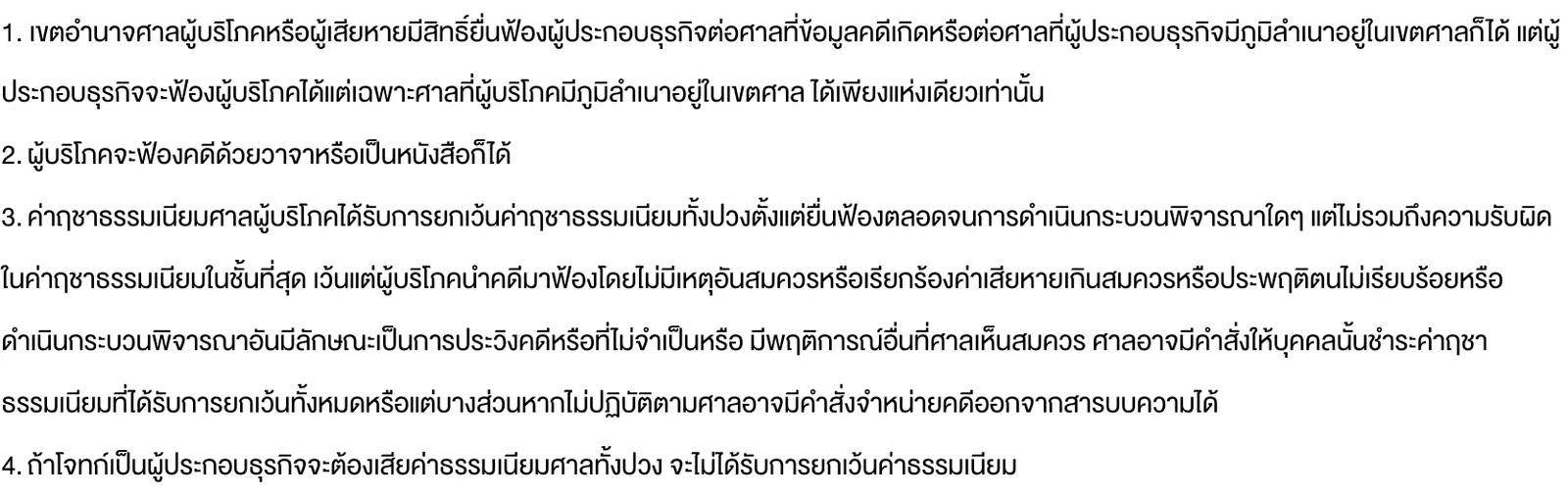
The consumer may sue in the court where the cause of action arose or the court where the operator is domiciled. For a Chiang Mai rental, the cause arose in Chiang Mai.
A consumer is exempt from all court fees from filing and through the proceedings, though not from liability for costs at the final stage. Bring the lease, the condition record, the payment record and the messages with the landlord.
Before you pay a deposit
- Ask how many rooms or houses the landlord lets in total.
- Add the deposit and the advance rent and compare with three months of rent.
- Get both amounts written on the lease form.
- Pay into an account in the landlord’s or company’s name.
- Keep your copy of the condition record.
- Write the return days into the lease.
Step by step
- Check who the landlord isAsk how many units the landlord lets; the notification covers an operator with three or more units.
- Add up the capAdvance rent plus deposit above three months of monthly rent is a prohibited term in the short-term lease.
- Write the amounts into the leaseThe standard form has lines for the deposit and the advance rent.
- Pay to a named account and keep the recordThe form lists a transfer into an account in the operator's name. The operator prepares a written record of the building's condition and gives you one copy.
- Ask for the deposit at move-outWith no damage, the operator returns it within seven days after the lease ends and the operator retakes the building.
- Complain if it is withheldSend a written demand, call the OCPB hotline 1166, then file a consumer case orally or in writing.
Not confirmed: A landlord with one or two units is outside clause 4. No return deadline is set for such a landlord, so write the days into the lease. Whether the consumer court takes a deposit claim against a one- or two-unit landlord is not stated; ask the court registry before filing.
Reach readers planning life in Chiang Mai. Advertise → hello@chiangmaijao.com
Common questions
How much deposit can a Chiang Mai landlord ask?
For a landlord with three or more units, advance rent and deposit together above three months of the monthly rent is a prohibited term.
Is two months deposit plus one month in advance legal?
It adds up to three months, which is the limit in the short-term standard lease.
How fast must the deposit come back?
From a landlord with three or more units: if the tenant caused no damage, within seven days after the lease ends and the operator has retaken possession. After a deduction for damage, the rest is returned within fourteen days. A one- or two-unit landlord has no deadline under the notification.
Is the seven-day return a law or just a term in the form?
It is a term of the standard form, and a covered operator's lease must use terms with the substance and conditions of that form.
What can a landlord actually take out of the deposit?
Only the cost the operator had to pay to fix damage the tenant caused. Normal use, wear from normal use and causes that are not the tenant's fault are excluded. Ask for the repair receipts.
Can the landlord keep the deposit for normal wear?
No deduction is allowed for damage from normal use, wear from normal use or causes that are not the tenant's fault. A term making the tenant liable for such damage is prohibited.
Can the landlord keep my deposit if I did nothing wrong?
A term letting the operator forfeit the deposit or advance rent when the tenant is not at fault is prohibited.
Who pays to send the deposit back?
The operator bears the cost of returning the deposit by the method the tenant names.
Where do I complain if the deposit is not returned?
Send a written demand, call the OCPB hotline 1166, then file a consumer case, which a consumer may bring orally or in writing. The case can be filed in the court where the cause arose, which for a Chiang Mai rental is the Chiang Mai court, or where the operator lives.
Do I pay court fees for a deposit claim?
A consumer is exempt from all court fees from filing and through the proceedings, but not from liability for costs at the final stage.
Read next
General information checked against the sources listed above, not legal advice for your situation. Rules and office practice change; confirm with the immigration office or a licensed adviser before you act. See how guides are checked.
Spotted an error? Report it.