Thai Universal Healthcare for Foreigners: Who Is Covered
No. Thai nationality is the first qualification for the national health security right, so a foreign passport does not unlock it. A foreigner with a work permit is enrolled in social security by the employer. A foreigner outside every scheme pays for public health services.
On this page
Thailand has no single card for foreigners. A person without Thai nationality who is outside social security and the Ministry of Public Health’s migrant insurance pays the service fee. The rest of this page goes through each route.
For a tourist or retiree, the gold card and the migrant-worker fund do not apply. Social security applies only with a Thai employer. Everything else is private insurance or paying cash.
The gold card is for Thai nationals
The national health security right, run by NHSO (the National Health Security Office), has three qualifications.
- Be a person of Thai nationality.
- Have a 13-digit identification number from the Department of Provincial Administration.
- Not have health insurance rights from a government agency, namely rights under the social security law.
The right is for Thai people, from birth. A foreign passport fails the first test. People call it the gold card scheme.
Social security and the migrant-worker fund
Employed foreigners
Social security is split into sections. Section 33 is the employee scheme, and Section 39 is the voluntary scheme for people who have left a Section 33 job. Migrant workers registered lawfully with a work permit are enrolled by the employer in the foreign-worker social security scheme. The benefits include medical treatment, sickness income, childbirth, old age and unemployment.
Foreign workers insured under Section 33 have the same medical treatment rights as Thai people, as the Labour Minister stated in March 2025.
Employees must be registered as insured persons within 30 days of starting work. The Social Security Office asks for a copy of the work permit plus a passport, an alien certificate or a pink ID card.
Employers and Section 33 insured persons pay a contribution into the fund every month. The wage used as the base is at least THB 1,650 and at most THB 15,000 a month.
After you leave a job
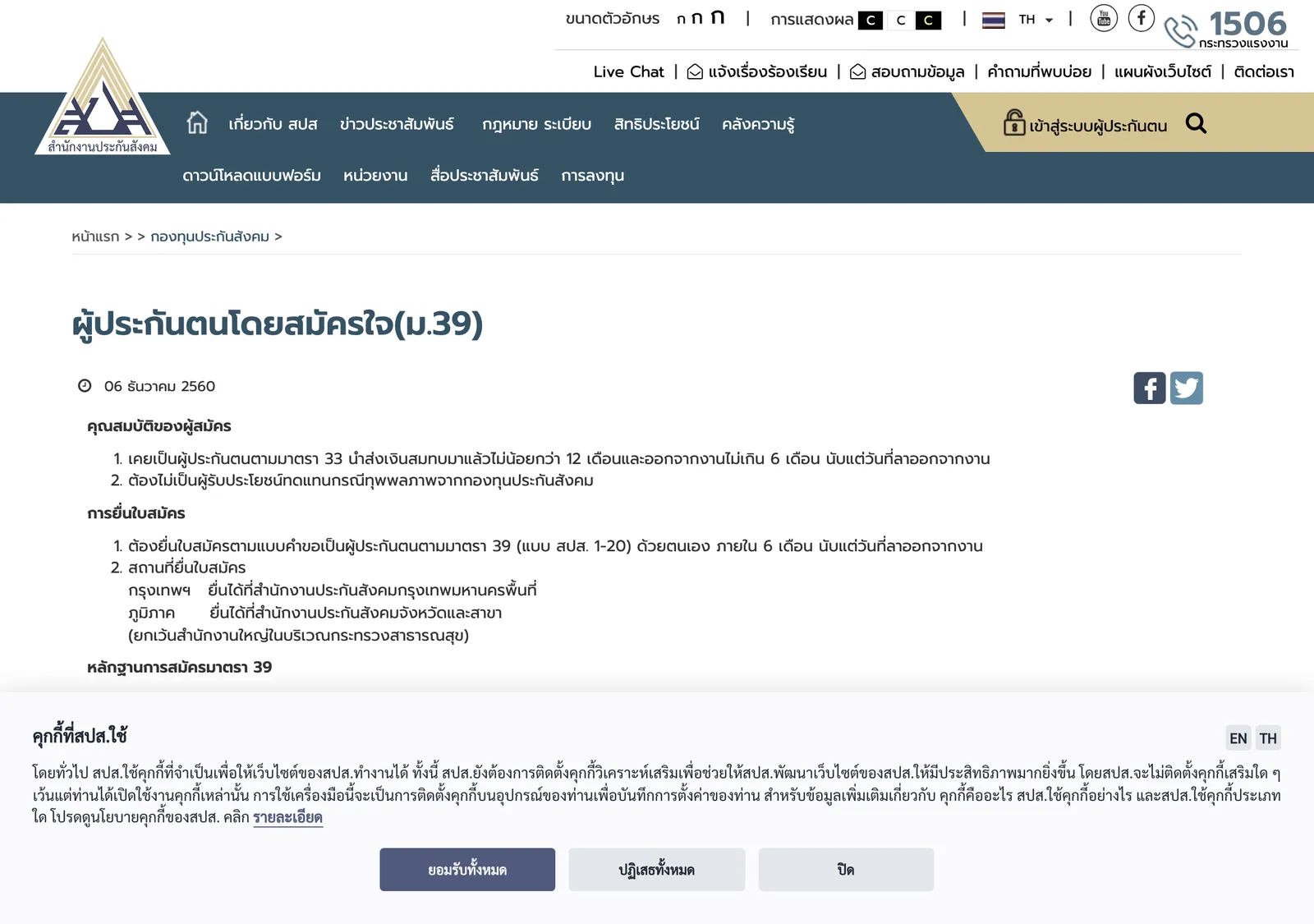
The Social Security Office sets three conditions for its voluntary scheme.
- You were a Section 33 insured person, with contributions for not less than 12 months.
- You left the job not more than 6 months ago.
- The contribution is THB 432 a month.
The application is on form SSO 1-20 and must be submitted in person. No nationality bar is published. A foreign former employee who meets the conditions should ask the Chiang Mai Social Security Office to confirm before relying on it. The monthly figure is the office’s figure as of October 2026.
The Ministry of Public Health fund
The Ministry’s fund for foreigners and migrant workers gives health checks and insurance to Lao, Myanmar and Cambodian workers who are not in social security or are waiting for it. A Western tourist or retiree is outside it.
On price, a report of a 14 February 2025 interview gives the card as about a thousand-odd baht and a proposal to raise it to THB 3,800 a year. No official price page was found, so confirm with the provincial public health office.
Emergencies and UCEP
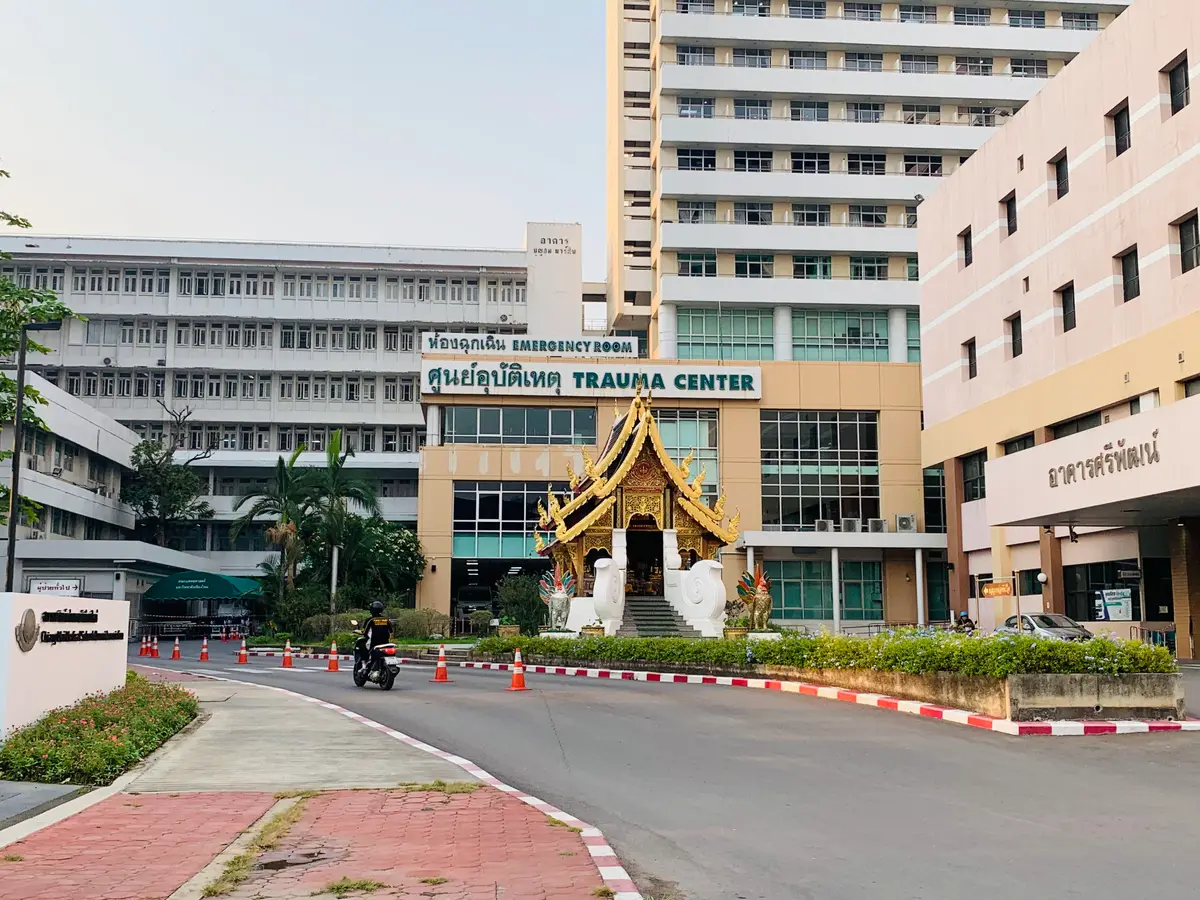
UCEP is a right to be treated at the nearest hospital without charge until out of danger and safe to move, for no more than 72 hours. When a patient meets the critical-emergency criteria and calls 1669, the patient is covered without paying upfront.
No official text read extends UCEP to non-Thai patients, so do not plan on it. In December 2023 the National Institute for Emergency Medicine said foreigners can receive treatment at any hospital. For critical emergencies, hospitals claim expenses from the foreign patient’s existing funds, such as life, health or travel insurance.
Check now that your travel or health policy covers emergency admission. The Cabinet approved new UCEP rules on 15 September 2026, but no official text is in force yet and nothing confirms coverage for non-Thai patients.
If you are outside every scheme
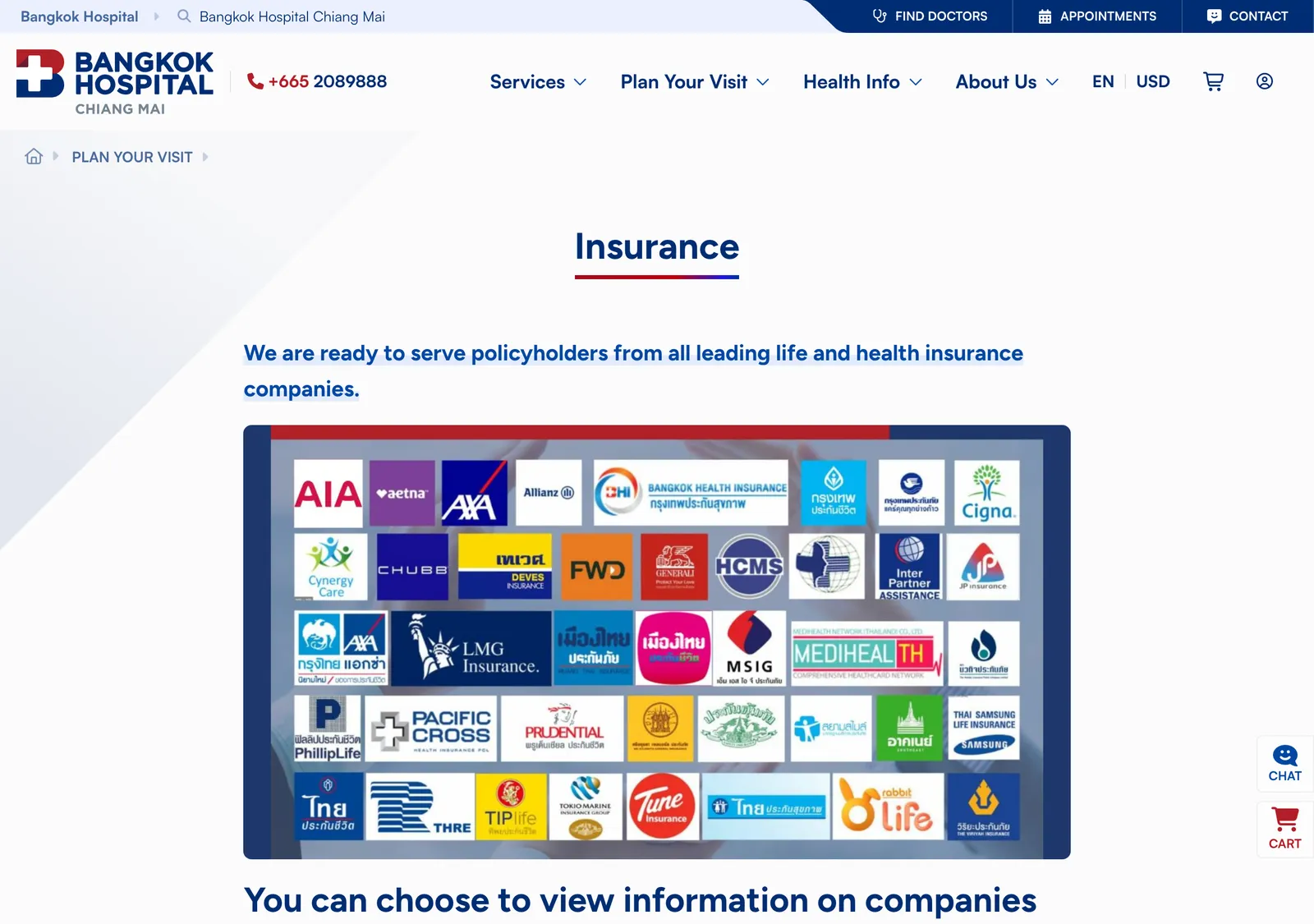
Government facilities normally cost less than private ones, but a tourist or short-term visa holder may be charged higher fees than Thai nationals and resident foreigners.
At a private hospital, someone paying their own way will usually be asked for a cash deposit before treatment begins. All hospitals require a guarantee of payment before treating patients.
A person who cannot pay may ask the hospital for help with treatment costs, which the service unit considers on humanitarian grounds. No criteria are published, so treat it as a last resort, not a plan.
Insurance that visas ask for
O-A applicants must hold health insurance covering COVID-19. The total sum insured must be no less than THB 3,000,000 or USD 100,000 per policy year.
The Board of Investment requires a Wealthy Global Citizen LTR applicant to provide a health insurance policy covering medical expenses in Thailand of at least USD 50,000.
Photo credits
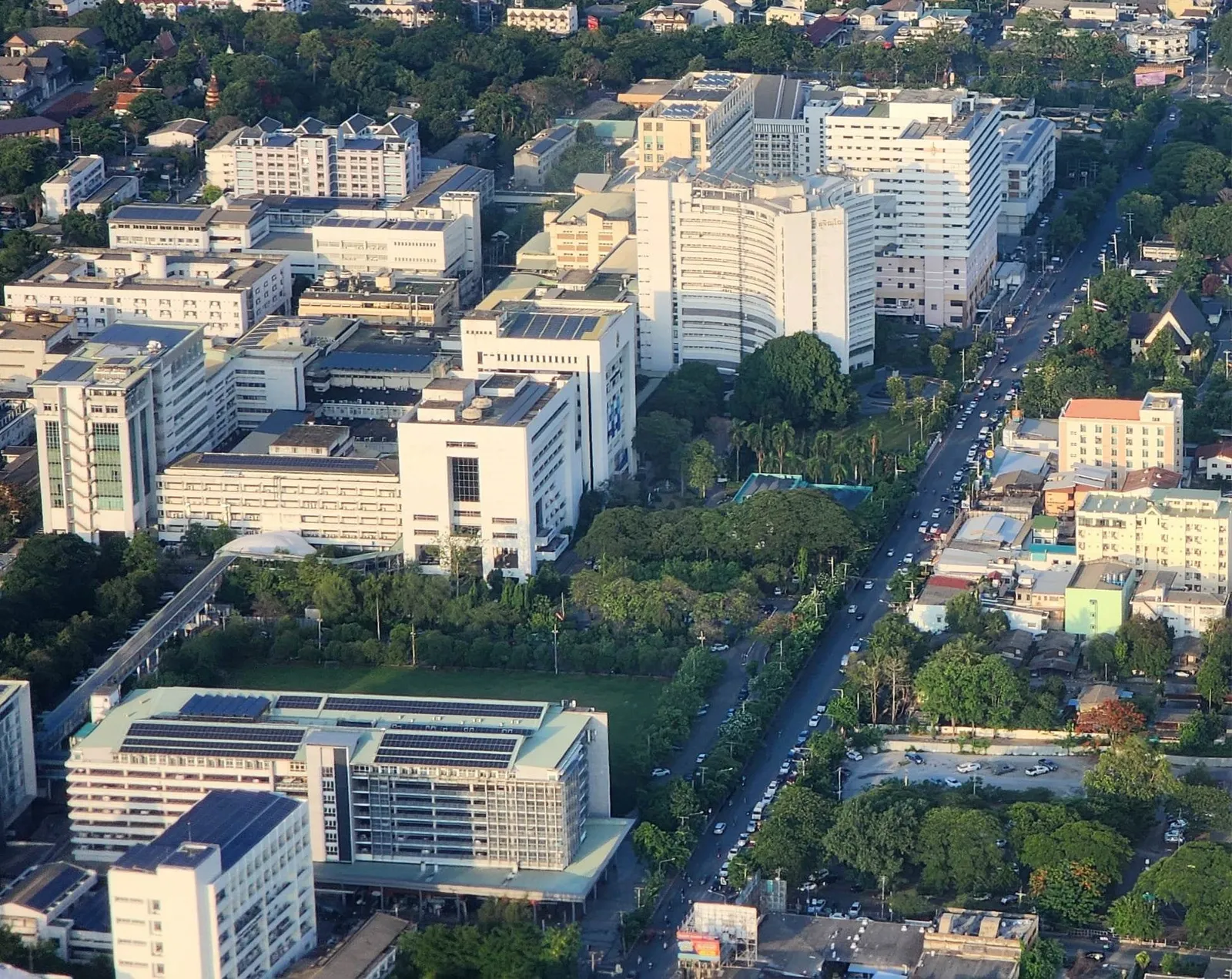
- Maharaj Nakorn Chiang Mai Hospital from above: Aerial view of Maharaj Nakorn Chiang Mai Hospital, Wikimedia Commons (opens in a new tab), Ratthathammanoon kawkhamnurd (CC BY-SA 4.0)
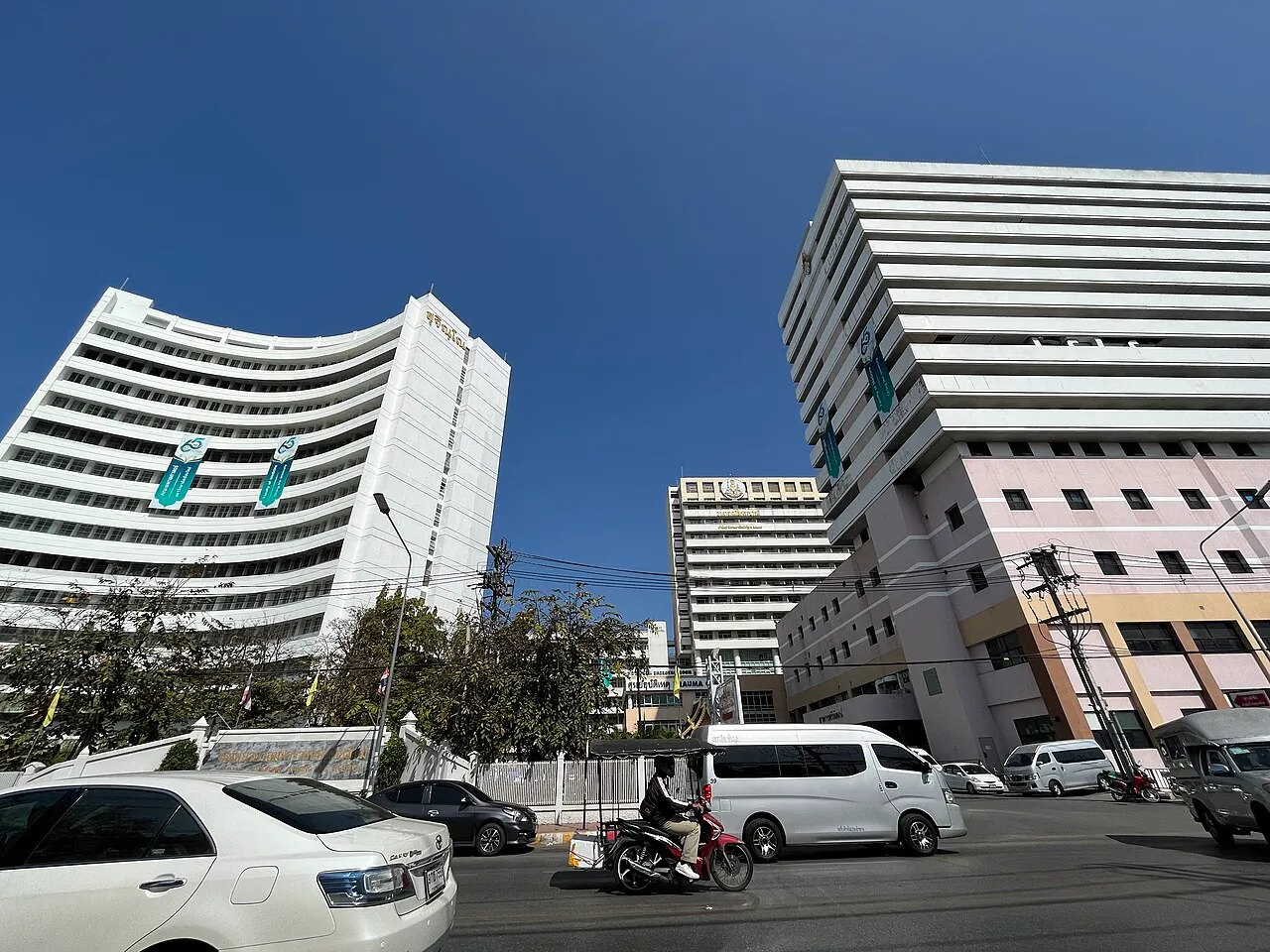
- Maharaj Nakorn Chiang Mai Hospital seen from the street: Maharaj Nakorn Chiang Mai Hospital 2, Wikimedia Commons (opens in a new tab), LittleT889 (CC0)
- Photos and clips uploaded to Google Maps (Maharaj Nakorn Chiang Mai Hospital on Google Maps (opens in a new tab)) by Suthep Prombuddha.
Not confirmed: Whether UCEP covers foreign patients: nothing official says so, so carry travel insurance. Whether a foreign former employee can join the voluntary scheme: ask the Chiang Mai Social Security Office. The current migrant-worker insurance price: ask the provincial public health office.
Reach readers planning life in Chiang Mai. Advertise → hello@chiangmaijao.com
Common questions
Can a foreigner get the Thai gold card?
No. The first qualification is being a person of Thai nationality. The second is a 13-digit identification number from the Department of Provincial Administration.
Does a work permit give me health cover?
The Social Security Office registers foreign employees with a copy of the work permit plus a passport, an alien certificate or a pink ID card. The employer enrols a lawfully registered worker with a work permit in social security.
Do foreign workers in social security get the same treatment as Thai workers?
Foreign workers insured under Section 33 have the same medical treatment rights as Thai people.
What happens if I leave my job?
There is a voluntary scheme for former Section 33 insured persons. You need contributions for not less than 12 months and must have left the job not more than 6 months ago. The contribution is THB 432 a month. Nationality is not mentioned on the page.
What is the migrant-worker health insurance?
It is a Ministry of Public Health fund. It gives health checks and insurance to Lao, Myanmar and Cambodian workers who are not in social security or are waiting for it. A tourist, retiree or worker of another nationality is outside it. A 2025 press report put the card at about a thousand-odd baht, with a proposal to raise it to THB 3,800 a year.
Does the emergency right UCEP cover foreigners?
Do not count on it. UCEP is treatment at the nearest hospital without charge, for no more than 72 hours. No official text read extends it to non-Thai patients. For critical emergencies hospitals claim a foreign patient's cost from the patient's own insurance.
What do I pay at a government hospital if I have no cover?
You pay the service fee yourself. A tourist or short-term visa holder may be charged higher fees than Thai nationals and resident foreigners.
Does a long-stay visa require health insurance?
Some do. An O-A applicant must hold health insurance with a sum insured of no less than THB 3,000,000 or USD 100,000 per policy year. A Wealthy Global Citizen LTR applicant provides a policy of at least USD 50,000.
Read next
General information checked against the sources listed above, not legal advice for your situation. Rules and office practice change; confirm with the immigration office or a licensed adviser before you act. See how guides are checked.
Spotted an error? Report it.