Health Insurance for Expats in Chiang Mai: What You Need
The O-A and O-X long-stay visas and every LTR category ask for health insurance or an alternative. The O-A amount differs by embassy. Employees with a work permit join social security under Section 33. The national health security scheme needs Thai nationality. Hospitals ask for a guarantee of payment before treatment.
On this page
Hospitals in Thailand ask for a guarantee of payment before they treat you. Premium figures further down are one insurer’s published table, not a market survey.
Visas with an insurance rule
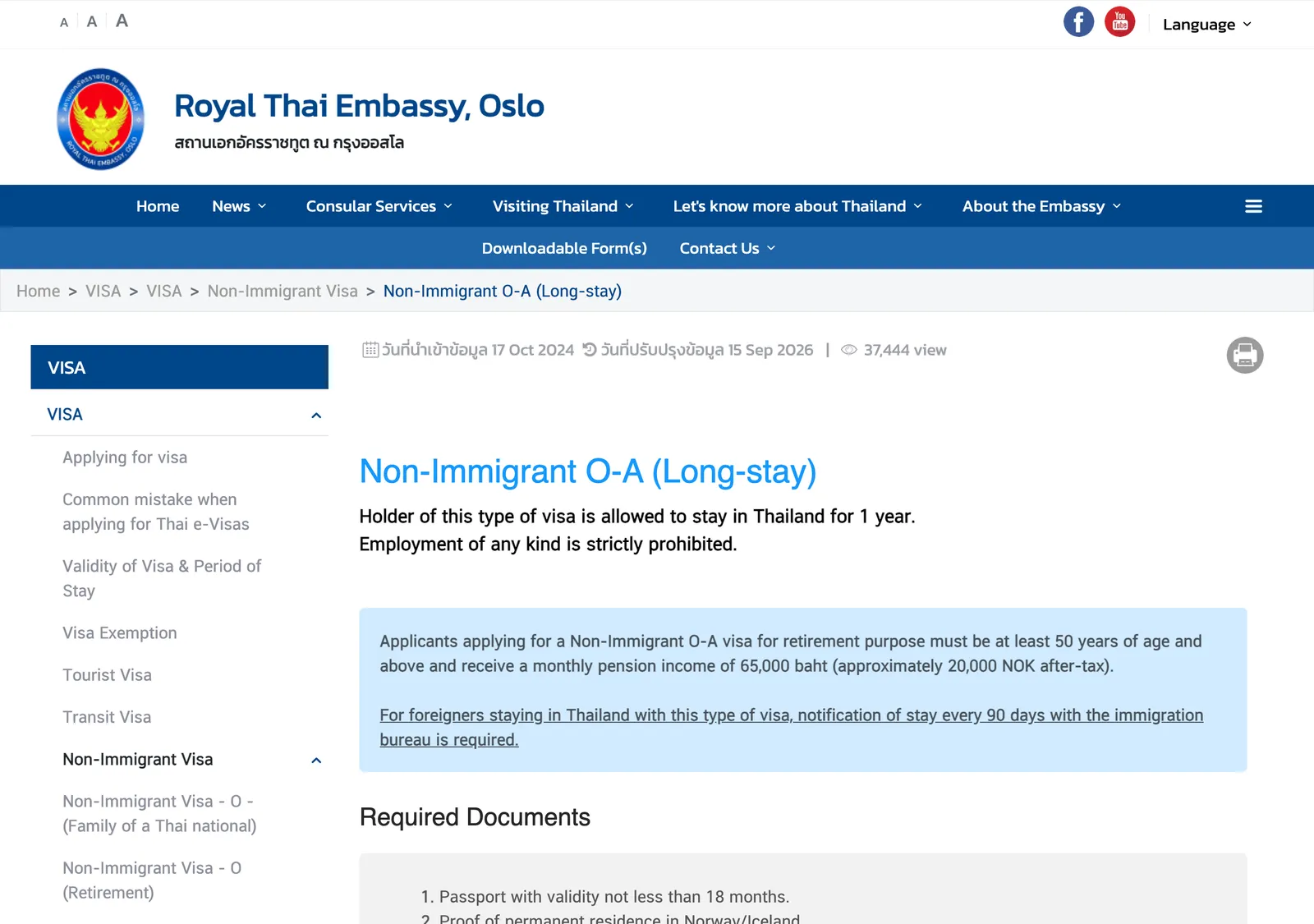
The rule depends on the visa, and for the O-A it depends on the embassy.
| Visa | Cover asked for |
|---|---|
| O-A at Oslo | USD 100,000 or THB 3,000,000 |
| O-A at Los Angeles | THB 3,000,000 or USD 100,000 per policy year |
| O-A at Pretoria | Outpatient THB 40,000, inpatient THB 400,000 |
| O-X | Inpatient THB 400,000 |
| LTR (all four categories) | USD 50,000, or social security, or a deposit |
O-A long-stay visa
The Oslo embassy asks for cover that includes COVID-19 treatment for the whole stay in Thailand. The Los Angeles consulate asks for COVID-19 cover per policy year.
The Pretoria embassy lists separate outpatient and inpatient amounts. Embassies differ, and the rule is about where you live, not Chiang Mai. The Wellington embassy requires the applicant to hold the nationality of, or be a resident of, the country where the application is submitted. It accepts only residents of New Zealand, the Cook Islands, Samoa and Niue.
Use the embassy page for the country you apply from. If it says USD 100,000 or THB 3,000,000, a THB 400,000 plan does not match it. Only an embassy that states the 40,000 outpatient and 400,000 inpatient split does.
The Los Angeles consulate accepts a Thai or a foreign insurer. A foreign insurer must also provide a Foreign Insurance Certificate, completed, signed and stamped by the insurance company. Embassy pages point to the TGIA list of participating Thai insurers at longstay.tgia.org.
Retirement extension
A Phitsanulok immigration handbook says only holders of Non-Immigrant O-A visas must have health insurance for the retirement extension.
O-X visa
The Oslo embassy page for the O-X asks for Thai health insurance with inpatient cover of THB 400,000.
LTR visa
Every LTR category asks for health insurance of at least USD 50,000, or social security benefits in Thailand, or a deposit of at least USD 100,000. The deposit must be held for at least 12 months as of the date of application.
For LTR dependants the alternative is an additional deposit of at least USD 25,000 per person. The BOI announcement is stated as taking effect on 4 February 2025.
What a plan costs
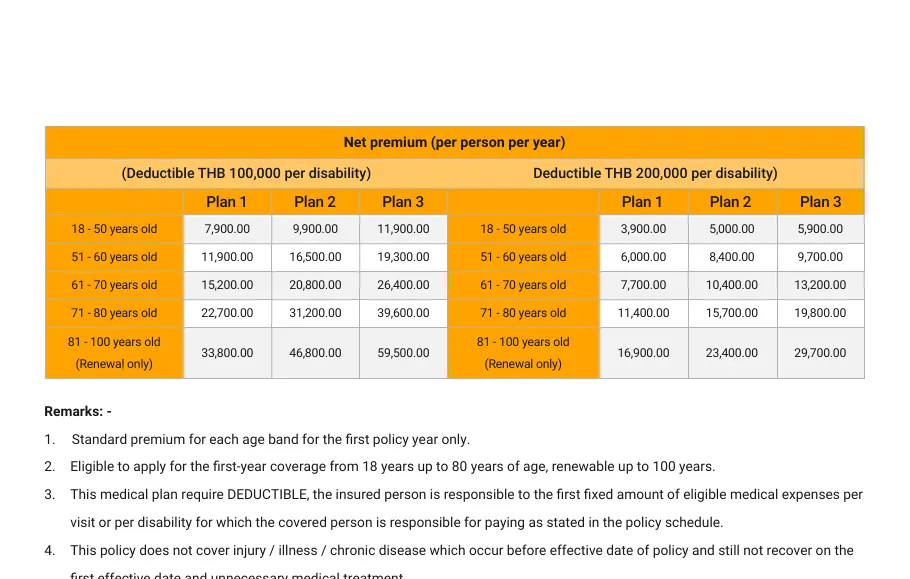
Insurers rarely publish rates. One that does is Chubb Samaggi, whose long-stay brochure (file dated 2 March 2026) sells inpatient cover from THB 400,000 and outpatient from THB 40,000 per policy year. It carries a deductible starting at THB 100,000, and its yearly maximum is THB 440,000 to 660,000 depending on the plan.
Net premium per person per year, with the deductible at THB 100,000:
| Age | Plan 1 | Plan 2 | Plan 3 |
|---|---|---|---|
| 18-50 | THB 7,900 | THB 9,900 | THB 11,900 |
| 51-60 | THB 11,900 | THB 16,500 | THB 19,300 |
| 61-70 | THB 15,200 | THB 20,800 | THB 26,400 |
| 71-80 | THB 22,700 | THB 31,200 | THB 39,600 |
The brochure says this is the standard premium for the first policy year only, and the renewal premium is adjusted for increasing age. This plan matches the 400,000 plus 40,000 structure, not an embassy that asks for USD 100,000 or THB 3,000,000. It is a brochure from a single insurer, so use it to size the budget, not to pick a plan.
Thai state cover: what a foreigner can use
Social security for employees (Section 33)
Section 33 is for employees. The employer registers the employee as an insured person within 30 days of starting work.
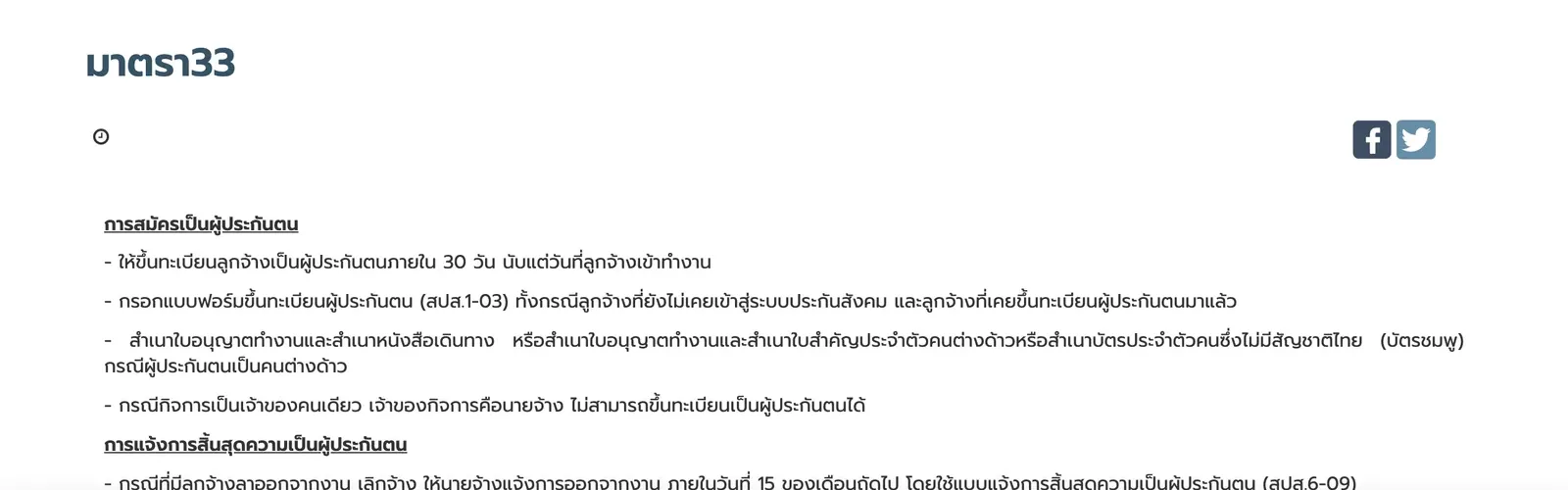
For a foreign employee the Social Security Office asks for a copy of the work permit plus a passport, an alien certificate or a pink ID card. The employer deducts the employee share on every pay day and remits an equal employer share.
The wage base for contributions is at least THB 1,650 and at most THB 15,000 a month. Foreign workers insured under Section 33 have the same medical treatment rights as Thai people.
The national health security scheme is for Thai nationals
The national health security right has three qualifications. The first is being a person of Thai nationality. The second is a 13-digit identification number from the Department of Provincial Administration.
It is a right the government provides to every Thai person from birth. Foreign residents without Thai nationality do not meet the first qualification.
The NHSO emergency right (UCEP)
UCEP is a state-policy right for critical emergency patients. They are treated at the nearest hospital without charge until out of danger and safe to move, for no more than 72 hours. Nothing published says whether this covers non-Thai patients, and emergency treatment for foreigners is rarely free. Plan to pay or to claim on your own cover.
What hospitals ask for before treating you
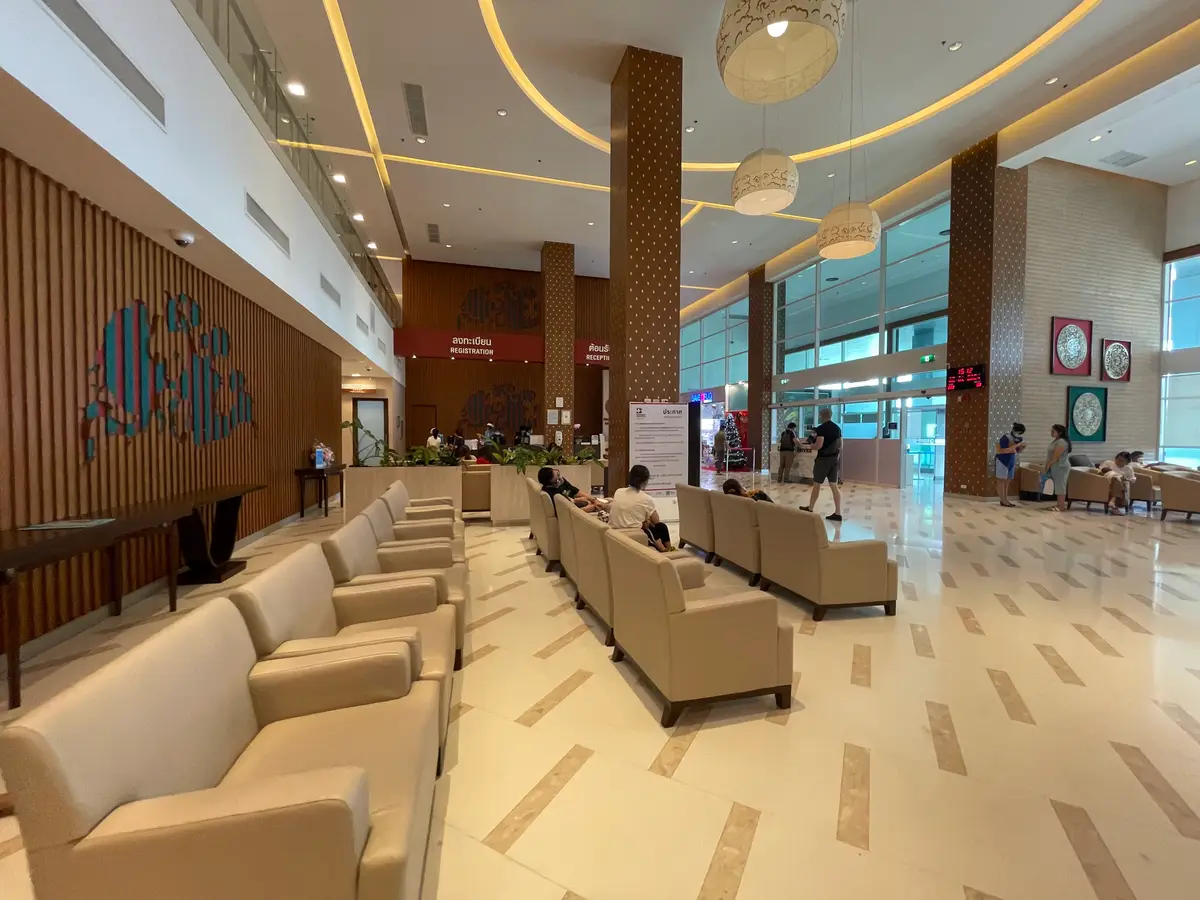
UK advice says all hospitals require a guarantee of payment before treating patients. Treatment, even in an emergency, is rarely free of charge.
At a private hospital, self-funding patients will usually be asked for a cash deposit before treatment begins. Most private hospitals have an international liaison officer who can help liaise with insurers.
Bangkok Hospital Chiang Mai asks for a deposit based on room category at admission, and the total estimated amount before surgery. It tells patients to contact their insurer about coverage and lists a payer services desk on 052-089-844. Its international department can coordinate with third-party insurance companies.
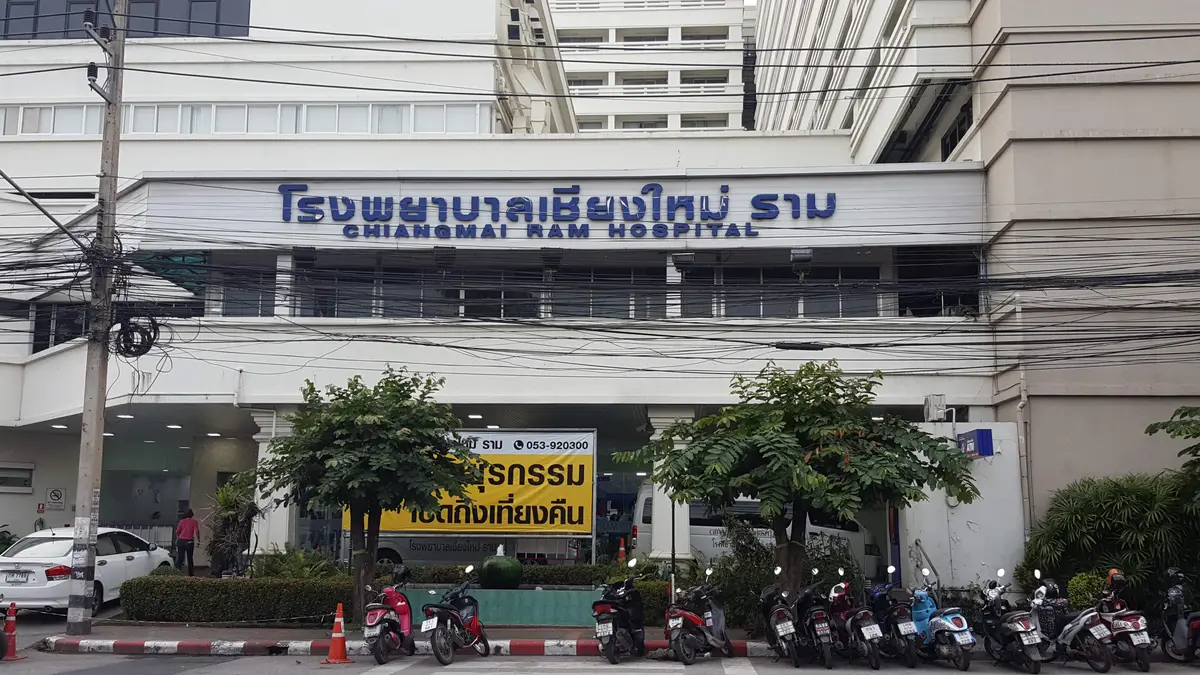
Chiangmai Ram Hospital has extensive experience coordinating with international insurance providers. Government facilities may charge a tourist or short-term visa holder higher fees than Thai nationals and foreign residents.
How to choose a plan: a checklist
- Match the visa. Use the table above and the embassy page for the country you apply from.
- Check the insurer. The Office of the Insurance Commission (OIC) consumer menu at oic.or.th/en/consumer has a “license check” entry and lists the names and locations of life and non-life insurers.
- Disclose existing conditions. A claim may be refused if a pre-existing condition was not disclosed.
- Check motorbike cover. Accident cover may not apply if the bike is over 50cc or Thai road laws were not followed.
- Ask about direct billing. Ask the hospital and your insurer which hospitals bill the insurer directly. The hospitals guide covers which hospitals publish an insurer list.
- Check repatriation. Repatriation is normally done through a repatriation company, with costs normally covered by travel insurance or personal funds.
The OIC hotline is 1186, with business hours of Monday to Friday 8.30-16.30.
UK advice says Thailand and the UK have no reciprocal healthcare agreement, and a UK-issued Global Health Insurance Card cannot be used in Thailand.
If you are hospitalised
Contact your insurance or medical assistance company quickly if you are referred to a medical facility. If you have travel insurance, contact the insurer as soon as you are hospitalised.
On discharge you are likely to be given a medical certificate with your diagnosis, a copy of your hospital bill and any medication prescribed. Keep receipts and medical reports, which you may need to claim reimbursement.
For hospitals that publish interpreter and insurer desks, see English-speaking hospitals in Chiang Mai. For the numbers to call, see Chiang Mai emergency numbers. Visa background is in Thailand retirement visa: Non-O vs O-A vs O-X.
Photo credits
- Photos and clips uploaded to Google Maps (Bangkok Hospital Chiang Mai on Google Maps (opens in a new tab), Chiangmai Ram Hospital on Google Maps (opens in a new tab)) by Khue Ho, Paradorn Tonthong.
Step by step
- Check the visa ruleFind the insurance amount for your visa and confirm it with the embassy handling your application.
- Register through your employer if you workAn employer registers an employee as an insured person within 30 days of starting work.
- Check the insurer's licenceThe OIC site has a licence check and lists life and non-life insurers.
- Disclose conditions and read the exclusionsA claim may be refused if a pre-existing condition was not disclosed.
- Keep the paperworkKeep receipts and medical reports for the claim.
Not confirmed: The O-A amount for an extension inside Thailand: the embassy pages cover new applications only, so ask the Chiang Mai immigration office. Whether the NHSO emergency right covers non-Thai patients: its page does not say, so assume you will be charged. The premium table below is one insurer's, for the THB 400,000 structure, not a ranking.
Reach readers planning life in Chiang Mai. Advertise → hello@chiangmaijao.com
Common questions
Does the O-A visa require health insurance?
Embassy pages ask for it. The Oslo embassy asks for a policy of not less than USD 100,000 or THB 3,000,000, while the Pretoria embassy asks for THB 40,000 outpatient and THB 400,000 inpatient.
Does the LTR visa require health insurance?
Every LTR category asks for one of three things. They are insurance of at least USD 50,000, social security benefits in Thailand, or a deposit of at least USD 100,000 held for no less than 12 months.
Does the retirement extension need insurance?
A Phitsanulok immigration handbook says only holders of Non-Immigrant O-A visas must have health insurance for the retirement extension.
Can a foreign employee use Thai social security?
An employee registered under Section 33 can, with a copy of the work permit. Insured foreign workers have the same medical treatment rights as Thai people.
Does the Thai national health security scheme cover foreigners?
No. The first qualification is being a person of Thai nationality.
Can I use my UK GHIC in Thailand?
No. Thailand and the UK have no reciprocal healthcare agreement, so a UK-issued Global Health Insurance Card cannot be used.
Will a hospital treat me before I pay?
UK advice says all hospitals require a guarantee of payment before treating patients, and treatment, even in an emergency, is rarely free of charge.
Read next
General information checked against the sources listed above, not legal advice for your situation. Rules and office practice change; confirm with the immigration office or a licensed adviser before you act. See how guides are checked.
Spotted an error? Report it.